
Understanding Water Quality in Jacksonville: A Resident’s Guide
An analysis of Jacksonville water quality, exploring JEA sources, common contaminants like PFAS and lead, and how to improve your home drinking water.
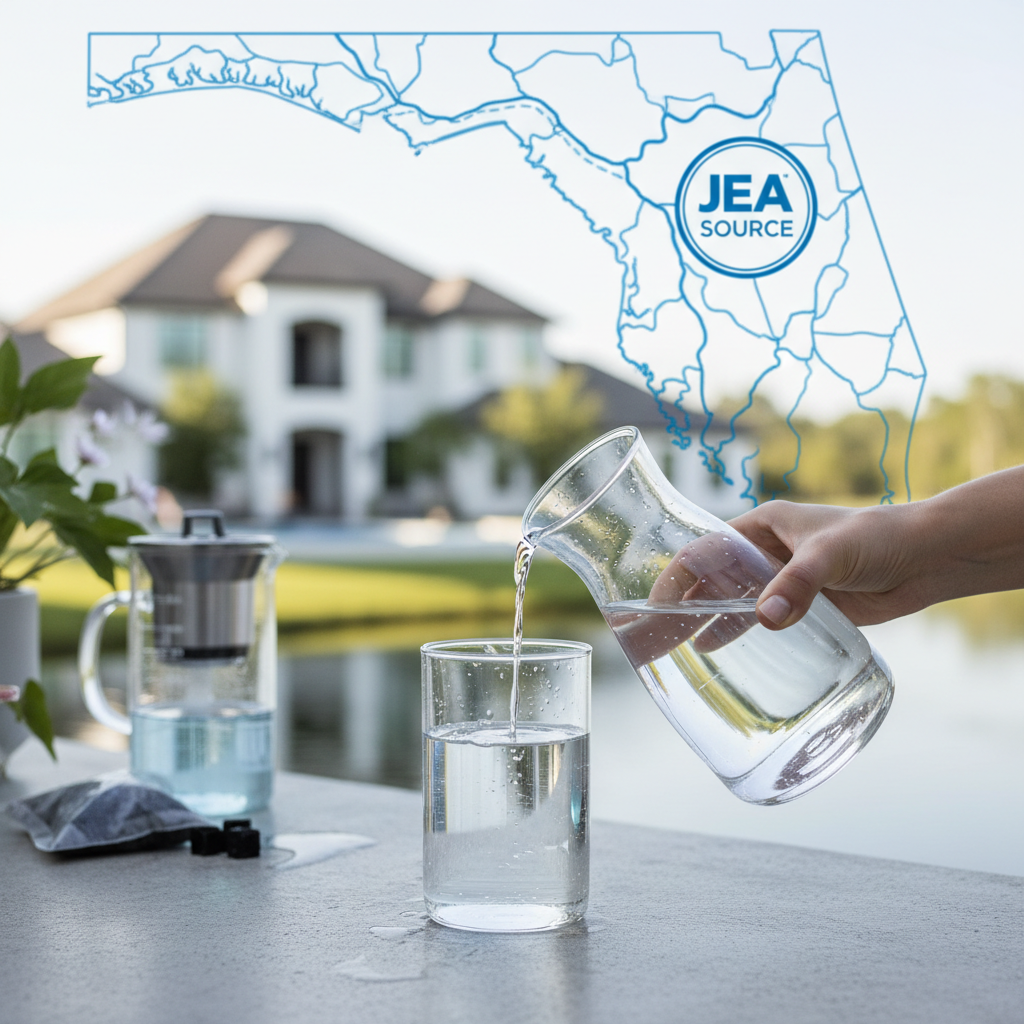
An Overview of Jacksonville’s Public Water Supply
Residents of Jacksonville and the surrounding Duval County area primarily receive their water from JEA, one of the largest municipal utilities in Florida. Unlike many metropolitan areas that rely on surface water from rivers or lakes, Jacksonville draws its supply from the Floridan Aquifer. This vast underground reservoir is located approximately 1,000 feet below the surface, protected by layers of clay, silt, and rock. While the aquifer is naturally filtered, the process of extracting, treating, and distributing this water through an aging infrastructure introduces specific considerations for water quality in Jacksonville.
The Source: The Floridan Aquifer
The Floridan Aquifer is one of the most productive aquifers in the world. Because the water is sourced from deep underground, it is generally free from the pathogens and surface-level pollutants found in river water. However, the water is naturally high in mineral content, particularly calcium and magnesium, which leads to the high water hardness levels common in Northeast Florida. JEA treats this raw water using aeration to remove hydrogen sulfide (the cause of a 'rotten egg' smell) and chlorination for disinfection before it enters the 3,000-mile network of distribution pipes.
Contaminants of Concern in Jacksonville
While JEA reports compliance with Environmental Protection Agency (EPA) standards under the Safe Drinking Water Act, modern research suggests that legal limits do not always align with optimal health guidelines. Residents should be aware of several specific substances often detected in the local supply.
Disinfection Byproducts
To keep water free of bacteria during its journey through the pipes, JEA uses chlorine. When chlorine reacts with small amounts of organic matter, it creates disinfection byproducts known as Trihalomethanes (TTHMs) and Haloacetic Acids (HAA5). Long-term exposure to these byproducts has been linked by peer-reviewed studies to an increased risk of bladder cancer and reproductive issues. Even when within legal limits, many health advocates suggest reducing these levels through point-of-use filtration.
PFAS and 'Forever Chemicals'
Per- and polyfluoroalkyl substances (PFAS) are a group of man-made chemicals used in industrial processes and firefighting foams. Jacksonville’s history as a major military hub—home to Naval Air Station Jacksonville and Naval Station Mayport—has led to documented PFAS contamination in specific local groundwater sites. While JEA monitors these levels, these 'forever chemicals' do not break down in the environment and are known to accumulate in the human body, potentially affecting metabolic and immune health.
Lead and Aging Infrastructure
While the water leaving JEA treatment plants is lead-free, Jacksonville’s historical infrastructure includes neighborhoods with older plumbing. Lead can leach into drinking water from lead pipes, brass fixtures, and lead solder in homes built before the 1986 amendments to the Safe Drinking Water Act. Because lead is a potent neurotoxin with no safe level of exposure, especially for children, testing at the tap is the only way to ensure safety.
Hard Water and Aesthetic Issues
Jacksonville’s water is classified as 'hard' to 'very hard' due to the mineral-rich nature of the Floridan Aquifer. While minerals like calcium are not a health risk, they cause significant scaling in water heaters, dishwashers, and plumbing fixtures. This can lead to reduced appliance lifespan and skin irritation for those with sensitive conditions like eczema. Many Jacksonville residents opt for softening or conditioning systems to manage these geological characteristics.
How to Protect Your Household
Information is the first step toward better water health. JEA publishes an annual Water Quality Report (Consumer Confidence Report), which provides a snapshot of the previous year's testing data. However, this report reflects the water at the plant, not necessarily the water at your kitchen sink.
For those looking to optimize their water quality in Jacksonville, a multi-stage approach is often most effective. Carbon filtration is highly efficient at removing chlorine and disinfection byproducts, while reverse osmosis systems are recommended for the reduction of PFAS, fluoride, and dissolved solids. If your home was built before 1986, conducting a specific lead test is a prudent measure to ensure your family's safety.
Empowering Your Health Journey
Understanding the nuances of your local water supply is a fundamental part of a clean-living lifestyle. While Jacksonville’s water meets federal safety standards, those pursuing premium health outcomes may choose to implement additional safeguards to account for emerging contaminants and aging infrastructure. We invite you to explore your unique water profile further and determine which solutions are right for your home environment.
Is your water as clean as it can be? Take our Water Health Assessment to receive a personalized analysis of your local water and a tailored recommendation for your household.
The water you shower, cook and brush with touches you every day.
Unfiltered municipal water carries chlorine, chloramines, sediment, hard-water minerals and trace contaminants. A whole-home treatment system shields every tap so the water you drink, bathe in, and cook with is consistently clean.
- ●Shower & bath — protects skin and hair from chlorine dryness.
- ●Brushing teeth — removes the chemical aftertaste at every sink.
- ●Cooking & coffee — cleaner water means cleaner flavor and safer meals.
- ●Appliances — extends the life of water heater, dishwasher and washer.
Curious what's in your water?
Take the 60-second Water Health Assessment for a personalized score and recommendations.
Take the Assessment