
Lead in Tap Water: Risks, Detection, and Mitigation in Florida
A comprehensive guide on lead in Florida's tap water. Learn about health risks, pipe corrosion, testing methods, and effective filtration solutions.
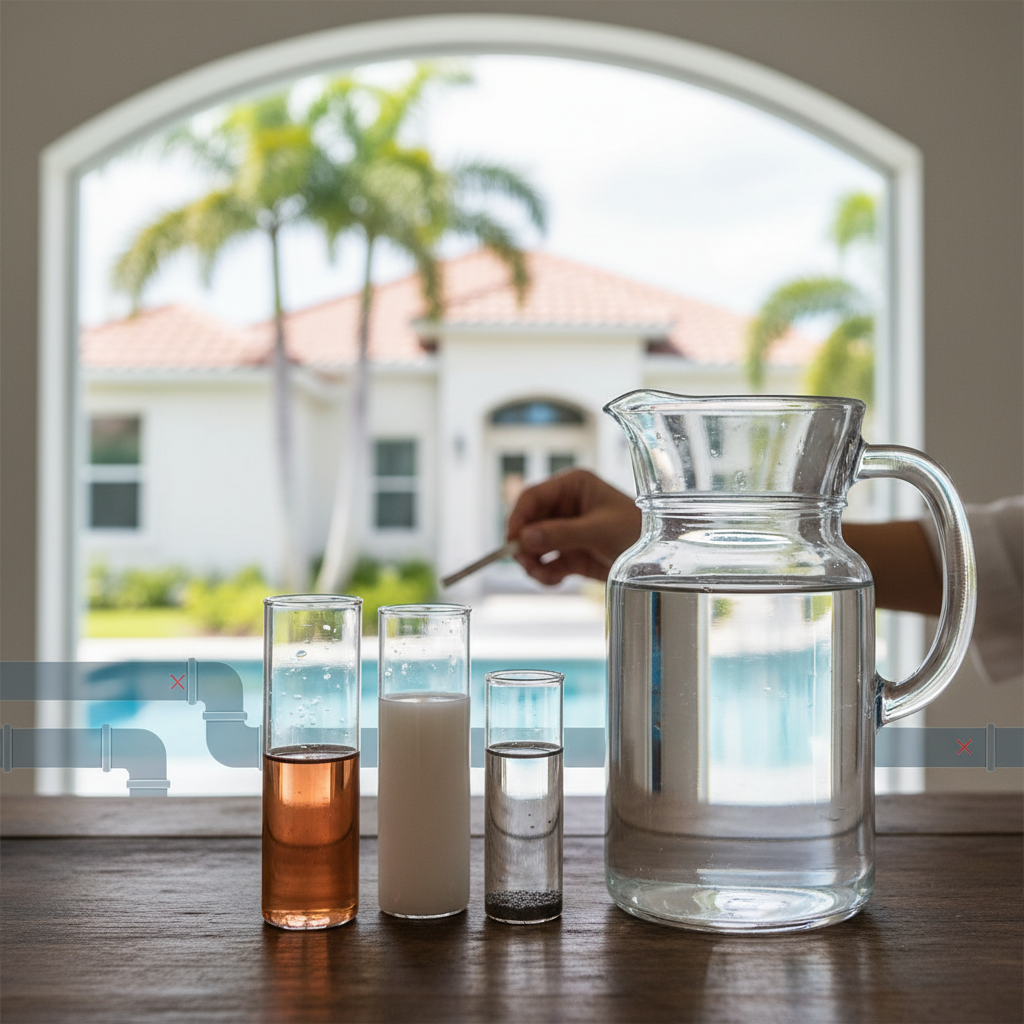
Understanding Lead Exposure via Drinking Water
Lead is a heavy metal that has been used for centuries in plumbing due to its malleability and resistance to leaks. However, modern medical science, including research from the World Health Organization and the Environmental Protection Agency (EPA), has established that there is no safe level of lead exposure for humans. Unlike many other contaminants, lead is a cumulative toxicant that affects multiple body systems, including the neurological, hematological, and renal systems.
In the state of Florida, lead rarely occurs naturally in the source water (aquifers and surface water). Instead, lead enters the drinking water through the corrosion of plumbing materials. When water sits in lead pipes or plumbing fixtures containing lead for several hours, the metal leaches into the water. The degree of leaching depends on several factors, including the water's acidity, mineral content, and temperature.
The Specific Context of Lead in Florida
Florida’s water landscape is unique. The majority of the state’s drinking water is drawn from the Floridan Aquifer. While the source water is generally high quality, the infrastructure used to transport that water varies significantly by municipality. In older Florida cities such as Jacksonville, Miami, and Tampa, some residential areas still utilize service lines or interior plumbing installed before the 1986 lead ban.
The EPA’s Lead and Copper Rule (LCR) requires public water systems to monitor lead levels at the tap in a sample of households. If more than 10 percent of customer taps sampled exceed the lead action level of 15 parts per billion (ppb), the water system must take action to control corrosion. Residents should note that the EPA’s maximum contaminant level goal (MCLG) for lead is zero, reflecting the understanding that even low levels of exposure can be harmful over time.
The Role of Galvanized Pipes and Brass Fixtures
Even if a home does not have a direct lead service line, lead can still be present. Lead solder was commonly used to join copper pipes until it was restricted in 1986. Furthermore, until 2014, the legal definition of "lead-free" plumbing allowed for up to 8% lead content in faucets and valves. In Florida’s humid environment, internal corrosion of these older brass fixtures can release lead into the water stream, particularly when water has been stagnant overnight.
Health Implications of Chronic Exposure
The health effects of lead are most pronounced in vulnerable populations. According to the Centers for Disease Control and Prevention (CDC), children are at the highest risk because their bodies absorb 4 to 5 times as much ingested lead as adults. Lead exposure in children is linked to central nervous system damage, learning disabilities, shorter stature, impaired hearing, and impaired formation and function of blood cells.
In adults, chronic low-level lead exposure from tap water can contribute to cardiovascular issues, increased blood pressure, and decreased kidney function. For pregnant women, lead exposure is particularly concerning as lead can cross the placental barrier, potentially resulting in reduced fetal growth and premature birth.
How to Test Your Florida Tap Water
You cannot see, taste, or smell lead in water. Therefore, the only way to confirm its presence is through laboratory testing. Many Florida municipal water providers offer free or low-cost lead testing kits to their customers. Alternatively, residents can hire a laboratory certified by the Florida Department of Environmental Protection (DEP).
Interpretation of Results
- Non-detectable: This is the ideal result, suggesting that the plumbing is either lead-free or the water chemistry is effectively preventing leaching.
- 1 to 14 ppb: While below the EPA action level, these results indicate some lead presence. Mitigation and filtration are recommended, especially for households with children or pregnant women.
- 15 ppb and above: This exceeds the federal action level. Immediate steps should be taken to identify the source and install high-quality filtration.
Effective Lead Removal and Mitigation Strategies
If lead is detected in your home, several mitigation strategies can be employed. Short-term measures include flushing the cold water tap for thirty seconds to two minutes before using the water for drinking or cooking. Using only cold water for consumption is also essential, as hot water dissolves lead more quickly from pipes.
Filtration Technologies
For long-term protection, specific filtration technologies are highly effective at removing lead:
- Reverse Osmosis (RO): These systems force water through a semi-permeable membrane, removing up to 99% of lead and other dissolved solids.
- Activated Carbon: Not all carbon filters remove lead. It is vital to choose a filter specifically certified to NSF/ANSI Standard 53 for lead reduction. These filters use specialized media to chemically bond with lead ions.
- Distillation: This process boils water to create steam, leaving the heavy metals behind in the boiling chamber.
When selecting a filter, look for independent certification from the NSF or the Water Quality Association (WQA). This ensures the product has been rigorously tested for its lead-reduction claims.
The Future of Plumbing in Florida
The EPA’s recent Lead and Copper Rule Revisions (LCRR) and the subsequent Lead and Copper Rule Improvements (LCRI) aim to accelerate the replacement of lead service lines across the United States. Florida municipalities are currently undergoing massive efforts to inventory service lines. However, because much of the risk resides in private indoor plumbing and fixtures, the responsibility for final water quality often rests with the homeowner.
Maintaining an awareness of your home’s plumbing history and the quality of your municipal supply is a cornerstone of clean living. By taking proactive steps to test and filter, you can effectively eliminate lead as a variable in your family's health equation.
Ensure Your Water’s Purity
Navigating the complexities of water contaminants like lead can be challenging, but clear information is the first step toward a healthier home. To better understand the specific needs of your household and find the right solutions for your local water profile, we invite you to take the Zoriah Living Water Health Assessment.
The water you shower, cook and brush with touches you every day.
Unfiltered municipal water carries chlorine, chloramines, sediment, hard-water minerals and trace contaminants. A whole-home treatment system shields every tap so the water you drink, bathe in, and cook with is consistently clean.
- ●Shower & bath — protects skin and hair from chlorine dryness.
- ●Brushing teeth — removes the chemical aftertaste at every sink.
- ●Cooking & coffee — cleaner water means cleaner flavor and safer meals.
- ●Appliances — extends the life of water heater, dishwasher and washer.
Curious what's in your water?
Take the 60-second Water Health Assessment for a personalized score and recommendations.
Take the Assessment