
PFAS Forever Chemicals in Florida Tap Water: 2026 Homeowner Guide
Discover how PFAS forever chemicals impact Florida tap water. Learn about recent EPA policy shifts, health risks in the Biscayne aquifer, and how to protect your home's water.
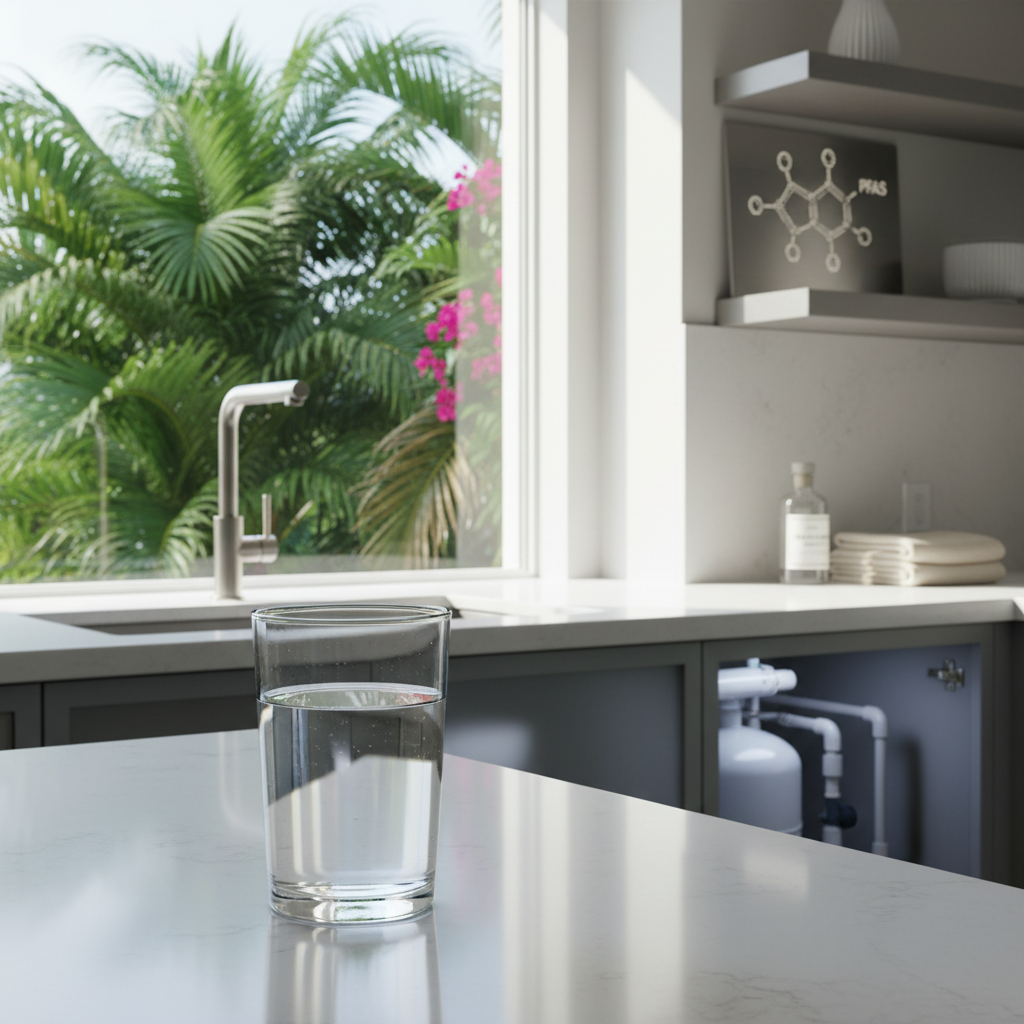
PFAS forever chemicals in Florida tap water have become a primary concern for homeowners seeking longevity and clean living in the Sunshine State. As of June 2026, the landscape of water safety is shifting rapidly due to new environmental findings in key areas like the Suwannee River basin and the Biscayne aquifer. Understanding these persistent man-made substances is the first step toward securing a healthy home environment and ensuring your family consumes only the purest water available.
Key takeaways for Florida homeowners
- PFAS (per- and polyfluoroalkyl substances) are highly persistent in the environment and do not break down naturally.
- Recent reports from the EPA and local watershed coalitions in 2026 indicate a potential rollback of stringent safe drinking water standards for these chemicals.
- Florida's unique limestone geology allows surface contaminants to migrate quickly into underground aquifers used for municipal water.
- Standard carbon pitchers are often insufficient; advanced filtration like reverse osmosis is typically required for significant PFAS reduction.
The current state of PFAS contamination in Florida
Florida relies heavily on groundwater, with the majority of residents receiving their tap water from underground aquifers. In June 2026, environmental monitors at Troy Springs State Park and other locations along the Suwannee River have highlighted the vulnerability of these water sources. The Environmental Protection Agency (EPA) recently proposed changes to the Safe Drinking Water Act regarding PFAS, which has led many health advocates to express concern over long-term exposure risks. According to the EPA, PFAS are linked to a variety of serious health issues, including hormonal disruptions and increased cholesterol levels.
In South Florida, the Biscayne aquifer remains particularly susceptible to saltwater intrusion and chemical runoff. Because PFAS are used in everything from fire-fighting foams at airports to non-stick cookware, these "forever chemicals" find their way into the soil and eventually the taps of Florida homes. The National Science Foundation (NSF) notes that once these chemicals enter the human body, they are difficult to eliminate, leading to bioaccumulation over time.
Health implications of long-term PFAS exposure
The term "forever chemicals" is not a metaphor; it refers to the carbon-fluorine bond, which is one of the strongest in organic chemistry. Peer-reviewed research cited by the CDC suggests that chronic exposure to even low levels of PFAS can interfere with the body's natural hormones and reduce vaccine response in children. In 2026, public health discussions in the Congressional Record have highlighted how essential services, including potable water, are being impacted by shifting environmental regulations and the ongoing presence of these contaminants.
Evidence from the Florida Department of Environmental Protection (DEP) suggests that certain regions near military bases and industrial sites show higher concentrations of PFOA and PFOS, two of the most studied chemicals in the PFAS family.
Top filtration methods for PFAS removal
Not all water filters are created equal when it comes to removing PFAS forever chemicals in Florida tap water. Homeowners must look for specific certifications to ensure their equipment is capable of capturing these microscopic molecules. To determine which system is right for your specific zip code, you should book a water test with a professional who understands Florida's unique mineral profile.
| Filtration Type | PFAS Removal Effectiveness | Pros and Cons |
|---|---|---|
| Activated Carbon | Moderate | Effective for PFOA/PFOS; requires frequent filter changes. |
| Reverse Osmosis | High | The gold standard for PFAS; removes up to 99% of contaminants. |
| Ion Exchange | High | Effective for various PFAS species; typically used in whole-home systems. |
| Sediment Filters | Zero | Does not remove dissolved chemicals like PFAS. |
Navigating EPA standards and local regulations
As of June 18, 2026, legislative debates in Washington D.C. have centered on the balance between industrial regulation and public health. For a Florida homeowner, these federal shifts mean that local utility companies may not be required to filter PFAS to the strictest possible levels. This transfer of responsibility often falls to the individual resident. Taking a proactive approach by obtaining a free Water Health Assessment allows you to see exactly what is entering your home regardless of the current federal minimums.
Why Florida's geology complicates water safety
Florida’s karst topography—characterized by porous limestone, sinkholes, and underground caves—means that there is a direct connection between surface water and our drinking supply. When chemicals like PFAS are spilled or disposed of incorrectly, they do not stay on the surface. They leach rapidly into the Floridan and Biscayne aquifers. This geological reality makes Florida one of the most challenging states for maintaining consistent water purity without point-of-entry filtration systems.
What to do next
Protecting your home from PFAS is a multi-step process that starts with data. Follow these steps to ensure your water meets the highest standards of clean living:
- Identify your water source: Determine if you are on municipal water or a private well.
- Get professional data: Reach out to a specialist to book a water test and check for specific PFAS compounds common in your county.
- Complete a free Water Health Assessment to understand how your current filtration stacks up against modern contaminants.
- Install high-performance filtration: Focus on NSF/ANSI 53 or 58 certified systems designed specifically for PFOA and PFOS reduction.
- Maintain your system: Schedule regular cartridge replacements to prevent chemical breakthrough.
Frequently asked questions
Can I boil PFAS out of my water?
No, boiling water does not remove PFAS. In fact, boiling can actually increase the concentration of these chemicals as the water evaporates while the chemicals remain behind.
Does the city of Miami or Tampa filter for PFAS?
While many Florida municipalities monitor for PFAS, most standard municipal treatment plants are not equipped with the high-level reverse osmosis or ion exchange technology required to remove them completely to near-zero levels.
How do I know if there are PFAS in my specific neighborhood?
Contamination levels vary by street and water main. The only way to be certain is to perform a professional-grade test at your actual kitchen tap, as local utility reports only reflect the water quality at the treatment plant.
What is the most effective filter for PFAS forever chemicals?
Reverse osmosis systems are widely considered the most effective for home use, as they utilize a semi-permeable membrane that blocks the majority of chemical contaminants, including the PFAS family.