
Nitrate Contamination in Florida Groundwater: A Risks Guide
Discover the hidden dangers of nitrate contamination in Florida groundwater. Learn how to identify risks, protect your family, and filter your home's drinking water effectively.
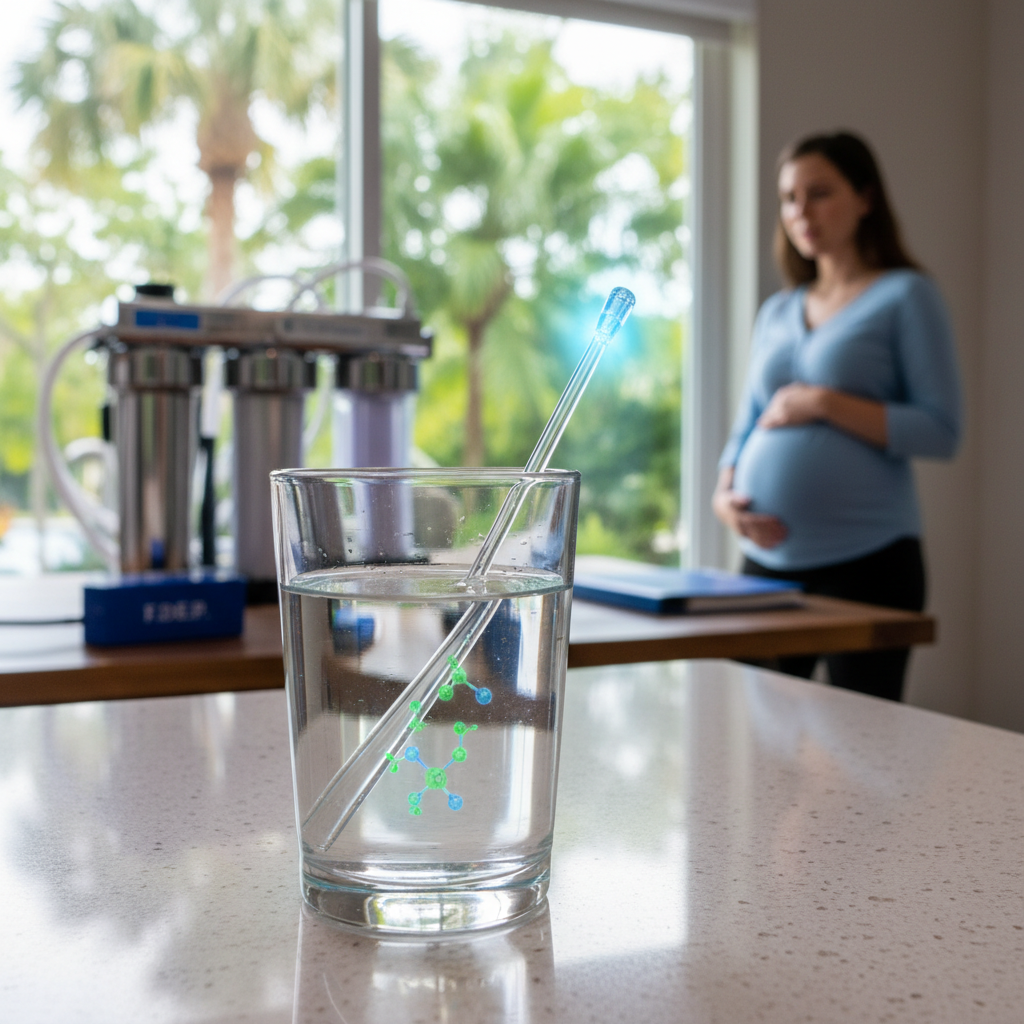
Nitrate contamination in Florida groundwater represents a growing concern for homeowners relying on the state's unique hydrogeology for their daily water needs. As nitrogen from fertilizers, septic systems, and animal waste leaches into our aquifers, the chemical stability of our drinking supply is increasingly compromised. Understanding the sources and health implications of these contaminants is the first step toward securing a clean, longevity-focused lifestyle in the Sunshine State.
Key takeaways
- Nitrates are colorless, odorless, and tasteless, making professional testing the only way to detect them.
- The EPA maximum contaminant level for nitrates is 10 milligrams per liter (mg/L), but health experts often suggest lower thresholds for long-term wellness.
- Florida's karst topography and sandy soils allow nitrates to migrate rapidly into the Floridan and Biscayne aquifers.
- Standard carbon pitchers do not remove nitrates; specialized filtration like reverse osmosis is typically required.
The mechanics of nitrate infiltration in Florida
Florida sits atop porous limestone formations characterized as karst topography. Unlike states with thick clay layers that act as natural filters, Florida’s soil is often sandy and highly permeable. When heavy seasonal rains occur, nitrogen-rich runoff from agricultural lands, golf courses, and residential lawns moves quickly through the soil. According to the Florida Department of Environmental Protection (DEP), more than 90 percent of the state's drinking water comes from underground aquifers, which are increasingly vulnerable to these surface pollutants.
In many coastal regions, such as Miami-Dade and Broward counties, the Biscayne aquifer is particularly shallow. This proximity to the surface increases the risk of contamination from aging septic systems. As of 2023, Florida has an estimated 2.6 million septic tanks. When these systems fail or are improperly maintained, they release high concentrations of nitrates directly into the groundwater table, which may eventually reach your home’s private well or municipal intake.
Health risks and long-term exposure
The primary health concern associated with nitrate contamination in Florida groundwater is methemoglobinemia, commonly known as Blue Baby Syndrome. The Centers for Disease Control and Prevention (CDC) warns that infants under six months of age are at the highest risk. Nitrates interfere with the blood's ability to carry oxygen, leading to clinical cyanosis. However, emerging research suggests that the risks extend beyond infancy.
Peer-reviewed studies have investigated links between long-term nitrate ingestion and increased risks of thyroid disease and certain cancers, including colorectal and bladder cancer. In 2020, research published in the journal Environmental Health Perspectives indicated that even levels below the EPA limit might be associated with adverse birth outcomes. For homeowners focused on longevity and clean living, maintaining nitrate levels as close to zero as possible is a prudent health strategy.
Private wells versus municipal water
If your home is connected to a municipal utility, the water is regulated under the Safe Drinking Water Act. Utilities are required to monitor nitrate levels and notify the public if concentrations exceed 10 mg/L. However, if you rely on a private well—as many do in rural parts of Central Florida and the Panhandle—you are solely responsible for your water safety. Private wells are not regulated by the EPA, and the Florida Department of Health recommends that well owners book a water test at least once a year to screen for nitrates and bacteria.
How to identify nitrate sources near your home
Homeowners should be aware of land-use patterns in their immediate vicinity. Factors that increase the likelihood of finding nitrate contamination in Florida groundwater include:
- Proximity to large-scale citrus groves or commercial farms.
- High density of residential septic systems in the neighborhood.
- Frequent use of nitrogen-heavy fertilizers on nearby lawns or golf courses.
- Recent heavy flooding or seasonal tropical storms that accelerate leaching.
Comparison table: Common filtration methods
| Filtration Method | Removes Nitrates? | Best For |
|---|---|---|
| Activated Carbon | No | Taste, Odor, Chlorine |
| Reverse Osmosis | Yes (90%+) | Comprehensive Home Safety |
| Ion Exchange | Yes | Specific Nitrate Removal |
The role of reverse osmosis in home protection
For most Florida homeowners, reverse osmosis (RO) systems represent the gold standard for nitrate removal. These systems use a semi-permeable membrane to mechanically strip nitrate ions from the water supply. It is important to note that boiling water does not remove nitrates; in fact, it concentrates them by evaporating the pure water and leaving the minerals and contaminants behind. To ensure your health standards are met, you can start by completing a free Water Health Assessment to understand your specific risk profile.
What to do next
If you suspect your water quality is compromised, proactive steps are essential for peace of mind and physical health. Follow this 1-2-3 protocol to secure your home.
- Identify your water source: Determine if you are on a municipal line or a private well.
- Get professional data: Reach out to a certified laboratory or professional service to book a water test specifically for nitrates, nitrites, and lead.
- Review your infrastructure: Check the age of your well casing or the proximity of your septic drain field to your water intake.
- Implement a barrier: Install a point-of-use or whole-home filtration system designed to specifically target dissolved inorganic contaminants.
Frequently asked questions
What is the safe level of nitrates in drinking water?
The EPA has established a Maximum Contaminant Level (MCL) of 10 mg/L for nitrates. However, for those concerned with chronic illness prevention and optimal wellness, many experts recommend aiming for levels below 5 mg/L, especially for pregnant women and children.
Can I smell or taste nitrates in my Florida well water?
No, nitrates are invisible, odorless, and tasteless. You cannot rely on your senses to detect them. Only a chemical laboratory analysis can confirm their presence and concentration in your water supply.
How often should I test my Florida water for nitrates?
Homeowners with private wells should test at least once per year. If you live in an agricultural area or a region with frequent flooding, semi-annual testing is recommended to capture changes in groundwater quality caused by seasonal runoff.
Does a standard refrigerator filter remove nitrates?
Most standard refrigerator filters use basic carbon blocks, which are effective at removing chlorine and improving taste but are ineffective against nitrates. You need a specialized ion exchange or reverse osmosis system to reduce nitrate levels significantly.