
Microplastics in Florida Drinking Water: Home Safety Guide 2026
Discover how microplastics affect Florida drinking water and the Biscayne aquifer. Learn how to protect your home and health with proven filtration solutions.
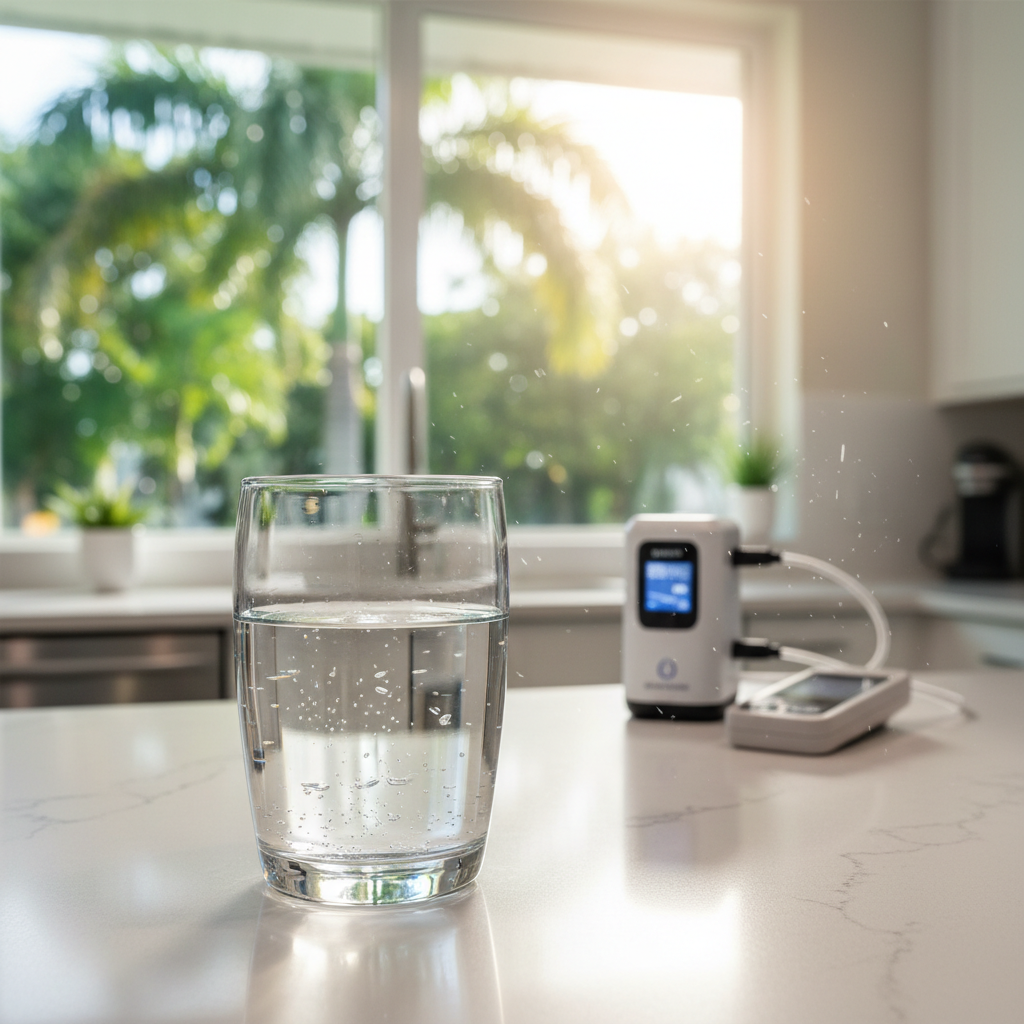
Microplastics in Florida drinking water have become a significant concern for homeowners as recent environmental studies highlight the ubiquity of synthetic polymers in our state's unique hydrogeological systems. While Florida residents once focused primarily on sulfur or hardness, the conversation has shifted toward microscopic plastic fragments measuring less than five millimeters. Understanding how these particles enter the Biscayne and Floridan aquifers is the first step in ensuring your family consumes the clean, high-quality water necessary for a long and healthy life.
Key takeaways for Florida homeowners
- Microplastics are now detected in both municipal tap water and private well systems across Florida.
- The state's porous limestone geology allows surface contaminants to migrate into deep groundwater sources more easily than in other regions.
- Standard carbon pitchers are often insufficient for removing the smallest nanoplastics.
- Point-of-entry and point-of-use filtration systems offer the most reliable defense against plastic ingestion.
The scope of microplastic contamination in Florida
Florida's water supply is particularly vulnerable to microplastic infiltration due to our frequent heavy rainfall and the highly permeable nature of our limestone bedrock. Research indicates that plastic fibers from synthetic clothing, breakdown products from single-use containers, and industrial runoff enter our waterways daily. According to data tracked by the Florida Department of Environmental Protection (DEP), the state continues to monitor emerging contaminants, though federal limits for microplastics in drinking water have not yet been established by the EPA.
Unlike minerals that can be beneficial, microplastics are foreign bodies. As of 2026, emerging peer-reviewed research suggests that the average person could be ingesting approximately 5 grams of plastic every week—roughly the weight of a credit card—primarily through water and food. In coastal Florida regions, saltwater intrusion and the degradation of marine debris further complicate the chemical profile of our local wells.
How microplastics enter the Biscayne and Floridan aquifers
Florida relies heavily on underground aquifers for its potable water. The Biscayne aquifer, which serves millions in South Florida, is a shallow, unconfined aquifer. This proximity to the surface makes it highly susceptible to pollutants from urban runoff. When it rains, plastic debris from roads and lawns breaks down and leaches into the soil, eventually reaching the water table.
The deeper Floridan aquifer is better protected but not various. As plastic particles break down into even smaller "nanoplastics," they gain the ability to bypass some natural filtration layers of sand and rock. For those relying on private wells, the risk is often higher because residential wellheads may not have the sophisticated multi-stage treatment processes found in large municipal facilities. To determine your specific risk level, many families choose to book a water test to analyze their current water quality.
Comparing filtration methods for plastic removal
To effectively remove microplastics from your home, you must understand the micron rating of your filtration media. Most microplastics found in tap water range from 0.1 to 5 micrometers. Because the threat is invisible, homeowners should look for technologies that provide a physical barrier to these particles.
| Filtration Technology | Effectiveness Against Microplastics | Best Use Case |
|---|---|---|
| Standard Carbon Pitcher | Low to Moderate | Taste and odor only | Multistage Carbon Block | Moderate to High | Chlorine and large particles | Reverse Osmosis (RO) | Very High | Comprehensive plastic and chemical removal | Ultrafiltration (UF) | High | Retains minerals while blocking particles |
Reverse osmosis systems remain the gold standard for clean living. These systems use a semi-permeable membrane with pores as small as 0.0001 microns, effectively stripping away not just microplastics, but also dissolved solids and chemical residues like PFAS. You can learn more about which system fits your home by taking a free Water Health Assessment.
The impact on longevity and clean living
For the health-conscious homeowner, water quality is the foundation of longevity. Microplastics are often associated with bisphenols and phthalates, which are known endocrine disruptors. The CDC has noted that exposure to these chemicals can interfere with hormonal balance and metabolic health. By eliminating these triggers at the source—the kitchen tap—you reduce the total body burden of environmental toxins.
In Florida’s subtropical climate, hydration is constant. If your primary source of hydration contains synthetic polymers, the cumulative exposure over decades is significant. Investing in high-grade filtration is not just about the water—it is about maintaining the integrity of your home’s internal environment. For more information on maintaining a healthy household, you can browse our related guides on clean living and environmental safety.
Checklist: Protecting your Florida home from microplastics
- Conduct a professional water analysis to identify particle load and chemical contaminants.
- Install a whole-home sediment filter to catch larger physical debris at the point of entry.
- Equip the kitchen with a dedicated high-purity drinking water system, such as Reverse Osmosis.
- Replace plastic water pitchers and storage containers with glass or high-grade stainless steel to prevent localized leaching.
- Maintain your filtration system according to manufacturer schedules to ensure the membrane remains effective.
What to do next
Addressing microplastics in Florida drinking water requires a proactive approach. The first step is to stop the intake of unfiltered tap water and move toward a verified purification method. Start by auditing your current water source. If you are on a municipal system in counties like Miami-Dade, Broward, or Palm Beach, your annual water quality report may not list microplastics yet, as they are not currently regulated under the Safe Drinking Water Act.
Take control of your home's health by scheduling a professional consultation. Protecting your family from the long-term effects of plastic ingestion is a hallmark of clean living in the modern era. Visit our free Water Health Assessment to receive a personalized recommendation based on your Florida zip code and household needs.
Frequently asked questions
Can boiling water remove microplastics?
No, boiling water does not remove microplastics. In fact, boiling may slightly increase the concentration of plastics as some water evaporates while the physical plastic particles remain in the pot. Only physical filtration or distillation can effectively remove these solids.
Does Florida municipal water filter out all microplastics?
Most municipal treatment plants use sand filtration and sedimentation, which can remove a significant portion of larger microplastics. However, they are not currently required by law to filter out nanoplastics or the smallest micro-fibers, which often pass through city-wide systems and enter your home.
How do I know if my water has microplastics?
Microplastics are invisible to the naked eye and typically have no taste or smell. The only way to confirm their presence is through specialized laboratory testing or by using high-precision filtration systems that are certified to remove particles at the sub-micron level.
Is bottled water safer than Florida tap water regarding plastics?
Generally, no. Studies have shown that bottled water can contain up to twice as many microplastic particles as tap water, often due to the plastic leaching from the bottle itself and the industrial bottling process. Filtered tap water in glass containers is the safest option.