
Microplastics in Florida Drinking Water: 2026 Homeowner Guide
Discover how microplastics affect Florida drinking water in 2026. Learn about Biscayne Aquifer risks, filtration solutions, and how to protect your family's health.
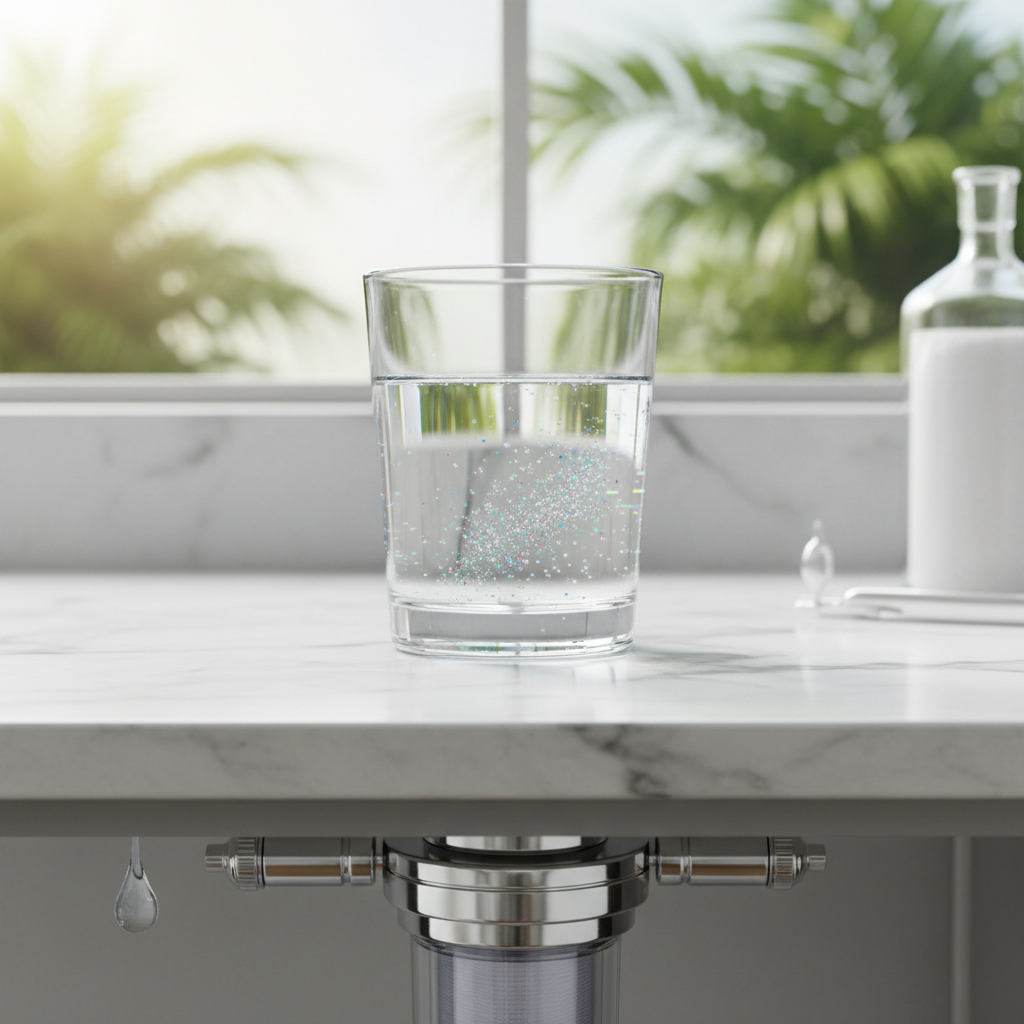
Microplastics in Florida drinking water have become a significant concern for homeowners as of June 2026, with recent environmental surveys indicating that these microscopic synthetic particles are no longer just an oceanic problem. As Florida relies heavily on unique underground limestone formations for its supply, the porous nature of our geology presents specific challenges for keeping tap water pure. This guide examines the current state of plastic contamination in the Sunshine State and provides actionable steps to safeguard your household supply.
Key takeaways
- Microplastics have been detected in major Florida aquifers due to surface runoff and wastewater infiltration.
- Traditional municipal water treatment is not always equipped to capture nanoplastics under 1 micrometer.
- Point-of-entry and point-of-use filtration systems are the most effective barriers for residential properties.
- Statewide monitoring in 2026 highlights a correlation between urban density and plastic particle counts.
The current state of Florida water quality in 2026
Florida homeowners are increasingly aware that their water quality is intrinsically linked to the health of the Biscayne and Floridan aquifers. Unlike other states with deep granite-protected wells, Florida’s karst topography means that surface contaminants—including microplastics from car tires, synthetic clothing fibers, and degraded packaging—can migrate into the groundwater relatively quickly. According to data tracked by the Florida Department of Environmental Protection (DEP), urban runoff carries a high density of secondary microplastics into drainage basins that recharge our primary drinking sources.
While the Environmental Protection Agency (EPA) has historically focused on chemicals like PFAS, recent localized testing in June 2026 has shown that microplastics often act as carriers for these "forever chemicals." If you are concerned about what might be coming through your faucets, you can book a water test to get a professional laboratory analysis of your specific tap water.
Understanding microplastics vs. nanoplastics
The term "microplastics" generally refers to plastic fragments smaller than 5 millimeters. However, the greater concern for Florida longevity-focused residents is nanoplastics. These are particles smaller than 1 micrometer that are capable of crossing biological barriers, including the gut lining. Recent research suggests that the average person could be ingesting thousands of these particles annually through unfiltered tap water. In the coastal regions of Southern Florida, saltwater intrusion and rising water tables further complicate the filtration process, as changing water chemistry can affect how particles stay suspended in the supply.
Exposure to microplastics is often combined with other contaminants; for instance, recent reports from the National Toxicology Program (NTP) continue to investigate the synergistic effects of environmental stressors on long-term cellular health.
Effective removal methods for homeowners
Not all water filters are created equal when it comes to microscopic debris. To achieve a "clean living" standard in 2026, homeowners must look for specific pore sizes and technologies. Most carbon pitchers are insufficient for capturing the smallest nanoplastics found in modern municipal supplies. Below is a comparison of the most common residential treatment methods.
| Technology | Microplastic Removal Rate | Particle Size Limit | Best For |
|---|---|---|---|
| Reverse Osmosis | 99.9% | 0.001 Microns | Comprehensive purity and nanoplastics |
| Ultrafiltration (UF) | 95-98% | 0.01 Microns | Retaining minerals while removing plastics |
| Standard Carbon | Variable | 0.5 - 5.0 Microns | Taste, odor, and large fragments only |
| Distillation | 99.9% | N/A | High purity but slow production |
The link between PFAS and plastics
Microplastics are often found in tandem with Per- and Polyfluoroalkyl Substances (PFAS). As mentioned in localized Florida environmental reports from June 2, 2026, elevated levels of PFAS were discovered in several municipal wells. These chemicals often adhere to the surface of microplastic particles, creating a "Trojan horse" effect where the plastic particle delivers concentrated chemical doses into the body. This makes a multi-stage filtration approach essential for those pursuing a clean living lifestyle. For a personalized look at your home water risks, the free Water Health Assessment can help identify which contaminants are most prevalent in your specific zip code.
How to protect your Florida home
Taking control of your water quality is a foundational step in maintaining a healthy home. Because Florida’s water chemistry varies significantly between the sandy soils of the Panhandle and the limestone-rich water of Miami-Dade, a one-size-fits-all solution rarely works. Use the following checklist to evaluate your home's defense against microplastics.
- Verify the age of your plumbing; older PVC pipes can sometimes contribute micro-debris to the water flow.
- Inquire with your local utility about their latest 2026 water quality report regarding “unregulated contaminants.”
- Install a point-of-use Reverse Osmosis system at the kitchen sink for drinking and cooking water.
- Consider a whole-home sediment pre-filter (rated at 1 micron or less) to protect appliances and shower water.
- Schedule annual testing to ensure your filtration membranes haven't been compromised by Florida's high mineral content.
What to do next
Ensuring your drinking water is free from microplastics and nanoplastics requires a proactive strategy. Start by identifying the baseline quality of your water. You can book a water test with a specialist who understands the unique mineral and contaminant profile of Florida’s aquifers. For a broader overview of your home’s wellness profile, take our free Water Health Assessment. This tool provides a customized roadmap for achieving the highest standard of clean living in the Sunshine State.
Frequently asked questions
Does boiling water remove microplastics?
No, boiling water does not remove microplastics; in fact, it may increase the concentration of particles as the water evaporates. While some studies suggest that boiling hard water can cause calcium carbonate to trap some microplastics in the resulting scale, this is not a reliable or efficient method for purification.
Is Florida's tap water more at risk for microplastics than other states?
Florida faces unique risks due to its karst (limestone) geology and high water table, which allow surface pollutants to reach aquifers more easily than in areas with deep, non-porous bedrock. Additionally, the high rate of plastic use in coastal tourism and boating contributes to local environmental loads.
What is the best filter for removing nanoplastics?
Reverse Osmosis (RO) is widely considered the gold standard for nanoplastic removal. Because RO membranes have a pore size of approximately 0.0001 microns, they can effectively block even the smallest plastic particles that pass through standard carbon or ceramic filters.
Can microplastics be absorbed through the skin while showering in Florida?
While the primary risk of microplastics is ingestion, there is ongoing research into the effects of microplastics on the skin barrier. More importantly, smaller particles can be inhaled in the steam of a hot shower, making whole-home filtration a preferred choice for health-conscious homeowners.