
Microplastics in Florida Drinking Water: Protecting Your Home
Discover the reality of microplastics in Florida drinking water and how these microscopic particles impact your health and home filtration needs.
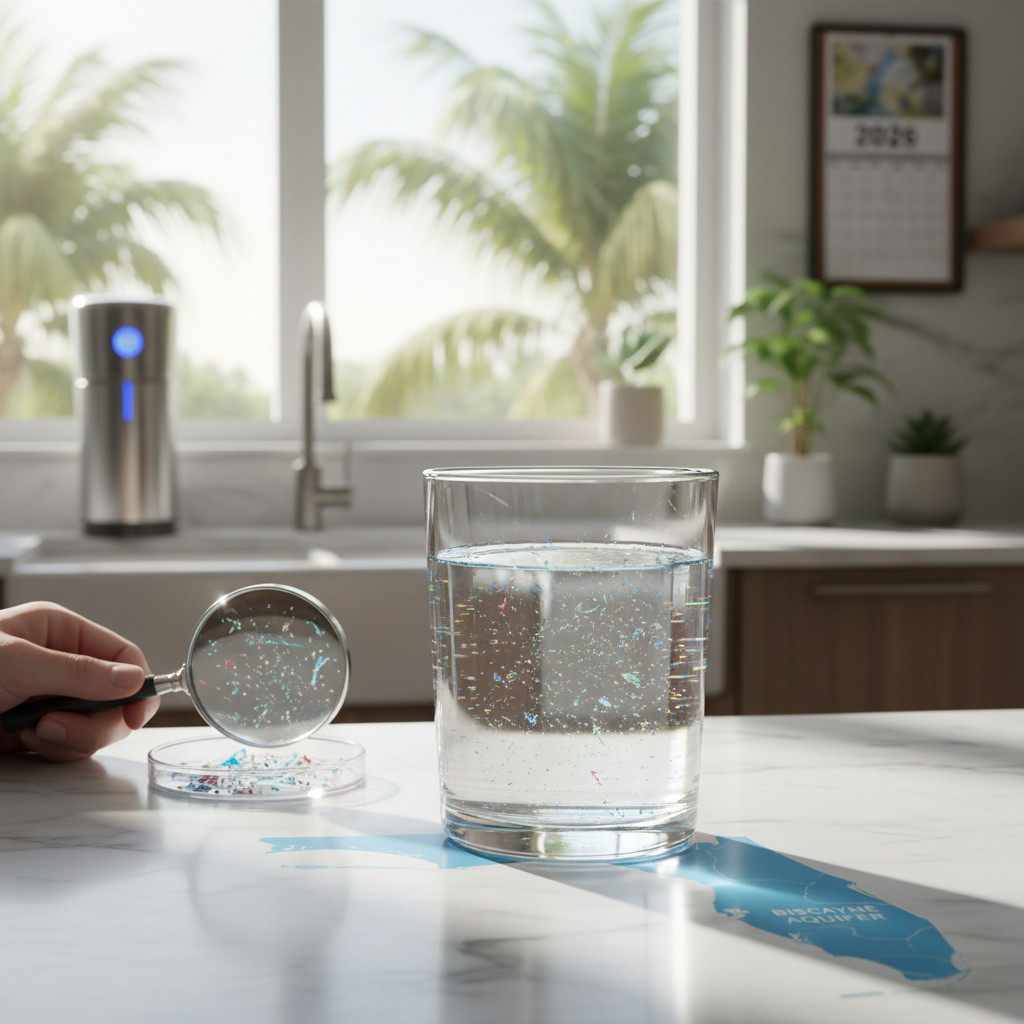
Microplastics in Florida drinking water have become a significant concern for homeowners as recent environmental surveys reveal the extent of plastic degradation in our unique hydrogeological systems. While Florida is celebrated for its pristine coastlines, the breakdown of single-use plastics and industrial materials has introduced microscopic polymers into the very aquifers we rely on for daily consumption. Understanding how these particles enter your home is the first step toward securing a cleaner, healthier living environment for your family.
Key takeaways
- Microplastics are particles smaller than 5 millimeters that persist in Florida aquifers and municipal supply lines.
- Current recycling rates remain below 10%, leading to increased plastic accumulation in local water sources like the Biscayne aquifer.
- Standard municipal water treatment is not always equipped to remove the smallest nanoplastic particles.
- Advanced home filtration is currently the most reliable method for reducing microplastic exposure in drinking water.
The growing presence of plastics in Florida water
Florida face a unique challenge due to its porous limestone geology. The state's primary drinking water sources, such as the Floridan and Biscayne aquifers, are highly susceptible to surface runoff. According to reporting from the Palm Beach Post in June 2026, plastic waste is projected to triple by 2060 if current consumption patterns continue. As plastic litter remains on roadsides or is buried in landfills, it does not disappear; instead, it fractures into microplastics that leach into the soil and groundwater.
In the coastal regions, saltwater intrusion and seasonal flooding further complicate water purity. Microplastics, often derived from synthetic clothing fibers, car tires, and degraded packaging, have been detected globally in human blood and lung tissue. In Florida, the concern is localized by the heavy use of industrial materials and the high volume of plastic waste that reaches the Atlantic and Gulf coasts, eventually circulating back into the water cycle.
How microplastics enter your domestic supply
Many homeowners believe that municipal treatment plants provide a complete shield against contaminants. However, microplastics often bypass traditional filtration systems due to their size. Research indicates that some microplastics are intentionally manufactured for use in cosmetics and cleaning supplies, while others are secondary byproducts of larger items. When you book a water test, you can gain clarity on the specific particulate load entering your home.
The Florida Department of Environmental Protection (DEP) monitors various contaminants, but microplastics are not yet federally regulated under the Safe Drinking Water Act. This leaves a gap in protection that homeowners must fill through private monitoring and advanced point-of-entry or point-of-use filtration systems. It is also important to note that microplastics can interfere with natural processes; some environmental studies suggest plastic particles can interrupt plant photosynthesis by 7% to 12%, signaling a broader ecological disruption that eventually impacts human health (Source: Climate and Environment News, 2026).
Health implications for Florida families
The health risks associated with microplastics in Florida drinking water are still being mapped by the scientific community, but current data is cause for caution. These particles can act as vectors for other toxins, such as heavy metals and endocrine-disrupting chemicals like Bisphenol A (BPA). When ingested, the smallest particles—nanoplastics—can cross the blood-brain barrier and the placenta.
For those prioritizing longevity and clean living, reducing the plastic load in the body is essential. While the body can eliminate some larger particles, the cumulative effect of daily exposure via tap water remains a primary concern for long-term wellness. Using a free Water Health Assessment can help identify if your neighborhood is at a higher risk due to aging infrastructure or proximity to industrial runoff zones.
Comparing filtration methods for microplastic removal
Not all water filters are created equal when it comes to capturing microscopic polymers. To protect your home, you must look for specific micron ratings and filtration technologies. Below is a comparison of common home filtration options:
| Filter Type | Microplastic Effectiveness | Primary Benefit |
|---|---|---|
| Standard Carbon Pitcher | Low | Improves taste and odor only. |
| 0.5 Micron Carbon Block | Moderate | Removes most visible microplastics and cysts. |
| Reverse Osmosis (RO) | High | Removes particles down to 0.0001 microns, including nanoplastics. |
| Ultrafiltration (UF) | High | Effective for sub-micron particles while retaining minerals. |
Steps to reduce plastic exposure at home
Beyond professional filtration, Florida residents can adopt lifestyle changes to mitigate the cycle of plastic pollution. By choosing to reuse glass or stainless steel containers, you reduce the demand for the single-use plastics that eventually degrade into our water supply. Florida's food code currently encourages the safe reuse of personal beverage containers, making it easier to avoid bottled water, which often contains significantly higher concentrations of microplastics than tap water.
- Replace all plastic beverage bottles with glass or high-quality stainless steel alternatives.
- Install a multi-stage filtration system certified to remove particulates at the sub-micron level.
- Avoid heating food in plastic containers, as heat accelerates the leaching of microplastics.
- Verify your local water quality reports but supplement them with private testing for a more accurate household profile.
What to do next
If you are concerned about the quality of your household water, start with a data-driven approach. You can book a water test to identify the presence of sediments and contaminants that may indicate a larger microplastic problem. For a comprehensive look at your home's water profile and personalized recommendations for filtration, take our free Water Health Assessment today. Taking control of your water quality is the most effective way to ensure your home remains a sanctuary for health and longevity in Florida.
Frequently asked questions
Are there microplastics in Florida tap water?
Yes, microplastics have been detected in various water sources across Florida. Due to the state's unique aquifer system and high plastic consumption, these particles frequently enter the municipal supply after breaking down from larger waste products.
Can I see microplastics in my glass of water?
Most microplastics are invisible to the naked eye, measuring less than 5 millimeters, with many being smaller than 1 micrometer. If your water appears cloudy, it may contain a high sediment load, but microscopic analysis is required to confirm the presence of plastic polymers.
Does boiling water remove microplastics?
No, boiling water does not remove microplastics. In fact, boiling may slightly increase the concentration of these particles as water evaporates, leaving the non-volatile plastic fragments behind. Filtration is the only effective removal method.
What is the best type of filter for microplastics?
The most effective systems for removing microplastics are Reverse Osmosis (RO) and Ultrafiltration (UF) systems. These technologies use membranes with pores small enough to trap even the smallest sub-micron plastic particles and nanoplastics.