
Microplastics in Florida Drinking Water: 2026 Homeowner Guide
Discover how microplastics in Florida drinking water affect your home. Learn about the Biscayne Aquifer risks and the best filtration methods for clean living.
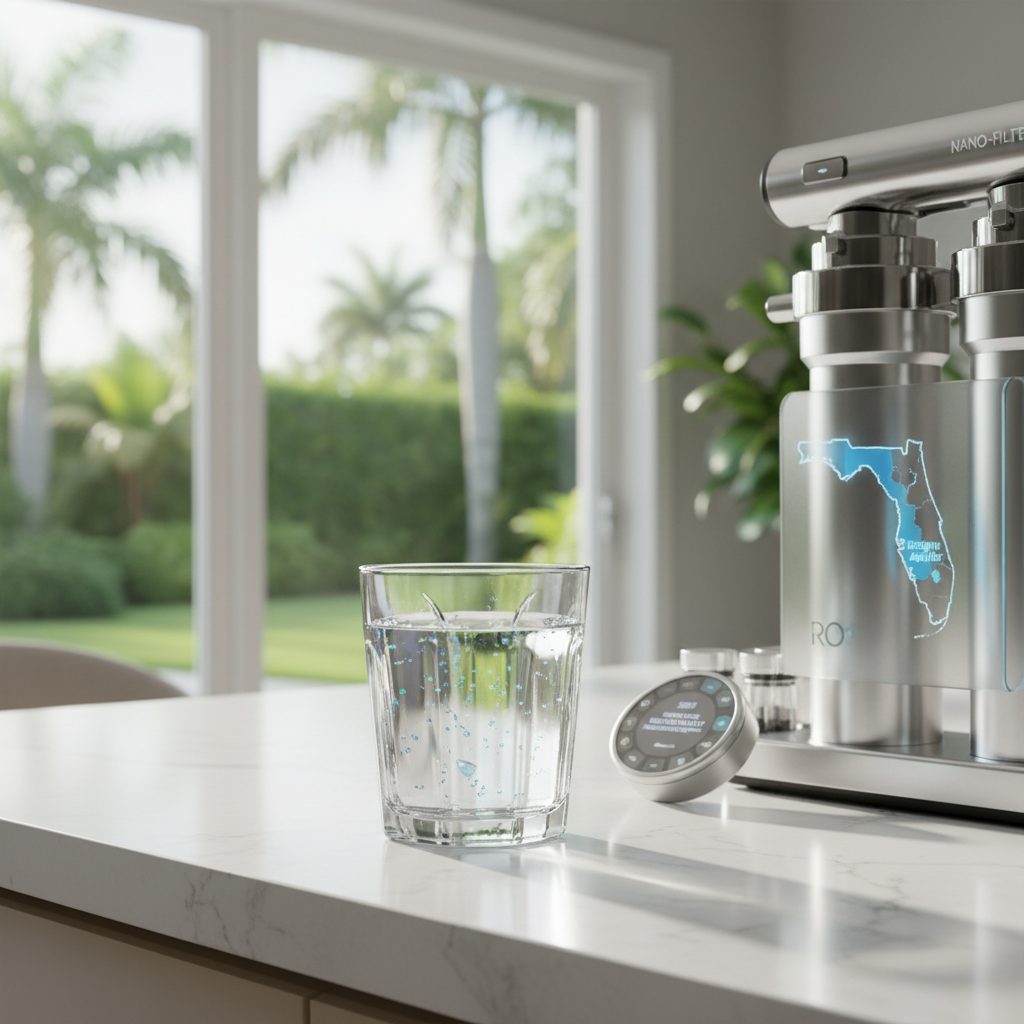
Microplastics in Florida drinking water have become a significant concern for homeowners seeking to maintain a clean and healthy living environment in 2026. As the state continues to navigate the complexities of water management within the unique limestone geography of the Floridan and Biscayne aquifers, the presence of synthetic polymer particles has moved from a marine concern to a domestic priority. Understanding the sources, risks, and filtration solutions is essential for protecting your family from these pervasive microscopic contaminants.
Key takeaways
- Microplastics are widely detected in Florida municipal tap water and private wells due to plastic degradation and runoff.
- Standard municipal treatment often fails to remove sub-micron nanoplastics that can cross biological barriers.
- Florida’s porous karst topography increases the vulnerability of groundwater sources to plastic infiltration.
- Point-of-entry and point-of-use filtration systems are the most effective barriers for home protection.
The current state of Florida water quality
As of June 2025, environmental research confirms that microplastics—defined as plastic fragments smaller than five millimeters—are ubiquitous in the Florida hydrological cycle. Recent studies by organizations such as the Florida Department of Environmental Protection (DEP) suggest that the state's unique geological structure contributes to this issue. The porous nature of Florida limestone allows surface contaminants, including microfibers from synthetic clothing and fragments from single-use plastics, to migrate into deep groundwater reservoirs.
While the Environmental Protection Agency (EPA) has begun the process of evaluating plastic polymers under the Safe Drinking Water Act, federal enforceable limits for microplastics in tap water remain in development as of early 2026. This leaves the responsibility of final-stage purification largely to the homeowner. Data from peer-reviewed studies indicate that the average person could be ingesting approximately five grams of plastic per week, equivalent to the weight of a credit card, through water and food sources.
Vulnerability of the Biscayne and Floridan Aquifers
Florida homeowners in Southeast Florida, particularly in Miami-Dade and Broward counties, rely heavily on the Biscayne Aquifer. Because this aquifer is shallow and highly permeable, it is exceptionally vulnerable to surface pollutants. Urban runoff and the degradation of plastic waste in landfills can lead to the leaching of secondary microplastics into the water table. In Central and Northern Florida, the deeper Floridan Aquifer faces similar threats through sinkholes and recharge zones where surface water directly enters the underground supply without extensive natural filtration.
For residents, this means that even if a utility company meets current secondary water standards, the water entering the home may still contain particles not currently regulated or fully filtered by local municipalities. This is why many homeowners choose to book a water test to identify the specific particulate load in their property pipes.
Health implications of plastic ingestion
The health effects of microplastics in Florida drinking water are an active area of toxicological research. Scientists are primarily concerned with two factors: the physical presence of the particles and the chemical additives they carry. Plastics often contain endocrine-disrupting chemicals (EDCs) like bisphenol A (BPA) and phthalates. According to reports from the World Health Organization (WHO), while the immediate acute toxicity of microplastics appears low, the long-term cumulative effects of chronic exposure remain a concern for longevity and metabolic health.
Furthermore, microplastics can act as vectors for pathogens. In the warm, humid climate of Florida, these particles can become coated in a "plastisphere" of bacteria and biofilms as they move through the distribution system. This makes the removal of these particles a critical step for maintaining a healthy home environment.
Comparing filtration methods for microplastic removal
Not all water filtration systems are equipped to handle the varying sizes of plastic debris. To ensure your home is protected, it is necessary to look at the micron rating of the filtration media. Use the following guide to compare standard residential options.
| Filtration Technology | Microplastic Removal Rate | Target Particle Size | Primary Benefit |
|---|---|---|---|
| Standard Carbon Pitchers | Low to Moderate | > 5.0 Microns | Improves taste and odor |
| Multistage Carbon Block | High | 0.5 - 1.0 Microns | Reduces most microplastics |
| Reverse Osmosis (RO) | Excellent | < 0.001 Microns | Removes nanoplastics and solutes |
| Ultrafiltration (UF) | Very High | 0.01 - 0.1 Microns | Retains minerals while removing debris |
For most Florida homes, a combination of technologies provides the highest level of security. Reverse osmosis is currently recognized by the NSF (National Sanitation Foundation) as one of the most effective ways to eliminate microscopic solids that carbon alone might miss.
Steps to secure your home water supply
Addressing microplastics requires a proactive strategy that begins with an assessment and ends with a verified solution. Homeowners should avoid relying on the "clear" appearance of water, as microplastics are invisible to the naked eye. To get started, you can complete a free Water Health Assessment to understand the risks specific to your Florida zip code and home age.
- Identify your water source and research your local utility’s latest consumer confidence report.
- Schedule a professional laboratory analysis to detect various particulate matter and chemical contaminants.
- Install a point-of-use (POU) system at the kitchen sink for drinking and cooking water.
- Consider a point-of-entry (POE) whole-home system to prevent microplastics from entering the shower and laundry streams, where they can be inhaled in steam or trapped in fabrics.
What to do next
Ensuring your home remains a sanctuary starts with the water you use every day. To address microplastics in Florida drinking water, begin by evaluating your current filtration capabilities. You can book a water test with a specialist to receive a detailed breakdown of your water quality. Once you have your results, use our free Water Health Assessment tool to find a customized filtration plan that aligns with your health goals and the specific needs of your Florida residence.
Frequently asked questions
Are microplastics regulated in Florida tap water?
As of 2026, there are no specific federal or Florida state mandates that require municipal water utilities to test for or remove microplastics to a specific parts-per-million standard. Most utilities focus on pathogens, heavy metals, and legacy chemicals defined by the EPA.
Can boiling water remove microplastics?
No, boiling water does not remove microplastics. In fact, boiling may slightly increase the concentration of microplastics as some of the water evaporates, leaving the non-volatile plastic particles behind. Effective removal requires mechanical filtration or reverse osmosis.
How do microplastics get into Florida groundwater?
Microplastics enter Florida groundwater through various pathways, including treated wastewater effluent used for irrigation, landfill leachate, and atmospheric deposition. Florida's sandy soil and karst limestone provide little resistance to these small particles as they move toward the aquifer.
What is the best type of filter for microplastics?
A reverse osmosis (RO) system is generally considered the best residential solution for microplastics and nanoplastics. The semi-permeable membrane in an RO system has pores small enough to block even the smallest plastic fragments, ensuring high-purity drinking water.