
Microplastics in Florida Drinking Water: Risks and Filtration
Discover the reality of microplastics in Florida drinking water and how to protect your home. Learn about aquifer contamination and the best filtration methods for clean living.
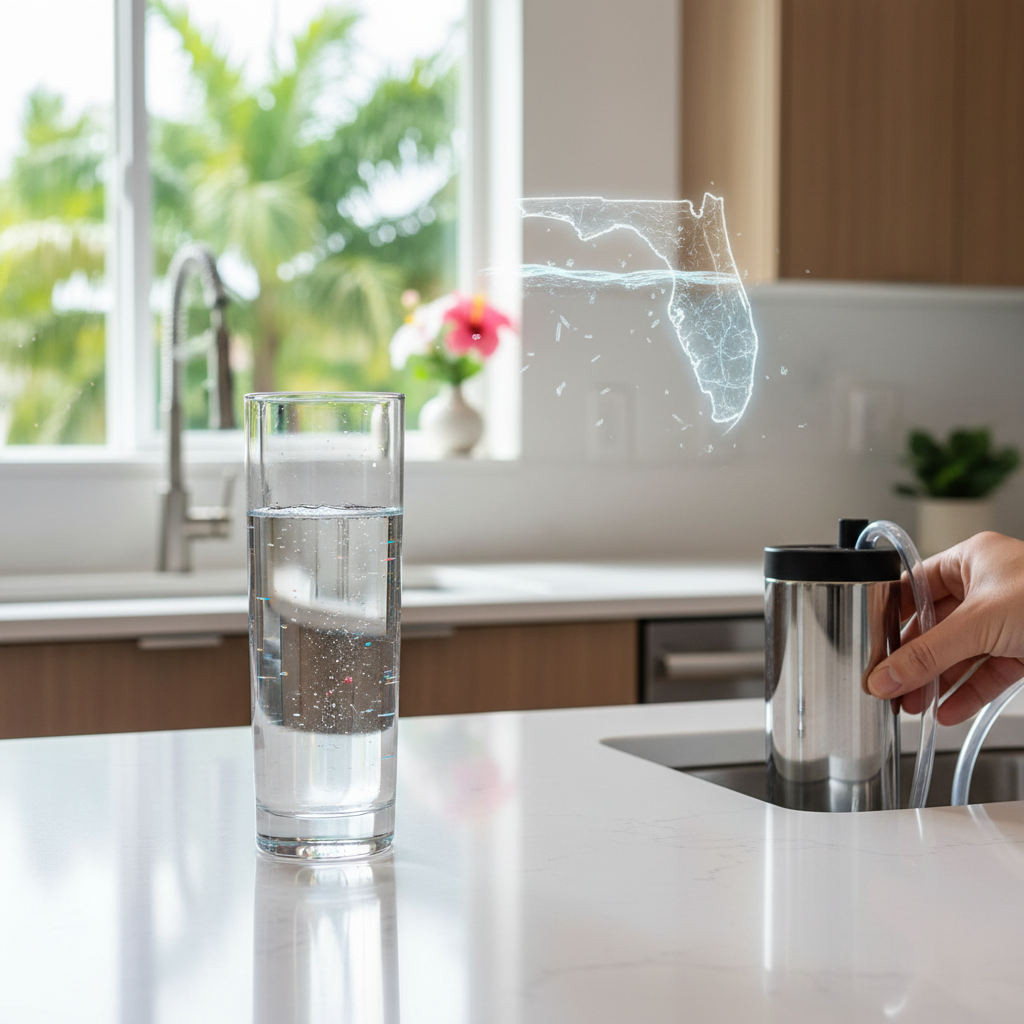
Recent studies regarding microplastics in Florida drinking water have raised significant concerns for homeowners from the Panhandle to the Keys. As plastic waste degrades in our environment, microscopic particles navigate through the state's unique limestone geology, potentially entering the Biscayne and Floridan aquifers. Understanding the prevalence of these contaminants is the first step toward securing a healthy home and ensuring the longevity of your family's wellness in the Sunshine State.
Key takeaways for Florida homeowners
- Microplastics are now ubiquitous in environmental water samples, including those from treated municipal sources and private wells.
- Florida's porous karst topography makes groundwater particularly vulnerable to surface pollutants and plastic runoff.
- Standard municipal treatment is not specifically designed to capture nanoplastics under 2.5 microns.
- High-quality filtration, such as Reverse Osmosis, is the most effective residential defense against plastic ingestion.
The scale of plastic contamination in the Sunshine State
Microplastics are defined as plastic particles smaller than five millimeters, though international research increasingly focuses on nanoplastics, which are invisible to the naked eye. In Florida, the intersection of heavy rainfall, coastal runoff, and a massive tourism industry contributes to a high volume of plastic entering our waterways. According to data from the Florida Department of Environmental Protection (DEP), the state’s water infrastructure faces constant pressure from emerging contaminants that were not a priority when many systems were built decades ago.
While the EPA has recently moved to regulate "forever chemicals" like PFAS, formal federal limits for microplastics in drinking water remain under development as of 2026. This leaves the responsibility of water quality verification largely to the individual homeowner. To understand what is in your specific supply, you should book a water test with a professional who understands Florida's local water chemistry.
How microplastics enter our aquifers
Florida’s primary source of drinking water is groundwater. The Floridan Aquifer, one of the most productive in the world, is covered by layers of sand and limestone. However, in regions with karst features—like sinkholes and disappearing streams—surface water can bypass natural filtration. When plastic waste breaks down into micro-shards, it can hitch a ride with rainwater directly into the underground reservoirs that feed your tap.
Furthermore, coastal saltwater intrusion, a growing issue in South Florida, can alter the chemistry of groundwater, potentially affecting how contaminants like microplastics and associated toxins move through the soil. For a personalized look at how your local geography impacts your water, take the free Water Health Assessment.
The health implications of plastic ingestion
Scientific inquiry into the human health effects of microplastics is accelerating. Recent peer-reviewed studies published in journals like Environmental Science & Technology suggest that these particles can cross biological barriers and may act as vectors for other chemicals, such as endocrine disruptors and heavy metals. Once ingested through drinking water, these particles can trigger inflammatory responses in the digestive system. For those committed to clean living and longevity, reducing the total body burden of plastic is a top priority.
Comparing filtration methods for microplastic removal
Not all water filters are created equal when it comes to capturing microscopic debris. While basic pitcher filters might remove chlorine taste, they often lack the pore size necessary to trap the smallest nanoplastics. Homeowners should look for systems certified by the Water Quality Association (WQA) or NSF International.
| Filtration Type | Microplastic Removal | Best For |
|---|---|---|
| Standard Carbon Pitcher | Low to Moderate | Taste and odor only |
| 0.5 Micron Carbon Block | High | Reducing cysts and larger microplastics |
| Reverse Osmosis (RO) | Superior | Total dissolved solids and nanoplastics |
| Ultrafiltration (UF) | High | Maintaining minerals while removing sediment |
The bottled water misconception
Many Florida residents turn to bottled water in an attempt to avoid tap water contaminants. However, research frequently shows that bottled water can contain significantly higher concentrations of microplastics than tap water. This is often due to the bottling process itself and the degradation of the plastic container under Florida's intense heat. Investing in a home filtration system is generally more cost-effective and healthier than relying on single-use plastics.
What to do next
If you are concerned about the quality of your home's water in Florida, follow these steps to secure your supply:
- Identify your water source: Determine if your home is on a municipal system or a private well.
- Get professional data: Reach out to a specialist to book a water test to establish a baseline of your water's purity.
- Evaluate your needs: Use the free Water Health Assessment to match your lifestyle and home size with the right filtration technology.
- Install point-of-use or whole-home systems: Prioritize Reverse Osmosis for drinking and cooking water to ensure maximum plastic removal.
Frequently asked questions
Are there microplastics in Florida tap water?
Yes, research indicates that microplastics are present in most tap water supplies globally, including Florida. The state's unique geography and high plastic usage contribute to the presence of these particles in both surface water and groundwater sources.
Can boiling water remove microplastics?
Boiling water does not remove microplastics. In fact, it can concentrate them as the water evaporates. Some studies suggest that boiling hard water may cause microplastics to become trapped in calcium carbonate solids, but this is not a reliable method for purification.
What is the best water filter for microplastics?
Reverse Osmosis (RO) systems are widely considered the gold standard for removing microplastics and nanoplastics. These systems use a semipermeable membrane that filters out particles much smaller than the plastics typically found in drinking water.
How do microplastics get into the Florida aquifer?
Microplastics enter the aquifer through stormwater runoff, improper waste disposal, and the breakdown of plastic debris. Florida's porous limestone allow these small particles to leach into the groundwater relatively quickly compared to other geological regions.