
Lead Contamination in Florida Municipal Water: Homeowner Guide
Discover the hidden risks of lead contamination in Florida municipal water. Learn how aging infrastructure impacts your home and how to protect your family's health today.
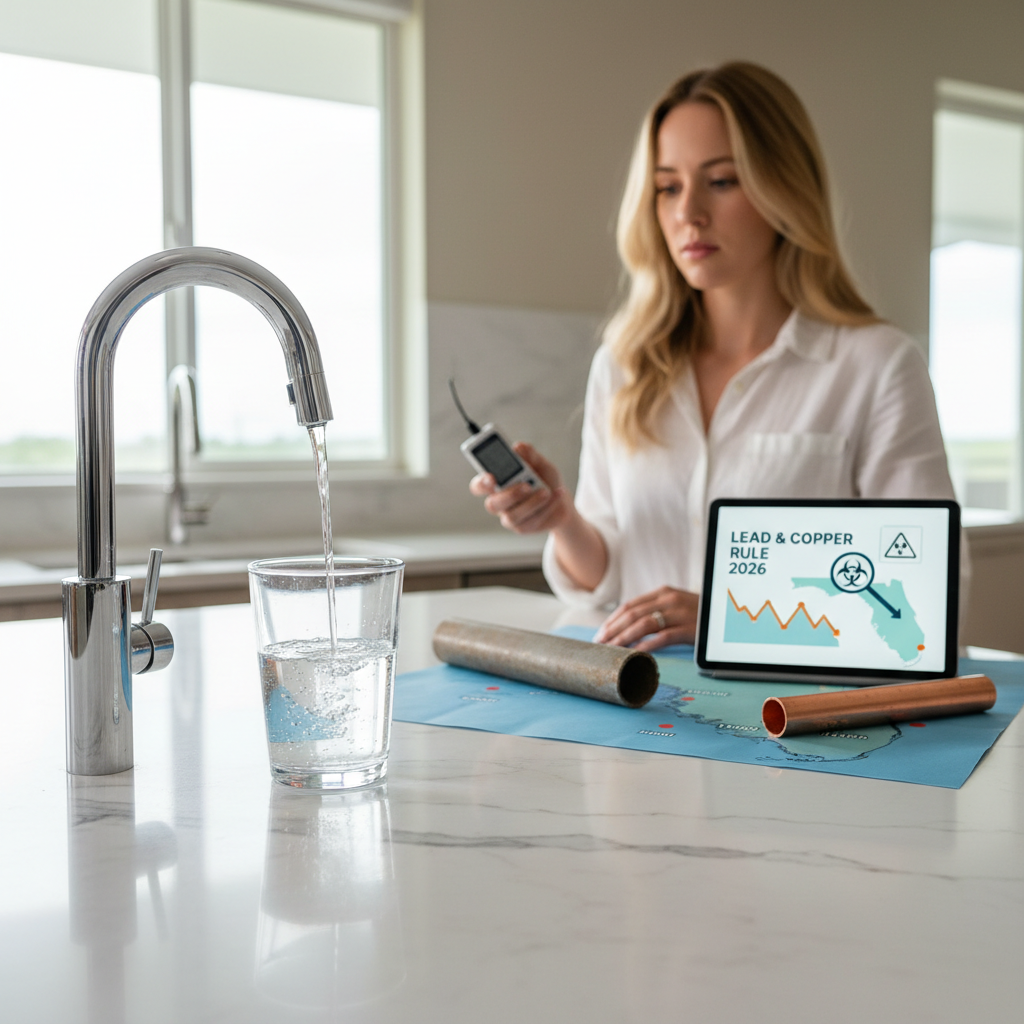
Lead contamination in Florida municipal water remains a critical concern for homeowners in 2026 as aging infrastructure continues to interface with the state's unique hydrogeology. While Florida's primary water sources, such as the Biscayne and Floridan aquifers, are generally free of lead at the source, the heavy metal often enters the supply through corroding service lines and household plumbing. Understanding the path from the utility to your tap is essential for ensuring the long-term health and longevity of your household.
Key takeaways
- Lead typically enters Florida water through aging lead service lines or brass fixtures rather than the source aquifer.
- Florida’s warm climate and specific water chemistry can accelerate the corrosion of older pipes.
- The EPA’s Lead and Copper Rule Improvements (LCRI) have mandated more aggressive identification and replacement of lead lines by utilities.
- Home-based filtration and regular testing are the most reliable methods for guaranteeing lead-free water.
The Source of Lead in Florida Water Systems
Unlike many contaminants that leach into the groundwater from industrial runoff, lead contamination in Florida municipal water is primarily a localized infrastructure issue. Florida’s groundwater is naturally slightly acidic or alkaline depending on the region, which can be corrosive to metal pipes. According to the Environmental Protection Agency (EPA), lead is rarely found in the source water itself but leaches into the flow as water sits in lead-based pipes or contact with older solder and brass fixtures.
In South Florida, the Biscayne Aquifer provides water to millions. While the water is highly managed, the 2026 infrastructure reports indicate that older neighborhoods in cities like Miami, Tampa, and Jacksonville still contend with legacy plumbing. Even if a municipal utility meets federal standards at the treatment plant, the journey through miles of distribution lines can introduce lead before it reaches your glass.
Health Risks and Vulnerable Populations
There is no safe level of lead exposure, a fact emphasized by both the Centers for Disease Control and Prevention (CDC) and the World Health Organization. Lead is a potent neurotoxin that accumulates in the body over time. For adults, chronic low-level exposure is linked to increased blood pressure, decreased kidney function, and reproductive issues. The risk is significantly higher for children, where lead exposure can result in permanent neurological damage, lower IQ scores, and behavioral problems.
The CDC states that even low levels of lead in blood have been shown to affect IQ, ability to pay attention, and academic achievement.
Florida homeowners focused on clean living must recognize that lead is tasteless, odorless, and colorless. You cannot rely on your senses to detect its presence; only scientific validation through a book a water test service can confirm the safety of your home's output.
Current Regulatory Landscape in 2026
As of June 2026, Florida utilities are under increased pressure to comply with the Revised Lead and Copper Rule. This involves creating a comprehensive inventory of service line materials. However, the timeline for total replacement of lead service lines can span decades. Data from the Florida Department of Environmental Protection (DEP) suggests that while newer developments (post-1986) are less likely to have lead plumbing, the "lead-free" definition allowed for up to 8% lead in pipes until 2014, when the standard was tightened to 0.25%.
Comparing Lead Mitigation Options
Homeowners have several paths to mitigate the risk of lead exposure. The following table identifies the common approaches used in premium Florida residences.
| Method | Effectiveness | Maintenance Level |
|---|---|---|
| Point-of-Use Carbon Filters | Moderate (Must be NSF-53 certified) | High (Frequent cartridge changes) |
| Reverse Osmosis (RO) | Very High (Removes 99% of lead) | Moderate (Annual filter service) |
| Full Service Line Replacement | Highest (Removes source) | Very Low (Permanent fix) |
| Flushing the Taps | Low (Temporary reduction only) | High (Must be done daily) |
Steps to Protect Your Florida Home
If you live in a home built before 2014, and especially before 1986, follow this checklist to ensure your water remains pure and safe.
- Identify your service line material by checking the pipe entering your water meter.
- Request the latest Consumer Confidence Report (CCR) from your local Florida utility provider.
- Avoid using hot water from the tap for cooking or drinking, as heat increases lead leaching.
- Install a high-quality filtration system certified to NSF/ANSI Standard 53 for lead reduction.
- Conduct a professional water analysis to establish a baseline for your home’s health.
For those unsure of where to start, taking a free Water Health Assessment is the most efficient way to identify specific risks associated with your zip code and home age.
What to do next
Protecting your family from lead contamination requires a proactive approach. Start by verifying the age of your home’s internal plumbing and the material of the municipal service line connecting to your property. If you have any doubt about the integrity of your water, contact a professional to book a water test. For a broader look at how water quality affects your lifestyle and longevity, explore our related guides on clean living and advanced filtration technologies.
Frequently asked questions
How does lead get into Florida municipal water?
Lead enters the water supply primarily through the corrosion of older lead service lines, brass faucets, and lead-based solder in household plumbing. While Florida utilities treat water to be less corrosive, the aging infrastructure in many cities can still leach lead into the water as it travels to your home.
Can I boil lead out of my water?
No, boiling water does not remove lead. In fact, boiling water can increase the concentration of lead because some of the water evaporates while the lead remains. To remove lead, you must use specific filtration methods like reverse osmosis or NSF-53 certified filters.
How do I know if my Florida home has lead pipes?
Homes built before 1986 are the most likely to have lead pipes or lead solder. You can check the pipe entering your home; lead is a dull gray color and is soft enough to be scratched with a coin, revealing a shiny silver surface underneath.
Is the city responsible for replacing lead lines?
Municipalities are generally responsible for the portion of the service line that runs from the water main to the property line. The homeowner is typically responsible for the portion from the property line into the house. Modern regulations are increasingly encouraging utilities to assist with full replacement to ensure public safety.