
How Hurricane Impact on Florida Water Supply Affects Your Home
Discover how hurricane impact on Florida water supply can contaminate your home's tap water long after the storm passes. Learn to protect your family today.
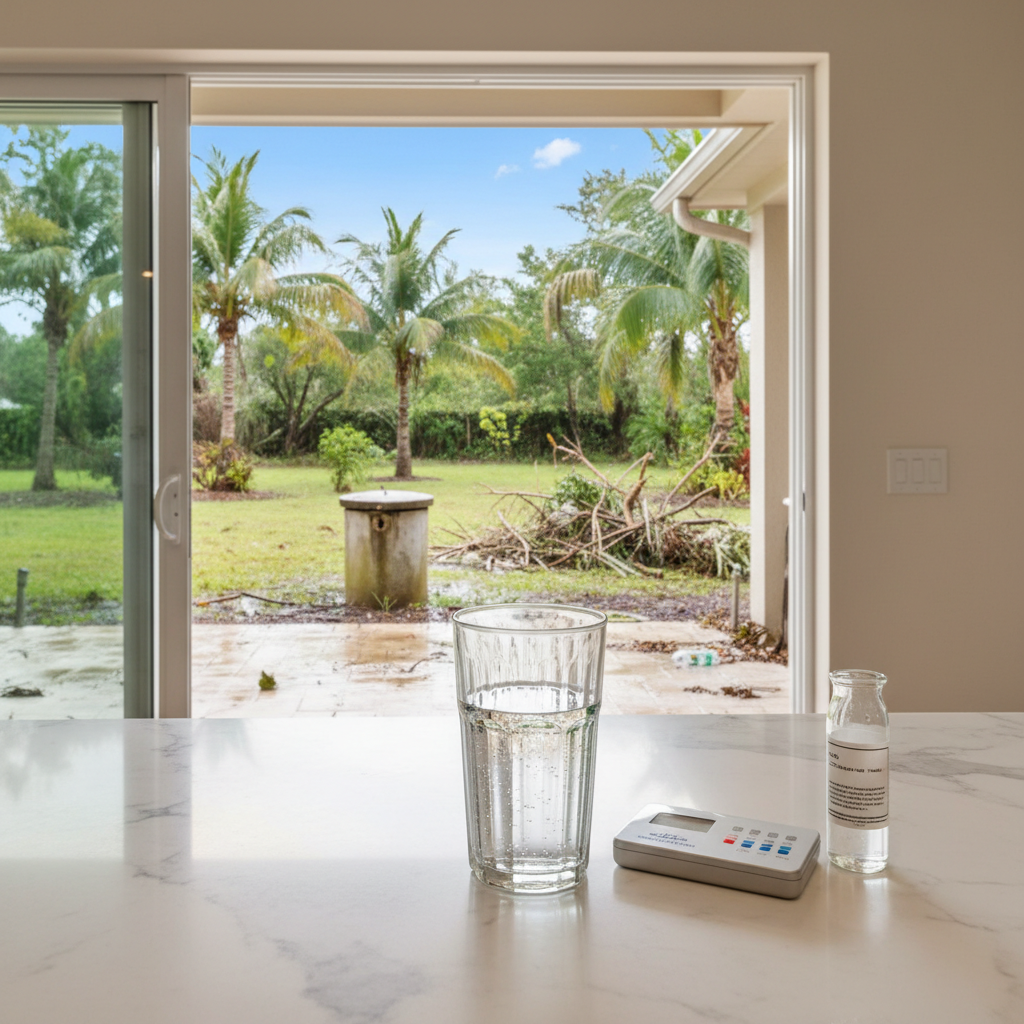
The hurricane impact on Florida water supply is a critical concern for homeowners as the 2026 Atlantic season remains active with a 20% tropical development chance in the northern Gulf of Mexico. Beyond the immediate threat of wind and rain, hurricanes pose a long-term risk to the purity of the water flowing into your home. Understanding how these massive weather systems interact with Florida's unique limestone geology and vulnerable aquifers is the first step toward ensuring your family’s long-term health and safety.
Key takeaways
- Floodwaters often carry industrial chemicals, agricultural runoff, and untreated sewage into local aquifers.
- Saltwater intrusion during storm surges can permanently alter the mineral profile of private wells and municipal lines.
- Even if a boil water notice is lifted, residual contaminants may linger in your home’s internal plumbing.
- Professional water filtration is the only reliable barrier against the microscopic pathogens common after Florida storms.
The vulnerability of Florida's groundwater systems
Florida’s geography makes its water supply uniquely susceptible to storm events. Much of the state sits atop the Floridan Aquifer and the Biscayne Aquifer, which are porous limestone formations. When a hurricane brings heavy rainfall, the pressure of the rising water table can force surface contaminants downward. According to the Florida Department of Environmental Protection (DEP), excessive runoff often includes pesticides, heavy metals, and fecal coliform bacteria that can bypass natural filtration layers during extreme flooding.
In coastal regions, the threat is compounded by saltwater intrusion. As storm surges push ocean water inland, the sea can infiltrate the freshwater lens. This not only makes water taste salty but can also introduce high levels of sodium and chlorides that corrode household pipes, potentially leaching lead or copper into your drinking water. Homeowners are encouraged to book a water test if they notice a change in taste or water pressure following a major coastal storm.
Contamination pathways during and after the storm
The hurricane impact on Florida water supply occurs through three primary vectors: infrastructure failure, wellhead inundation, and chemical runoff. When power outages strike, municipal water treatment plants may lose the ability to maintain pressure. This loss of pressure creates a vacuum, potentially pulling groundwater—and whatever it contains—into the delivery pipes through small leaks.
For the millions of Floridians relying on private wells, the risk is even more direct. If a wellhead is submerged by floodwater, the CDC notes that the well system must be professionally disinfected. Surface water during a hurricane often contains E. coli and Giardia. Even after the water recedes, these pathogens can colonize the well casing. To understand your specific risk profile, you can complete a free Water Health Assessment to evaluate your home's current defenses.
Hurricane Water Safety Checklist for Homeowners
- Seal your wellhead: Ensure your private well has a watertight cap and is graded so water flows away from the pipe.
- Monitor local alerts: Follow Florida Health Department notices for your specific county regarding boil water orders.
- Flush your lines: After a storm, run all cold water taps for at least five minutes to clear sediment and stagnant water.
- Check your filtration: Examine whole-home systems and under-sink filters for clogs caused by increased sediment loads.
- Professional testing: Schedule a laboratory-grade analysis to check for chemical contaminants that a visual inspection cannot detect.
Long-term health implications of storm-affected water
While the immediate goal is preventing acute illness like dysentery, the long-term hurricane impact on Florida water supply involves chronic exposure to low-level toxins. Disturbed soil and industrial flooding can release legacy pollutants like arsenic or PFAS into the groundwater. Unlike bacteria, these do not cause immediate symptoms but can contribute to health issues over years of consumption.
Data from the EPA indicates that extreme weather events are increasingly linked to fluctuations in nitrate levels in agricultural zones like Central Florida. These nitrates are particularly dangerous for infants and the elderly. Ensuring your home has a robust, multi-stage filtration system—such as reverse osmosis—is the most effective way to address these invisible hazards that persist long after the storm clouds have dispersed.
Understanding Boil Water Notices vs. Water Quality
| Factor | Boil Water Notice | Permanent Filtration |
|---|---|---|
| Primary Target | Bacteria and viruses | Pathogens, chemicals, and metals |
| Effectiveness | High for biology; Zero for chemicals | High for all tracked contaminants |
| Duration | Temporary (hours to days) | Continuous protection |
| Lead/Salt Control | No | Yes |
What to do next
Your first priority following a storm should be verifying the integrity of your water source. If you experienced any flooding on your property, do not assume your water is safe simply because it looks clear. Start by completing a free Water Health Assessment to identify potential vulnerabilities in your home. If you suspect your well or municipal line has been compromised, book a water test with a professional who understands the specific geological challenges of the Florida landscape. Taking proactive steps now ensures that when the next storm hits, your family’s hydration and health remain uncompromised.
Frequently asked questions
How long should I wait to test my water after a hurricane?
You should wait until all floodwaters have completely receded from your property and the surrounding area. Testing too early can provide a false sense of security, as contaminants may still be migrating through the soil. Usually, 7 to 10 days after the water has subsided is the ideal window for an accurate assessment.
Can a standard refrigerator filter protect me from hurricane runoff?
No, standard carbon refrigerator filters are designed for taste and odor, not for removing pathogens like bacteria or heavy metals introduced by storm flooding. After a hurricane, these filters can actually become breeding grounds for bacteria if they are not replaced immediately, especially if the home lost power or water pressure.
What are the signs that my water was affected by a storm?
Common indicators include a change in water color (turbidity), a sulfur-like or metallic smell, or a salty taste indicating saltwater intrusion. However, many of the most dangerous contaminants, including various chemicals and certain bacteria, are completely invisible, odorless, and tasteless, making professional testing essential.
Does the city water supply stay safe during a hurricane?
While municipal plants have backup systems, they are not infallible. Power outages can stop the pumps, and broken mains can allow groundwater to enter the system. Always follow local health department bulletins and assume a boil water notice is in effect if you experience a total loss of water pressure until told otherwise.