
How to Improve Indoor Air Quality: 7 Tips for Florida Homes
Learn how to improve indoor air quality with these natural and professional tips. From HVAC maintenance to humidity control, keep your Florida home healthy.
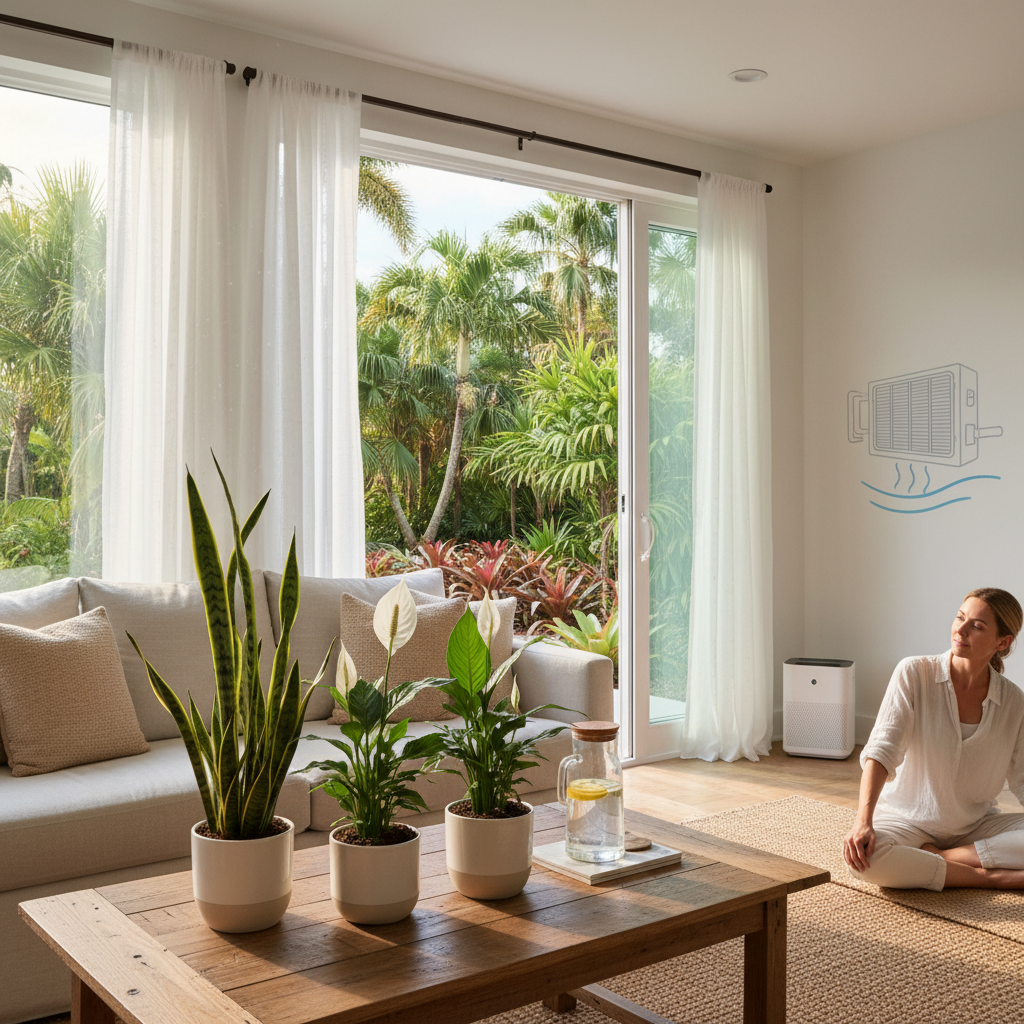
Learning how to improve indoor air quality is essential for Florida homeowners who face unique environmental challenges like high humidity and seasonal allergens. While we often focus on the purity of what we eat and drink, the air we breathe inside our homes can be two to five times more polluted than outdoor air, according to the EPA. This guide provides actionable strategies to reduce pollutants, manage moisture, and create a sanctuary of clean living that supports long-term wellness and longevity.
Key takeaways for a healthier home
- Control Humidity: Maintain indoor humidity levels between 30% and 50% to prevent mold growth and dust mite infestations.
- Prioritize Ventilation: Use exhaust fans during cooking and bathing, and strategically open windows when outdoor air quality is high.
- Maintain HVAC Systems: Clean filters and serviced ducts are the first line of defense against circulating particulates.
- Reduce VOCs: Swap synthetic fragrances and harsh cleaners for natural alternatives to eliminate volatile organic compounds.
The Florida factor: Humidity and indoor air
In Florida, the relationship between climate and air quality is inseparable. The subtropical environment often leads to high indoor moisture levels, which the CDC identifies as a primary trigger for mold and respiratory issues. Because our homes are built to be airtight for energy efficiency, they often trap pollutants like pet dander, pollen, and chemical vapors. To truly optimize your living space, start by addressing any sources of standing water or leaks. Since household health is holistic, residents often find that if their air quality is poor, their water might also need evaluation. You can book a water test to ensure your home's foundation is clean from the pipes up.
Natural methods for air purification
Improving your environment doesn't always require expensive machinery. Certain houseplants, such as snake plants and peace lilies, have been studied for their ability to naturally filter harmful toxins like formaldehyde and benzene while releasing fresh oxygen. Additionally, establishing a "no-shoes" policy at your entryway prevents the tracking of outdoor pollutants, pesticides, and heavy metals onto carpets where they become airborne. Using natural cleaning agents like white vinegar and baking soda instead of aerosol sprays significantly lowers the chemical load in your breathing zone.
The role of HVAC and mechanical filtration
Your heating, ventilation, and air conditioning (HVAC) system is the lungs of your home. To ensure it is helping rather than hindering your air quality, high-efficiency particulate air (HEPA) filters are recommended. These filters can trap 99.97% of dust, pollen, mold, and bacteria. In Florida, the cooling coils in your AC can also be breeding grounds for microbes if not regularly inspected. Regular maintenance prevents the recirculation of biological contaminants throughout your bedrooms and living spaces.
Comparison: High-Impact Air Quality Strategies
| Strategy | Primary Benefit | Difficulty Level |
|---|---|---|
| Source Removal | Eliminates pollutants at the root | Moderate |
| HEPA Filtration | Removes 99.97% of fine particles | Easy |
| Humidity Control | Prevents mold and dust mites | Moderate |
| Air Purifying Plants | Natural toxin removal and beauty | Easy |
Addressing VOCs and household chemicals
Volatile Organic Compounds (VOCs) are gases emitted from certain solids or liquids, including paints, varnishes, and even some furniture. To improve your air quality, look for products labeled as low-VOC. Avoid burning candles or incense, which release fine particulate matter and soot into the air. If you are renovating or painting, ensure maximum ventilation. Similar to how chemical runoff can impact local aquifers like the Biscayne aquifer, indoor chemicals linger in the air long after the scent is gone. For those committed to a toxin-free lifestyle, taking a free Water Health Assessment is an excellent way to see how other parts of your home environment measure up.
Creating a clean air sanctuary
During times of high outdoor pollution or wildfire smoke, creating a "clean room" is a strategy recommended by the EPA. This involves choosing a room with few windows, sealing any gaps with towels, and running a dedicated air purifier. This localized approach ensures that even if the rest of the house is compromised, you have a safe space to sleep and breathe deeply.
What to do next
- Check your HVAC filter today and replace it if it appears gray or dusty.
- Purchase a low-cost hygrometer to monitor your home's humidity levels.
- Schedule a professional inspection of your air ducts and cooling coils.
- Evaluate the safety of your home's primary systems by taking the free Water Health Assessment.
Frequently asked questions
Can houseplants really clean the air?
Yes, certain plants like spider plants and rubber trees can remove small amounts of toxins like formaldehyde and benzene. However, they should be used as a supplement to, not a replacement for, proper ventilation and mechanical filtration.
What is the ideal humidity level for a Florida home?
According to the EPA and Florida building standards, indoor humidity should be kept between 30% and 50%. Levels above 60% significantly increase the risk of mold growth and structural damage.
How often should I change my air filters?
Most experts recommend changing standard 1-inch filters every 30 to 90 days. If you have pets or suffer from allergies, a monthly change is often necessary to maintain optimal air flow and filtration.
Are essential oil diffusers good for air quality?
While they provide a natural scent, diffusers still release organic compounds and particulates into the air. For individuals with asthma or chemical sensitivities, even natural diffusers can cause respiratory irritation.