
Healthy Home Indoor Air Quality Tips for Florida Homeowners
Discover essential healthy home indoor air quality tips to combat Florida humidity, mold, and allergens while improving longevity and household wellness.
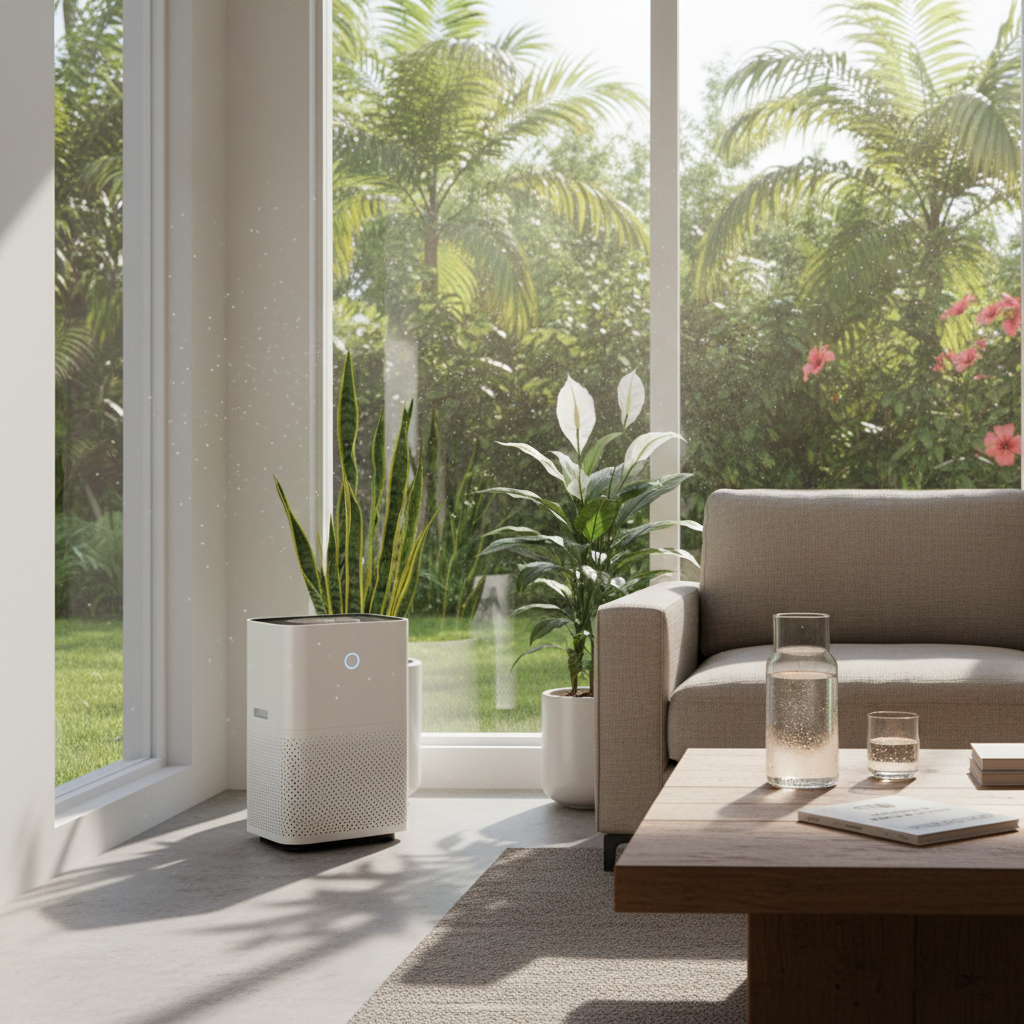
Implementing healthy home indoor air quality tips is essential for Florida residents who spend a significant portion of their lives sheltering from high heat and humidity. While we often focus on outdoor pollutants, the Environmental Protection Agency (EPA) reports that indoor air can be two to five times more polluted than outdoor air. In the Sunshine State, where homes are sealed tightly for air conditioning, trapping allergens, volatile organic compounds (VOCs), and moisture is a common health risk. This guide provides actionable strategies to purify your living space and enhance your long-term wellness.
Key takeaways for better indoor air
- Maintain indoor humidity levels between 30% and 50% to prevent mold growth and dust mite proliferation.
- Upgrade to high-efficiency HVAC filters (MERV 13 or higher) and replace them every 60 to 90 days.
- Introduce air-purifying plants such as snake plants and peace lilies to naturally filter common household toxins.
- Identify the link between your home's water quality and air quality, specifically regarding chemical off-gassing from showers.
The Florida Humidity Factor and Air Quality
In Florida, the primary challenge to maintaining a healthy home is the climate. High outdoor humidity easily migrates indoors through small gaps in the building envelope or through frequent door openings. When indoor humidity exceeds 60%, it creates an ideal breeding ground for mold and mildew. According to the Florida Department of Health, damp indoor environments are linked to respiratory issues and allergic reactions. To combat this, homeowners should use dedicated dehumidifiers in addition to their air conditioning systems. Monitoring these levels with a simple hygrometer is one of the most cost-effective healthy home indoor air quality tips for the coastal South.
Source Control: Eliminating VOCs and Pollutants
The most effective way to improve air quality is to remove the source of pollution. Many common household items, including synthetic fragrances, conventional cleaning supplies, and new furniture, release volatile organic compounds (VOCs). These gases can cause headaches, dizziness, and long-term health complications. Switch to natural cleaning agents like white vinegar, baking soda, and lemon juice. Furthermore, ensure that gas stoves are properly vented to the outdoors. If you are concerned about invisible toxins in your environment, you should also consider how your water affects your air. Chemicals like chlorine in municipal water can vaporize into the air during hot showers; you can learn more by completing a free Water Health Assessment.
Natural Purification with Indoor Greenery
Integrating biology into your home design is a staple of clean living. Certain houseplants are documented by NASA research to absorb pollutants like benzene and formaldehyde through their leaves and roots. For Florida homes, snake plants (Sansevieria) and peace lilies are excellent choices because they thrive in indoor light conditions and act as natural filters. While plants alone cannot replace a high-quality mechanical filter, they contribute to a biophilic environment that reduces stress and improves oxygen levels, supporting a holistic approach to longevity.
HVAC Maintenance and Ventilation Strategies
Your HVAC system is the lungs of your home. In mechanical systems, air is recirculated, meaning any trapped dust, pet dander, or pollen continues to move through your living spaces unless captured by a filter. The American Society of Heating, Refrigerating and Air-Conditioning Engineers (ASHRAE) recommends proper ventilation to dilute indoor contaminants. On days when the Florida weather is mild, opening windows for just ten minutes can flush out stale air. For the rest of the year, ensure your HVAC system is serviced annually. If you notice a musty odor when the AC turns on, it is time to book a water test or a professional HVAC inspection to check for biological growth in the drain pans or coils.
Actionable Air Quality Checklist
- Check your HVAC filter monthly and replace it at least once every quarter.
- Use an exhaust fan every time you cook or shower to vent moisture and gases.
- Leave shoes at the door to prevent tracking in pesticides and heavy metals from the Florida soil.
- Vacuum weekly using a machine equipped with a HEPA (High-Efficiency Particulate Air) filter.
- Dust surfaces with a damp microfiber cloth instead of dry duster to prevent particles from becoming airborne.
Comparing Air Purification Technologies
| Technology | Best For | Considerations |
|---|---|---|
| HEPA Filters | Pollen, dust, dander, and mold spores. | Requires regular filter replacements. |
| Activated Carbon | Odors, smoke, and VOCs. | Does not remove heavy particulate matter. |
| UV-C Lights | Killing bacteria and viruses in HVAC coils. | Must be professionally installed in ductwork. |
What to do next
Improving your home's air quality is a journey of small, consistent changes. Begin by monitoring your indoor humidity and upgrading your air filters today. Because the health of your home is an interconnected system, the quality of your water also dictates the quality of the air you breathe and the longevity of your appliances. To get a comprehensive view of your home's wellness profile, take our free Water Health Assessment or browse our related guides for more clean living strategies tailored to the Florida lifestyle.
Frequently asked questions
How often should I change my air filter in Florida?
In Florida, you should change your HVAC filter every 60 to 90 days. If you have pets or suffer from severe allergies, monthly changes are recommended to prevent the buildup of dust and mold spores in the humid climate.
Do air purifying plants really work?
Yes, certain plants like the spider plant and rubber tree can remove small amounts of toxins like formaldehyde from the air. While they are not a replacement for mechanical filtration, they improve humidity and psychological well-being.
Is indoor air really worse than outdoor air?
According to the EPA, indoor air is often 2 to 5 times more polluted than outdoor air. This is due to the concentration of VOCs from household products and the lack of fresh air exchange in modern, energy-efficient homes.
How does water quality affect indoor air?
Volatile chemicals like chlorine and radon present in water can off-gas into the air during activities like showering, dishwashing, or laundry. This contributes to the total chemical load in your home's air supply.