
Healthy Home Indoor Air Quality Tips for Florida Homeowners
Discover essential healthy home indoor air quality tips to combat Florida humidity, mold, and VOCs. Learn how to optimize your environment for long-term respiratory health.
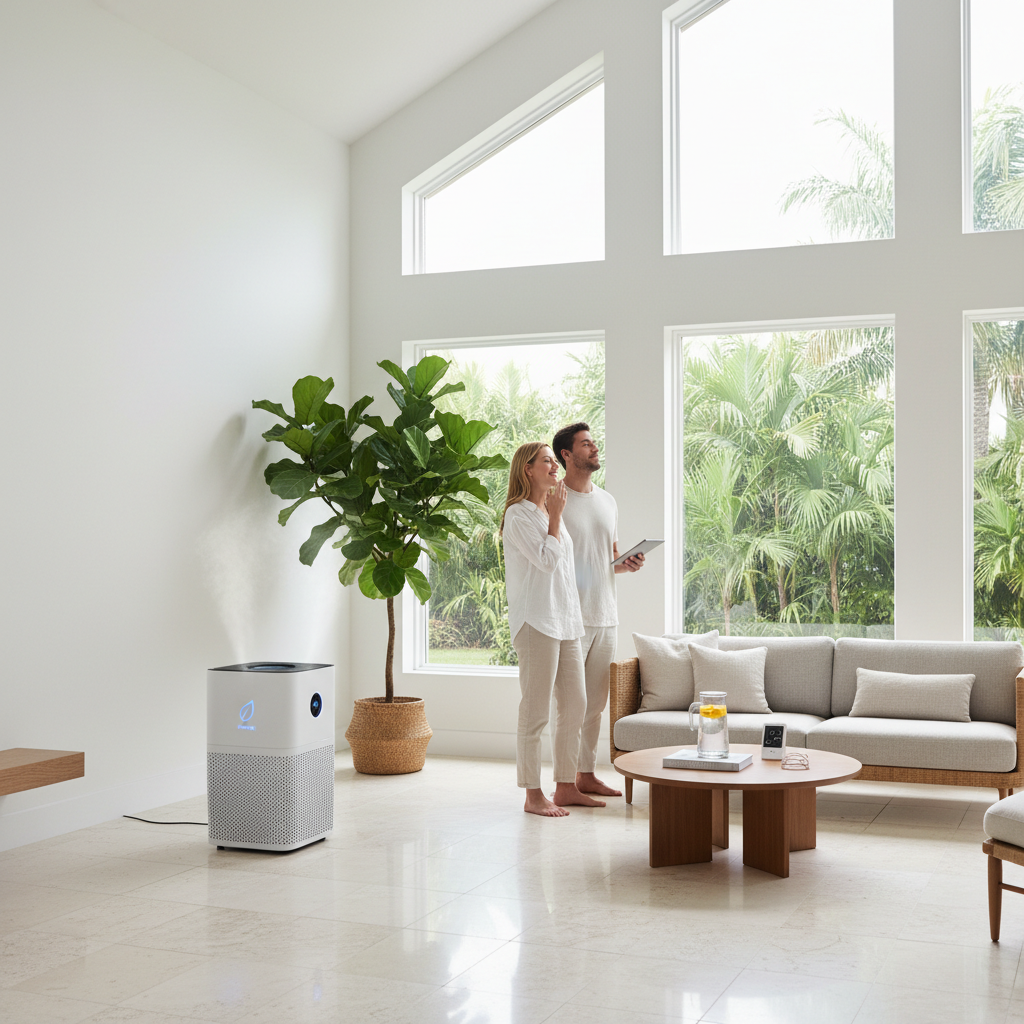
Implementing healthy home indoor air quality tips is essential for Florida residents who spend nearly 90 percent of their time indoors according to EPA data. Given our state’s extreme humidity and the unique geological challenges of the Floridan aquifer, maintaining a clean interior environment requires a dual focus on atmospheric purity and water quality. This guide provides actionable strategies to reduce pollutants, manage allergens, and create a sanctuary that supports your long-term longevity and wellness goals.
Key takeaways
- Identify and eliminate sources of VOCs and mold to improve baseline air purity.
- Balance mechanical ventilation with high-efficiency filtration to manage Florida humidity.
- Understand the critical link between water vapor from tap water and indoor contaminants.
- Prioritize regular maintenance of HVAC systems to prevent biological growth in coastal climates.
The Science of Indoor Air in Florida
Indoor air quality (IAQ) refers to the air quality within and around buildings, specifically as it relates to the health and comfort of building occupants. In Florida, the challenges are intensified by a climate that promotes the growth of biological contaminants. According to the Environmental Protection Agency (EPA), localized pollution levels can be two to five times higher indoors than outdoors. For homeowners in areas like Miami-Dade or Palm Beach County, the interplay between outdoor allergens and indoor moisture creates a complex environment that requires proactive management.
Pollutants generally fall into three categories: biological (mold, pollen, dust mites), chemical (VOCs, radon, lead), and combustion byproducts (carbon monoxide, tobacco smoke). In the Sunshine State, the Biscayne aquifer and other local water sources also play a role; when we shower or run appliances, volatile chemicals in the water can aerosolize, becoming part of the air we breathe. This is why many families choose to book a water test as part of a holistic home health strategy.
Effective Source Control Strategies
The most effective way to improve air quality is to remove the sources of pollution. This starts with a "toxin audit" of your home. Many common household cleaners, scented candles, and synthetic fragrances emit Volatile Organic Compounds (VOCs) that can irritate the respiratory system and impact neurological health. Selecting products with the EPA Safer Choice or Environmental Working Group (EWG) certifications can significantly lower your chemical burden.
In Florida, moisture is the primary pollutant. The Florida Department of Environmental Protection notes that keeping indoor relative humidity between 30 and 50 percent is vital to inhibiting mold growth. If your home has recently experienced localized flooding or heavy storm surge, mold can begin to grow on porous surfaces like drywall and carpet in as little as 24 to 48 hours. Immediate remediation and dehumidification are mandatory to prevent long-term air quality degradation.
Prioritizing Ventilation and Filtration
While source control is paramount, filtration acts as your second line of defense. Standard fiberglass filters are often insufficient for capturing fine particulate matter. Upgrading to a HEPA (High-Efficiency Particulate Air) filter or a filter with a MERV rating of 13 or higher can capture up to 99.97% of particles including dust, pollen, and some bacteria. For those concerned with holistic health, it is important to note that air and water quality are intrinsically linked. You can investigate your home's total health profile by completing a free Water Health Assessment.
Ventilation is the third pillar of IAQ. In the Florida heat, opening windows is often impractical due to humidity. Instead, rely on mechanical ventilation. Ensure that kitchen and bathroom exhaust fans vent to the outside, not into the attic. This removes moisture and combustion gases at the source. If you use a gas stove, always run the vent hood to mitigate carbon monoxide and nitrogen dioxide levels.
Healthy Home Maintenance Checklist
| Action Item | Frequency | Purpose |
|---|---|---|
| Change HVAC Filters | Every 60-90 Days | Reduce particulates and allergens |
| Clean Condensate Drain Lines | Every 6 Months | Prevent mold growth and water damage |
| Test Humidity Levels | Weekly | Ensure levels stay below 50% |
| Deep Clean Area Rugs | Annually | Remove trapped dust and biologicals |
The Link Between Water and Air Quality
Many homeowners overlook the fact that their water supply can affect their air. In Florida, chlorine is commonly used by municipal utilities to disinfect water drawn from surficial aquifers. When you take a hot shower, this chlorine and its byproducts, such as trihalomethanes, are released into the air as steam. Inhaling these vapors can be more detrimental than consuming them in drinking water because they enter the bloodstream directly through the lungs. For a comprehensive look at how your environment affects your well-being, read our related guides on clean living.
Installing a whole-home filtration system can alleviate this issue by removing contaminants before they reach your showerhead or faucets. This creates a cleaner breathing environment throughout the home, particularly in confined spaces like bathrooms and laundry rooms. Integrating air purification with water filtration represents the pinnacle of modern healthy home design.
What to do next
Improving your home's air quality is a journey of incremental changes that lead to significant health dividends. Start by monitoring your indoor humidity and replacing any synthetic fragrances with natural alternatives. Next, evaluate the mechanical systems in your home to ensure filters are high-quality and vents are functioning correctly. Finally, consider how your water quality might be impacting your air. We recommend performing a free Water Health Assessment to see if aerosolized contaminants are a hidden factor in your home. Taking these steps today ensures a cleaner, safer environment for your family tomorrow.
Frequently asked questions
How do I know if my indoor air quality is poor?
Common signs of poor air quality include persistent sneezing, headaches, or fatigue that improves when you leave the house. You may also notice visible mold growth, musty odors, or excessive dust buildup on surfaces. For a more technical assessment, you can use an indoor air quality monitor to track VOCs and PM2.5 levels.
Do indoor plants actually clean the air?
While NASA studies originally suggested plants could remove VOCs, modern peer-reviewed research indicates that you would need an impractical number of plants to significantly impact air quality in a standard home. However, plants can improve humidity levels and psychological well-being; they should be used as a supplement to, not a replacement for, proper filtration and ventilation.
What is the ideal humidity level for a Florida home?
The ideal indoor relative humidity is between 30 and 50 percent. Levels higher than 50 percent promote the growth of mold, mildew, and dust mites, which are major triggers for asthma and allergies. In Florida, using a dedicated dehumidifier alongside your air conditioning system is often necessary to maintain these levels during the summer months.