
10 Healthy Home Indoor Air Quality Tips for Florida Homeowners
Discover essential healthy home indoor air quality tips to combat Florida humidity, mold, and allergens. Learn how to purify your air and protect your family today.
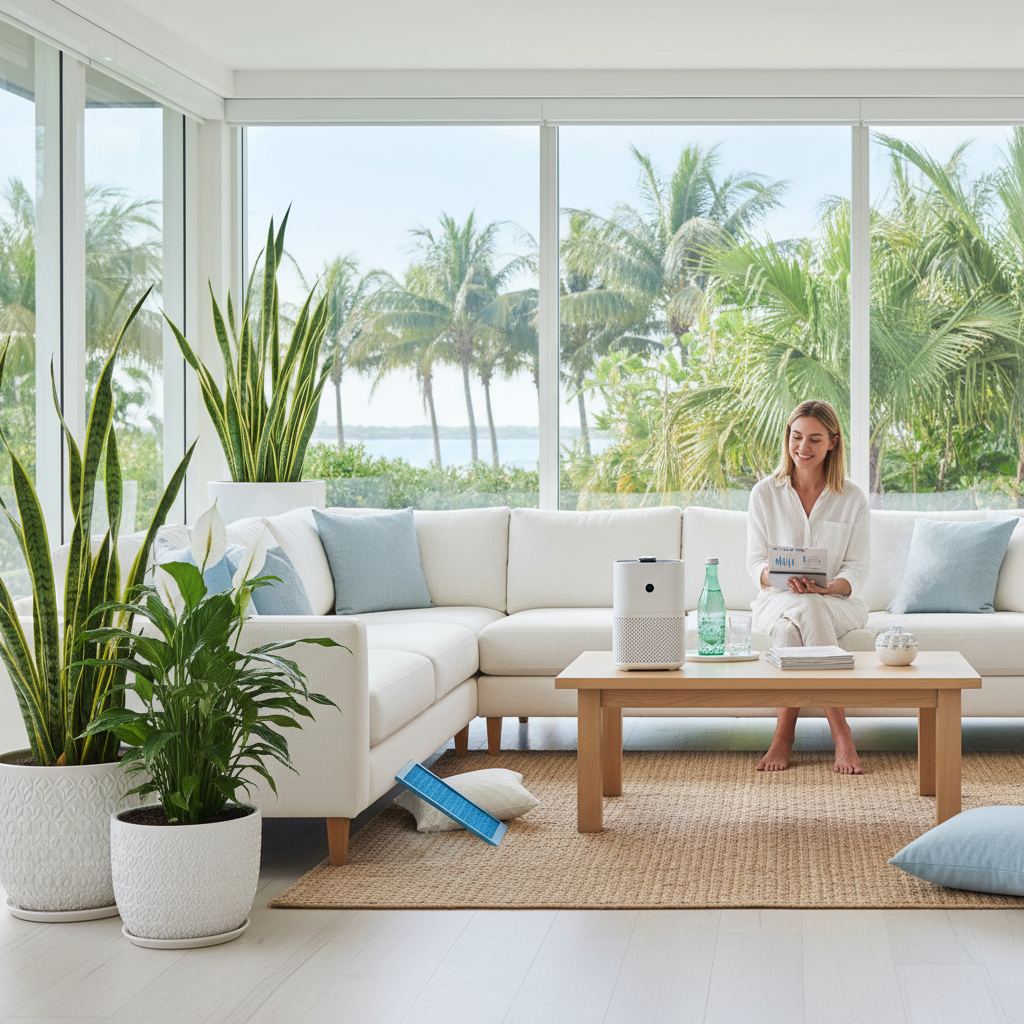
Implementing practical healthy home indoor air quality tips is essential for Florida residents who spend upwards of 90% of their time indoors where pollutant levels can be two to five times higher than outdoor air. In our subtropical climate, the combination of high humidity, tightly sealed air-conditioned spaces, and volatile organic compounds (VOCs) creates a unique challenge for respiratory health and longevity. By managing moisture, upgrading filtration, and choosing non-toxic materials, you can transform your home from a source of irritation into a true sanctuary for wellness.
Key takeaways for a healthier home
- Maintain indoor humidity between 30% and 50% to prevent mold growth and dust mite proliferation.
- Utilize high-efficiency MERV 13 filters in your HVAC system and change them every 60-90 days.
- Integrate air-purifying plants like Snake Plants and Peace Lilies to naturally sequester toxins.
- Minimize the use of synthetic fragrances, aerosols, and harsh chemical cleaners.
Optimize Ventilation and Humidity Control
In Florida, the Biscayne aquifer and surrounding coastal regions contribute to a naturally humid environment that can easily infiltrate the home. According to the EPA, keeping indoor humidity below 50% is the single most important factor in preventing mold and mildew. While it may be tempting to open windows for a cross-breeze, doing so during high-humidity days can introduce moisture that gets trapped in carpets and drywall. Instead, rely on your air conditioning system’s "auto" setting rather than the "on" fan setting to ensure the cooling coils have a chance to dehumidify the air before it circulates.
For high-moisture areas like kitchens and bathrooms, always use exhaust fans that vent directly to the outside. This prevents steam from migrating to other parts of the house where it can fuel fungal growth. If you are concerned about the intersection of moisture and household contaminants, you may want to book a water test to ensure your whole-home environment is optimized for safety.
The Role of HVAC and Advanced Filtration
Your HVAC system is the lungs of your home. Standard fiberglass filters are designed to protect the machinery, not your health. Upgrading to a MERV 13 or higher filter can capture microscopic particles, including bacteria, tobacco smoke, and fine allergens. During periods of outdoor smoke or high pollen counts, the CDC recommends setting your HVAC to "recirculate" to prevent pulling in unfiltered outdoor air.
Beyond standard filters, many Florida homeowners are opting for UV-C light installations within the air handler. These lights effectively neutralize biological contaminants like mold spores and viruses on the cooling coils before they enter the ductwork. Regularly cleaning your ducts and ensuring they are sealed prevents the "stack effect" from pulling dusty, unconditioned air from your attic or crawlspace into your living areas.
Reducing Chemical Loads and VOCs
Indoor air quality is heavily influenced by the products we bring inside. Volatile Organic Compounds (VOCs) are gases emitted from paints, new furniture, and cleaning agents. To maintain a clean living environment, prioritize "Low-VOC" or "Zero-VOC" labels when remodeling. Avoid synthetic air fresheners and candles which can release phthalates and soot into the air. Instead, use natural alternatives like essential oil diffusers or soy-based candles with cotton wicks.
Comparison: Traditional vs. Healthy Home Practices
| Feature | Standard Home | Healthy Home |
|---|---|---|
| Filtration | MERV 1-4 (Dust only) | MERV 13 or HEPA |
| Cleaning | Bleach/Ammonia products | Vinegar, Baking Soda, Citric Acid |
| Humidity | Unmonitored (>60%) | Dehumidified (30-50%) |
| Greenery | Artificial plants | Live air-purifying species |
Natural Air Purification with Indoor Plants
While mechanical filtration is vital, biological filtration offers a secondary layer of protection. Research conducted by NASA and reinforced by various environmental studies suggests that certain houseplants can remove trace amounts of benzene, formaldehyde, and trichloroethylene. Best choices for Florida interiors include:
- Snake Plant (Sansevieria): Excellent for bedrooms as it releases oxygen at night.
- Peace Lily: Known for breaking down toxic gases like carbon monoxide.
- Spider Plant: Resilient and effective at battling formaldehyde from new carpets or furniture.
Keep in mind that while plants help, they are not a replacement for proper ventilation. Ensure your plant pots do not have standing water, which can inadvertently increase local humidity and attract pests.
The Connection Between Air and Water Quality
Clean living is a holistic endeavor. Just as particulates in the air can irritate the lungs, contaminants in your water can affect your skin and gastrointestinal health. In Florida, where groundwater issues like saltwater intrusion and agricultural runoff are prevalent, the quality of your tap water is just as critical as the air you breathe. Taking a free Water Health Assessment is the best way to understand how your home's total environment influences your longevity. Airborne moisture often originates from the water coming through your taps and showers; if that water contains chlorine or volatile chemicals, those gases can be released into your air every time you shower.
What to do next
- Buy a digital hygrometer to monitor your home's humidity levels daily.
- Replace your current HVAC filter with a MERV 13 rated filter.
- Remove shoes at the door to prevent tracking in pesticides and heavy metals.
- Schedule a professional inspection of your ductwork and air handler.
- Complete your free Water Health Assessment to ensure your home's water is as clean as its air.
Frequently asked questions
What is the ideal humidity level for a Florida home?
The ideal humidity level is between 30% and 50%. This range is high enough to prevent respiratory discomfort but low enough to inhibit the growth of mold and the survival of dust mites, which thrive in Florida's naturally damp climate.
Do air purifiers really work for allergies?
Yes, HEPA-certified air purifiers can capture 99.97% of particles as small as 0.3 microns, including pollen, pet dander, and mold spores. They are highly effective at reducing allergy symptoms when used in the rooms where you spend the most time, such as bedrooms.
How often should I change my AC filter?
In Florida, you should change your filter every 60 to 90 days. If you have pets or suffer from severe allergies, checking and potentially replacing the filter every 30 days is recommended to maintain optimal airflow and air purity.
Can I improve air quality without buying expensive equipment?
Absolutely. Simple habits like taking shoes off at the door, using natural cleaning products like vinegar, and ensuring you use the exhaust fan while cooking or showering can significantly reduce the pollutant load in your home naturally.