
Healthy Home Indoor Air Quality Tips for Florida Homeowners
Discover essential indoor air quality tips to protect your Florida home from mold, VOCs, and allergens while improving your long-term health and wellness.
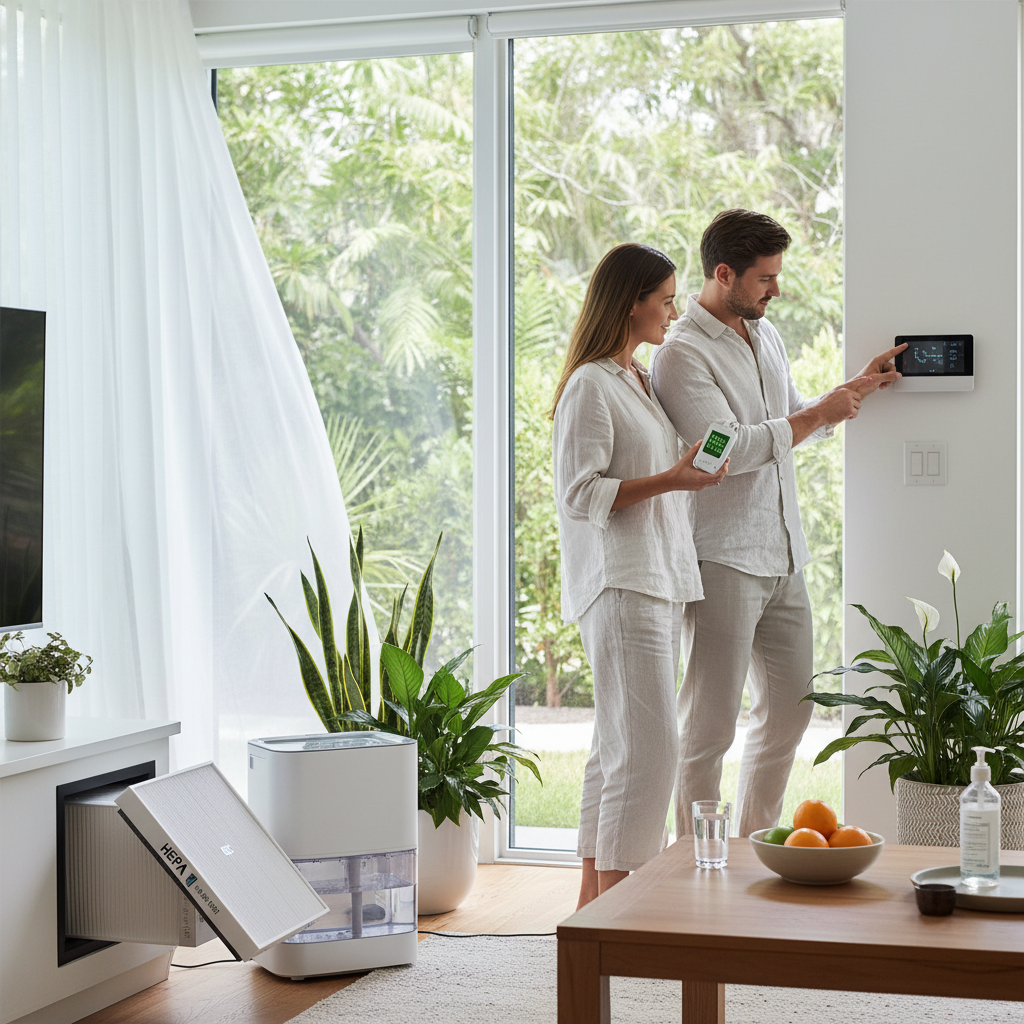
Improving your indoor air quality tips is essential for Florida homeowners, as the EPA reports that Americans spend approximately 90% of their time indoors where pollutant levels can be significantly higher than outdoor levels. In the Sunshine State, our unique climate—characterized by high humidity and heavy reliance on air conditioning—creates specific challenges for maintaining a clean breathing environment. By mastering source control, ventilation, and advanced filtration, you can safeguard your household against the invisible triggers that impact respiratory health and longevity.
Key takeaways
- Inhibit mold growth by maintaining indoor relative humidity below 50% to address Florida's humid climate.
- Prioritize source control by eliminating tobacco smoke and switching to non-toxic, VOC-free cleaning products.
- Enhance HVAC efficiency with high-quality MERV 13 or HEPA filters changed every 60 to 90 days.
- Integrate professional testing for both air and water to ensure a comprehensive approach to home wellness.
The Florida Challenge: Humidity and Mold
Florida homeowners face a constant battle with moisture. The Florida Department of Environmental Protection emphasizes that mold can begin growing on organic surfaces like drywall and wood within 24 to 48 hours of moisture exposure. Because our homes are often sealed tightly to keep the heat out, trapped moisture can lead to poor indoor air quality. Utilizing dehumidifiers and ensuring your HVAC system is properly sized are the first steps in moisture management. If you have recently experienced a leak or flood, the book a water test service can help identify if plumbing issues are contributing to structural dampness.
Mastering Source Control
The most effective way to improve air quality is to remove the source of pollution. According to the EPA, source control is usually more cost-effective than increasing ventilation because it prevents pollutants from entering the air in the first place. You should avoid smoking or vaping indoors and choose furnishings that do not off-gas formaldehyde. Additionally, look for products with the EPA Safer Choice or EWG-certified labels to minimize the introduction of volatile organic compounds (VOCs) through cleaning agents and detergents. A healthy home requires a holistic view of everything you bring inside, from the air you breathe to the water you drink.
Mechanical Ventilation and Filtration Strategies
While opening windows can provide a fresh breeze, Florida's high outdoor humidity often makes this impractical. Instead, rely on your HVAC system as a high-performance air scrubber. The CDC and EPA recommend using air filters with a Minimum Efficiency Reporting Value (MERV) of 13 or higher to capture fine particles, including bacteria and smoke. For those with severe allergies, a HEPA filter is the gold standard, capable of removing 99.97% of dust and pollen. Keeping your air ducts clean is also vital, as it prevents the circulation of accumulated debris and enhances overall system efficiency.
Creating a Clean Living Checklist
To maintain a high standard of indoor air quality, follow this maintenance schedule to keep your home environment optimized for health and comfort.
- Change Filters Regularly: Replace HVAC filters every 2 months, or more frequently if you have pets.
- Monitor Humidity: Use a hygrometer to ensure your home stays between 30% and 50% humidity.
- Ventilate Cooking: Always use exhaust fans that vent outdoors when cooking on a gas or electric stove.
- Dust and Vacuum: Use a vacuum with a HEPA filter to trap allergens instead of blowing them back into the room.
- Test your inputs: Ensure both your air and your water are free from contaminants by completing a free Water Health Assessment.
Comparing Air Quality Solutions
| Solution | Primary Benefit | Frequency |
|---|---|---|
| HVAC Filter (MERV 13) | Traps dust, pollen, and viruses | Every 60-90 days |
| Dehumidifier | Prevents mold and dust mites | Continuous in FL |
| Activated Carbon Filter | Removes odors and VOCs | Every 6 months |
| Professional Audit | Identifies hidden pollutants | Annually |
What to do next
Achieving a healthy home requires a multi-pronged approach. Start by addressing the easiest indoor air quality tips: change your air filter today and check your home for any standing moisture. Once your air is managed, it is time to look at the other foundational element of your health: your water quality. Environmental toxins can enter your body through inhalation and ingestion alike. Take the next step in your clean living journey by visiting our free Water Health Assessment to see how your home's water compares to national safety standards.
Frequently asked questions
How can I naturally improve the air quality in my house?
The best natural method is source control, which involves removing items that off-gas chemicals, such as synthetic fragrances and harsh cleaners. You can also utilize indoor plants like spider plants or snake plants, though their air-purifying impact is modest compared to mechanical filtration. Ensuring your kitchen and bathroom fans vent to the outside is another natural way to reduce pollutant buildup.
What are the symptoms of poor indoor air quality?
Common symptoms include frequent headaches, irritation of the eyes, nose, and throat, dizziness, and fatigue. For those with existing respiratory conditions, poor air quality can trigger asthma attacks or allergic reactions. If symptoms improve when you leave the house and return when you are home, you likely have an indoor air quality issue.
Does a high-quality air filter help with mold?
Yes, a MERV 13 or HEPA filter can capture mold spores that are circulating in the air, preventing them from being inhaled or settling elsewhere. However, filters do not treat the source of the mold. You must still control the humidity levels in your home to prevent spores from growing into active colonies on your walls or in your HVAC ducts.
How does water quality affect indoor air?
Contaminants in your water, such as chlorine or volatile organic compounds, can be released into the air during hot showers or through the use of humidifiers. This process, known as off-gassing, means that poor water quality can directly contribute to poor indoor air quality. Testing your water is an essential part of an integrated home health plan.