
Healthy Home Indoor Air Quality Tips: A Guide for Clean Living
Learn essential indoor air quality tips to reduce toxins, manage Florida humidity, and create a healthy home environment for long-term wellness and clean living.
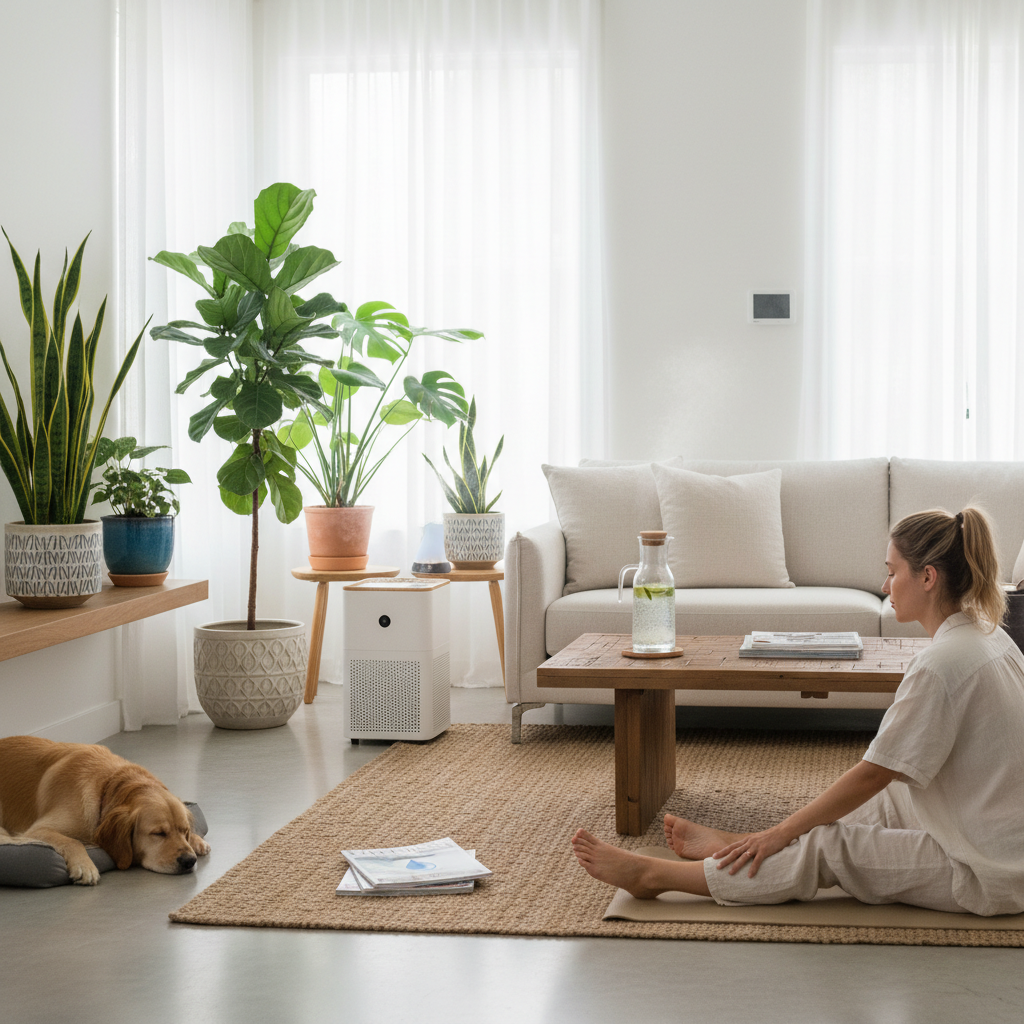
Establishing healthy home indoor air quality tips is essential for Florida homeowners who spend a significant portion of their lives indoors to escape the subtropical heat. While many focus on outdoor pollution, the Environmental Protection Agency (EPA) notes that indoor levels of pollutants may be two to five times higher than outdoor levels. Reducing airborne irritants, managing humidity, and understanding the link between your air and water systems are critical steps toward achieving a baseline of true clean living and longevity.
Key takeaways
- Maintain indoor humidity between 30% and 50% to inhibit mold growth and dust mites.
- Ventilate your home frequently and use HEPA-certified filtration to capture fine particulates.
- Reduce volatile organic compounds (VOCs) by choosing natural cleaning products and furnishings.
- Integrate air quality management with water health by booking a water test to identify cross-contamination risks.
The Science of Indoor Air in Florida Homes
Florida presents unique challenges for indoor air quality due to high ambient humidity and the prevalence of closed-circuit HVAC systems. When outdoor air is humid, indoor environments become breeding grounds for biological pollutants. Common contaminants include mold spores, pollen, pet dander, and volatile organic compounds (VOCs) emitted from household paints and furniture. In the Florida climate, the Biscayne Aquifer and surrounding water sources also play a role; high humidity often means increased moisture in structural areas, which can exacerbate the spread of these pollutants.
Controlling Humidity to Prevent Mold
According to the Centers for Disease Control and Prevention (CDC), keeping indoor humidity levels below 50% is the most effective way to prevent mold colonization. In coastal Florida regions, air conditioning units often struggle to dehumidify effectively if they are oversized or poorly maintained. Using a hygrometer to monitor moisture levels is one of the most practical healthy home indoor air quality tips. If levels consistently exceed 50%, consider a whole-home dehumidification system that works in tandem with your HVAC to ensure the air remains dry and crisp.
The Importance of Advanced Filtration
Standard HVAC filters are often designed only to protect the machinery from large dust clumps, not to protect human lungs from microscopic particles. Upgrading to a MERV 13 filter or a HEPA (High-Efficiency Particulate Air) system can significantly reduce the presence of allergens. HEPA filters are capable of trapping 99.97% of particles that are 0.3 microns in diameter. These filters are particularly effective for homeowners with pets, as they capture dander and fur that would otherwise circulate through ductwork. You can supplement this by using a portable air purifier in high-traffic areas like bedrooms and home offices.
Reducing Volatile Organic Compounds (VOCs)
VOCs are gases emitted from certain solids or liquids, including many building materials and household products. Sources include paints, wood preservatives, aerosol sprays, and even some air fresheners. Long-term exposure to these chemicals is linked to respiratory irritation and other chronic health issues. To mitigate these risks, opt for products labeled as "Zero-VOC" or "Low-VOC." For a comprehensive approach to home wellness, you should also evaluate chemical exposure in your water through a free Water Health Assessment, as some VOCs can actually enter the air during hot showers through a process called off-gassing.
Maintenance Checklist for a Healthy Home
Consistency is key to maintaining high air quality. Use the following checklist to keep your home environment clean and safe:
- Change HVAC filters every 30 to 90 days depending on pet ownership and local pollen counts.
- Vacuum carpets and rugs twice a week using a vacuum equipped with a HEPA filter.
- Clean bedding and drapes in hot water weekly to eliminate dust mites.
- Groom and bathe pets regularly to reduce the accumulation of dander in the air.
- Inspect windows and doors for seal leaks that allow humid Florida air to infiltrate.
Air and Water Quality Comparison
| Pollutant Category | Air Impact | Water Impact | Primary Solution |
|---|---|---|---|
| Biological | Mold, Bacteria, Pollen | Bacteria, Algae, Viruses | Dehumidification / UV Sterilization |
| Chemical | VOCs, Formaldehyde | Chlorine, PFAS, Lead | Carbon Filtration / RO Systems |
| Particulate | Dust, Dander, Smoke | Sediment, Microplastics | HEPA Filters / Whole Home Filters |
What to do next
Improving your indoor air quality is a foundational step in a clean living journey, but it is only half of the equation. Airborne toxins often share the same sources as waterborne contaminants, particularly in Florida’s porous geological landscape. To ensure your entire home environment supports your longevity goals, start by booking a professional water test. Combining air purification strategies with high-quality water filtration creates a holistic barrier against environmental stressors. Visit our related guides to learn more about detoxifying your living space.
Frequently asked questions
What is the most effective way to improve air quality immediately?
The fastest way to improve air quality is to increase ventilation by opening windows when outdoor humidity is low and switching to a high-efficiency HEPA air purifier. These actions immediately reduce the concentration of stagnant pollutants and CO2 levels in the home.
How does high humidity affect indoor air quality?
High humidity, typically above 50%, promotes the growth of mold, mildew, and dust mites. It also slows down the evaporation of moisture from surfaces, which can lead to structural damage and increased respiratory irritation for residents.
Can indoor plants actually clean the air?
While plants can remove small amounts of certain toxins, they are not a substitute for mechanical filtration or proper ventilation. Large numbers of moisture-loving plants can occasionally increase indoor humidity if not monitored carefully.
How often should I change my air filters in Florida?
In Florida, where air conditioners run frequently throughout the year, it is recommended to check filters monthly and replace them at least every 60 days to ensure optimal airflow and contaminant capture.