
Hard Water in Florida: Managing Scale and Water Quality Issues
Discover how hard water impacts Florida homes and learn effective ways to eliminate scale buildup. Protect your appliances and health with our expert guide.
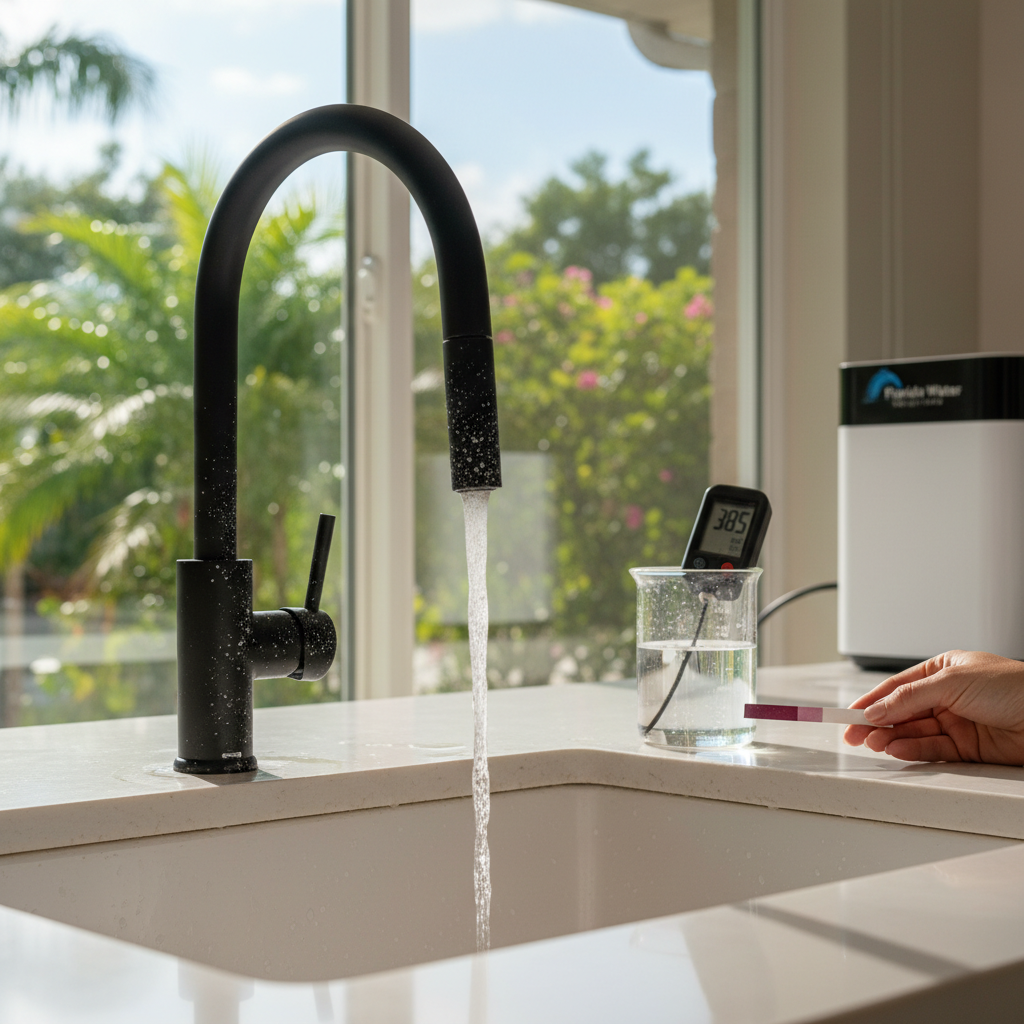
Hard water Florida homeowners experience is a result of the state’s unique geological makeup, where groundwater travels through vast limestone deposits before reaching the tap. This process saturates the water with high concentrations of calcium and magnesium, leading to stubborn scale buildup on fixtures and inside expensive appliances. Understanding whether your domestic supply is affected by these minerals is the first step toward preserving your home’s infrastructure and your family’s dermatological health. While hard water is generally safe to drink, its cumulative effect on plumbing systems can lead to thousands of dollars in premature repairs.
Key takeaways for Florida homeowners
- Florida is geographically predisposed to hard water because of the Floridan and Biscayne aquifers, which are primarily composed of limestone and dolostone.
- Mineral scale significantly reduces the energy efficiency and lifespan of water heaters, dishwashers, and laundry machines.
- The U.S. Geological Survey classifies much of Florida’s water as "very hard," often exceeding 180 milligrams per liter of calcium carbonate.
- Effective mitigation requires a customized approach based on your specific county’s water report and a professional assessment.
The geological origins of hard water in Florida
To understand hard water Florida issues, one must look beneath the surface. Most of the state’s municipal and well water comes from the Floridan Aquifer System. This massive underground reservoir is housed within porous carbonate rocks. As rainwater seeps through the soil, it picks up carbon dioxide, becoming slightly acidic. This acidity dissolves the limestone (calcium carbonate) and dolomite (magnesium carbonate), carrying these minerals into the water supply. According to the Florida Department of Environmental Protection (DEP), these minerals are the primary contributors to the "hardness" that residents feel when washing their hands or notice as white crust on showerheads.
Regional variations are common. Coastal areas may deal with higher total dissolved solids (TDS) due to saltwater intrusion, while inland central Florida often sees the highest concentrations of calcium. In tropical climates like ours, these minerals precipitate faster when heated, which is why water heaters in Florida often fail years earlier than the national average.
How scale buildup damages your home
Scale, or limescale, is the solid mineral deposit that remains after hard water evaporates or is heated. In your plumbing, this acts like cholesterol in an artery. Over time, the diameter of your pipes narrows, reducing water pressure and increasing the strain on your entire system. This is particularly problematic for tankless water heaters, which feature narrow heat exchangers that can clog entirely within just a few years of untreated hard water exposure.
The impact extends to your daily chores. Hard water interferes with the chemical reaction of soaps and detergents. Instead of a rich lather, the minerals bind with soap molecules to create "soap scum." This sticky residue clings to bathtub walls, tiles, and even your skin and hair. For those with sensitive skin or conditions like eczema, the abrasive nature of these minerals can exacerbate irritation. To see how your home measures up, you can book a water test to get an accurate reading of your mineral grains per gallon.
Evaluating your water quality
Knowing the hardness level of your water is essential for choosing the right treatment. Hardness is typically measured in grains per gallon (gpg) or milligrams per liter (mg/L). The Water Quality Association (WQA) and the U.S. Geological Survey (USGS) use the following scale to categorize water hardness:
| Classification | mg/L or ppm | Grains per Gallon (gpg) |
|---|---|---|
| Soft | 0 - 17.1 | 0 - 1.0 |
| Slightly Hard | 17.1 - 60 | 1.0 - 3.5 |
| Moderately Hard | 60 - 120 | 3.5 - 7.0 |
| Hard | 120 - 180 | 7.0 - 10.5 |
| Very Hard | 180 & Over | 10.5 & Over |
In many parts of Florida, it is not uncommon to see readings well above 15 gpg. If you are noticing spots on your glassware or a film on your skin after showering, your home likely falls into the "very hard" category. You can start the process of identifying your specific water profile by taking a free Water Health Assessment.
Solutions for hard water and scale
Managing hard water Florida challenges requires more than just a generic filter. There are several technologies designed to handle Florida’s high mineral demand:
- Ion Exchange Water Softeners: These replace calcium and magnesium ions with sodium or potassium ions. This is the most effective way to achieve "zero soft" water and completely eliminate scale.
- Template Assisted Crystallization (TAC): These are salt-free conditioners. They do not remove the minerals but change their structure so they cannot stick to surfaces. These are ideal for those on sodium-restricted diets.
- Reverse Osmosis: While typically used for drinking water at a single point of use, whole-home reverse osmosis can remove minerals along with nearly all other contaminants, though it requires significant maintenance.
Hard water and Florida's infrastructure
Local utility companies often provide water that meets EPA Primary Drinking Water Standards, but these standards focus on pathogens and toxic chemicals, not "secondary" issues like hardness. As seen in recent public service announcements from southern water utilities, local infrastructure often struggles with aging pipes and mineral sedimentation. Furthermore, climate events such as those predicted for late June 2026 can lead to shifts in water table levels, temporarily increasing the concentration of dissolved minerals or introducing sediment into the municipal lines. Florida homeowners must take personal responsibility for the "final foot" of water treatment—from the meter to the tap.
What to do next
Do not wait for your water heater to leak or your shower pressure to drop before addressing hard water. Follow these steps to protect your home:
- Inspect your faucet aerators and showerheads for white, crusty buildup.
- Check your dishwasher and washing machine manuals for hardness limits; many warranties are voided if scale isn't managed.
- Obtain a copy of your local annual Water Quality Report (Consumer Confidence Report).
- Apply for a free Water Health Assessment to receive a personalized analysis of your home's water needs.
- If you suspect high mineral levels, book a water test with a professional who understands Florida's unique aquifer chemistry.
Frequently asked questions
Is Florida water hard or soft?
The vast majority of Florida has hard to very hard water. This is due to the limestone aquifers that provide the state's groundwater, which naturally infuse the water with calcium and magnesium.
Can hard water cause hair loss or skin irritation?
While hard water doesn't directly cause hair loss, the mineral buildup can make hair brittle and prone to breakage. It also leaves a film on the skin that can clog pores and exacerbate conditions like eczema or chronic dryness.
Do I need a water softener if I have city water?
Yes, most municipal treatments in Florida do not include softening. While the city ensures the water is safe to drink according to EPA guidelines, it often remains hard enough to damage home appliances and plumbing.
How do I remove scale from my faucets?
For a temporary fix, soaking fixtures in white vinegar can dissolve calcium deposits. However, for a permanent solution, a whole-home softening or conditioning system is required to stop scale before it enters the home.