
Florida Well Water Testing: Stay Safe from PFAS and PFAS Salts
Is your Florida well water safe? Learn how new state bans on PFAS and rising saltwater intrusion impact your home's water quality and how to test for emerging contaminants.
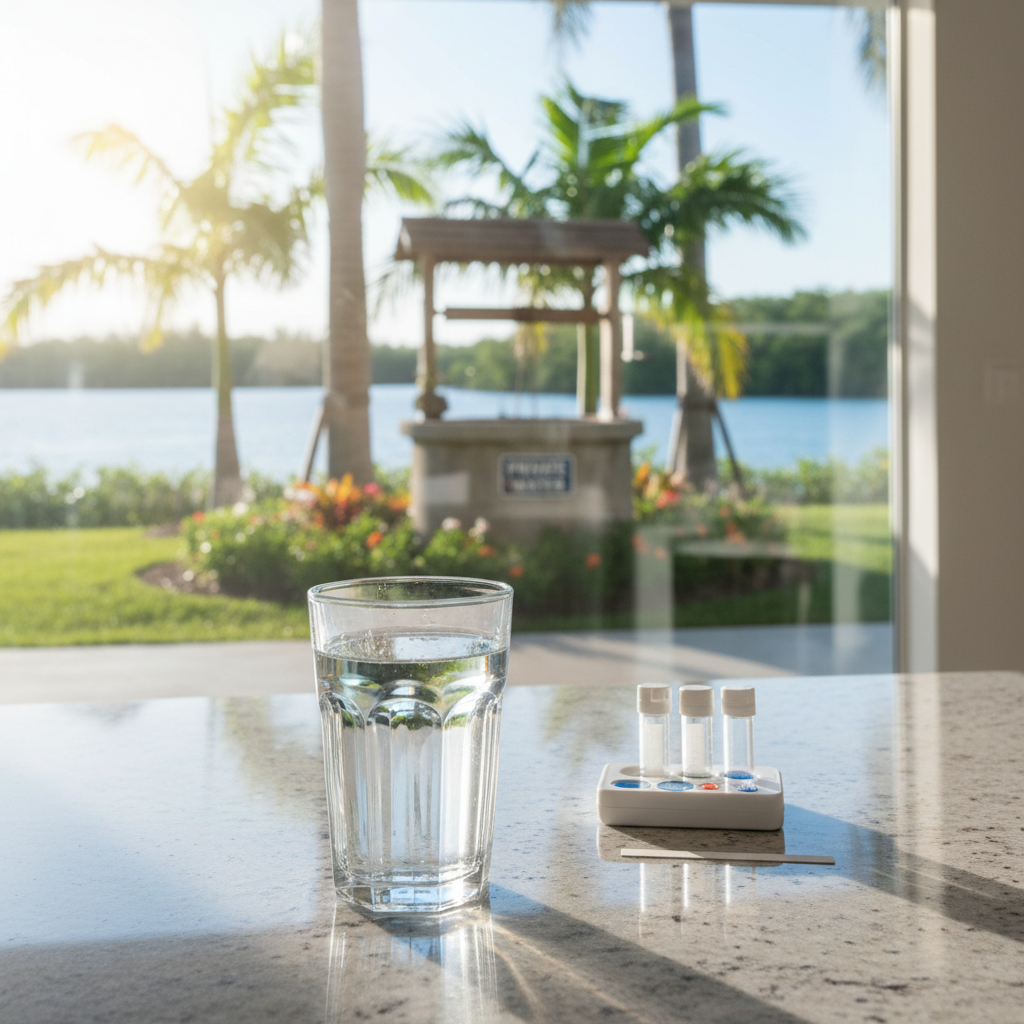
Florida well water testing is a critical responsibility for more than 12% of the state's population who rely on private wells for their daily drinking water. Unlike municipal systems, private wells in Florida are not regulated under the Federal Safe Drinking Water Act, leaving homeowners responsible for monitoring their own safety. As of June 2026, new legislative developments regarding PFAS chemicals and intensifying environmental pressures like saltwater intrusion have made routine testing more vital than ever for maintaining a healthy coastal lifestyle.
Key takeaways for Florida well owners
- Private wells require testing at least once a year for bacteria and nitrates.
- New Florida legislation has phased out PFAS-heavy firefighting foams to protect aquifers.
- Saltwater intrusion in coastal counties can permanently damage well productivity and water taste.
- A professional water analysis is the only way to detect odorless contaminants like lead or arsenic.
The impact of new Florida PFAS legislation
Florida recently enacted a significant ban on certain cancer-linked firefighting foams, according to recent reports from the Florida Department of Environmental Protection (DEP). These foams have historically been a major source of per- and polyfluoroalkyl substances (PFAS) in the state’s groundwater. These "forever chemicals" are known to persist in the human body and have been linked by the CDC to various health issues, including thyroid disease and increased cholesterol levels. For homeowners, this means that while the source of new contamination is being restricted, existing plumes in the soil may still affect local wells.
During your next Florida well water testing cycle, ensuring the lab screens for specific PFAS compounds is essential, especially if your property is located near an airport, military base, or industrial site. You can start by taking a free Water Health Assessment to determine your specific risk profile based on your zip code.
Understanding saltwater intrusion in the Biscayne Aquifer
In South Florida, specifically within the Biscayne and Floridan aquifers, saltwater intrusion is an escalating threat. According to data from the U.S. Geological Survey (USGS), rising sea levels and increased groundwater pumping are pushing saltwater further inland. This process increases the chloride levels in private wells, leading to a metallic taste and the corrosion of household plumbing. If you notice a sudden change in the taste of your water or spotting on your fixtures, you should book a water test immediately to check for salinity and total dissolved solids (TDS).
Common contaminants in Florida groundwater
Florida's unique geology, characterized by porous limestone, allows surface contaminants to reach the groundwater quickly. Homeowners should be aware of several primary concerns:
- Nitrates: Often resulting from fertilizer runoff or septic tank leakage, high nitrate levels can be dangerous for infants.
- Coliform Bacteria: Presence of these bacteria indicates that your well may be susceptible to fecal contamination.
- Lead and Copper: Often leached from older plumbing, these metals are not detectable by sight or smell.
- Radon: A naturally occurring radioactive gas found in some Florida bedrock that can dissolve into groundwater.
Annual testing checklist for homeowners
Maintaining a private well requires a proactive schedule. Use the following checklist to ensure your water remains safe according to Florida Department of Health recommendations:
- Perform a basic physical inspection of the well head for cracks or loose caps every six months.
- Conduct a microbiology test annually to check for Total Coliform and E. coli.
- Test for nitrates and nitrites once every year, especially in agricultural areas.
- Every three years, test for "secondary" contaminants like iron, manganese, and chloride.
- Update your filtration system based on the results of your most recent professional lab report.
Comparing DIY kits vs. professional laboratory testing
| Feature | DIY Home Test Kit | Certified Laboratory Test |
|---|---|---|
| Accuracy | Low to Medium (subject to user error) | High (ISO/NELAP Certified) |
| PFAS Detection | Rarely included and often inaccurate | Precise parts-per-trillion analysis | Instant | 5 to 10 Business Days |
| Cost | $20 - $50 | $150 - $400 |
While DIY kits provide a quick snapshot, they lack the sensitivity required to detect low levels of toxins that impact long-term health. For a comprehensive view of what is in your water, professional Florida well water testing is the gold standard.
What to do next
Protecting your home's water quality is a continuous process that begins with accurate data. Follow these steps to secure your water supply:
First, inspect your well area for any standing water or nearby chemical storage. Second, complete a free Water Health Assessment to see if your area is impacted by recent PFAS findings or drought-related quality shifts. Finally, if you haven't tested your water in the last 12 months, book a water test with a certified specialist to ensure your filtration system is actually removing the contaminants specific to your local aquifer.
Frequently asked questions
How often should I test my well water in Florida?
The Florida Department of Health recommends testing private wells at least once per year for bacteria and nitrates. However, if you notice changes in color, taste, or odor, or if there is a local flooding event, you should test immediately.
Can I test for PFAS in my well water at home?
No, PFAS testing requires sophisticated equipment capable of detecting parts-per-trillion. You must use a laboratory that utilizes EPA Method 533 or 537.1 to get accurate results for these specific chemicals.
What are the signs of saltwater intrusion in a well?
The most common signs are a salty or brackish taste, increased soap scum, and rapid corrosion of faucets or water heaters. If these occur, a chloride and TDS test is necessary to confirm the extent of the intrusion.
Does Florida law require me to test my private well?
There is no state law requiring private homeowners to test their wells; the responsibility lies entirely with the owner. Monitoring your own water is the only way to ensure it meets health standards similar to city-provided water.