
Florida Well Water Testing Guide: Safety Tips for Homeowners
Learn how to ensure your Florida well water is safe from bacteria and nitrates. This guide covers testing schedules, local contaminants, and how to protect your family's health.
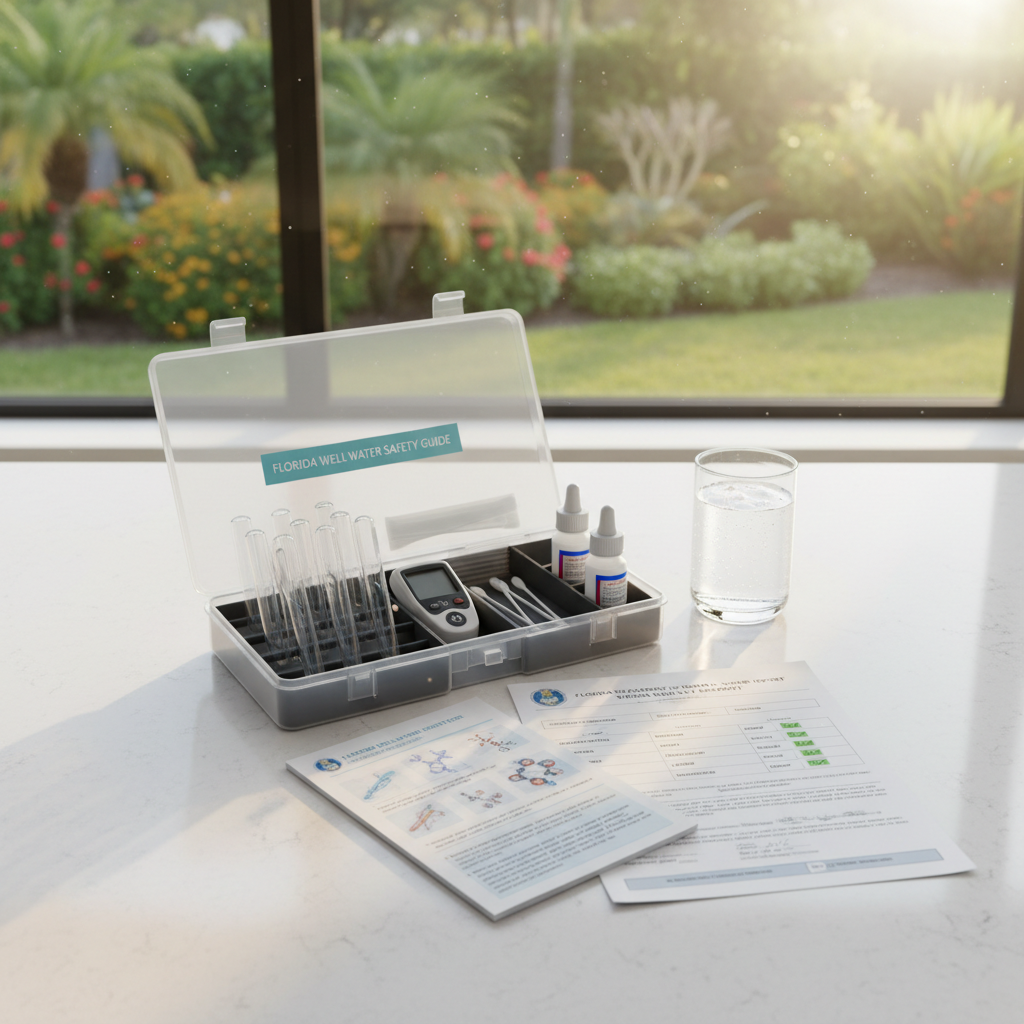
Florida well water testing is the only way for the estimated 2.5 million residents using private wells to ensure their drinking supply remains free from invisible contaminants. Unlike municipal systems, private wells are not regulated under the Safe Drinking Water Act, leaving the responsibility of safety entirely to the homeowner. As we approach peak summer transitions in July 2026, understanding the seasonal risks to your water supply—from heavy rainfall to increased agricultural runoff—is critical for maintaining a healthy home environment.
Key takeaways for Florida well owners
- Test your well at least once per year for bacteria and nitrates.
- Perform additional testing after major weather events, such as hurricanes or localized flooding.
- Be aware of local risks like saltwater intrusion in coastal counties and agricultural runoff in Central Florida.
- Regular maintenance of the well head and casing is the first line of defense against surface contamination.
The importance of regular Florida well water testing
Private wells draw water from underground aquifers, such as the Floridan or Biscayne aquifers. While these are vast natural resources, they are susceptible to contamination from surface activities. The Florida Department of Health (DOH) recommends that homeowners conduct Florida well water testing at a minimum of once per year. This frequency should increase if there is a change in the taste, odor, or appearance of the water, or if a nearby property experiences a chemical spill.
According to the Florida DEP, the state's unique limestone geology allows water to move quickly from the surface to the aquifer. This high permeability means that pollutants can reach your drinking water faster than in states with denser clay soils. If you haven't checked your levels recently, you should book a water test to establish a baseline for your home's safety.
Common contaminants in Florida private wells
While many assume that deep wells are naturally filtered, several specific contaminants frequently appear in Florida groundwater. The most common issues identified by the CDC and local health departments include coliform bacteria and nitrates. Bacteria often enter the system through cracked well caps or faulty seals, while nitrates are typically the result of fertilizers, animal waste, or failing septic systems.
Biological threats: Bacteria and viruses
Total coliform bacteria are used as an indicator. While not all are harmful, their presence suggests that disease-causing organisms could enter the system. Fecal coliform or E. coli are more serious and indicate direct contamination from human or animal waste. Any positive result for these organisms requires immediate shock chlorination and a follow-up free Water Health Assessment to identify the breach point.
Chemical concerns: Nitrates and Lead
Nitrates are especially dangerous for infants, as high levels can interfere with the blood's ability to carry oxygen. The EPA limit for nitrates in drinking water is 10 milligrams per liter (mg/L). In agricultural regions of Florida, levels can often fluctuate during the rainy season. Lead, while rare in the source water itself, often enters the supply through aging brass fittings or lead solder in the home's internal plumbing.
Well maintenance and safety checklist
Proactive maintenance is significantly more cost-effective than remediating a contaminated aquifer. Use the following checklist to ensure your well remains a secure source of clean water.
| Task | Frequency | Reason |
|---|---|---|
| Visual inspection of well cap | Quarterly | Check for cracks, loose bolts, or evidence of tampering. |
| Bacterial and Nitrate testing | Annually | Standard health safety requirement for private wells. |
| Check for pooling water | After heavy rain | Ensure surface water drains away from the well head. |
| Professional mechanical check | Every 5-10 years | Inspect the pump, pressure tank, and internal casing. |
Protecting your well during Florida peak seasons
In July 2026, Florida experiences both high temperatures and the height of the rainy season. This combination increases the risk of bacterial blooms and runoff. Public safety is a priority during these months; for example, local records divisions and the Public Safety Building lobby often observe holiday closures around July 3rd, making it important to schedule your professional water services in advance. High-traffic periods on Florida waterways also correlate with increased environmental stressors, reminding us that our local water cycle is interconnected.
If you live in a coastal area, be mindful of saltwater intrusion. As sea levels rise and over-pumping occurs, saltwater can migrate into the freshwater aquifer, leading to increased salinity and corrosive potential. This can damage appliances and lead to the leaching of metals from your pipes. Homeowners can read more about mitigation strategies in our related guides.
What to do next
Ensuring your family's safety requires a combination of vigilance and professional verification. Start by inspecting the area around your well for any debris or chemical storage. If your well is more than 20 years old, or if you have never seen a formal laboratory report for your water, taking action now is essential.
- Locate your well head and ensure the ground slopes away from it.
- Remove any pesticides, fertilizers, or paints stored within 100 feet of the well.
- Complete a free Water Health Assessment to understand your specific local risks.
- Schedule a certified professional to book a water test for bacteria, nitrates, and lead.
Frequently asked questions
How often should I test my Florida well water?
You should test for coliform bacteria and nitrates at least once every year. Additionally, you should test whenever there is a significant change in the water's color or taste, or if you replace any part of the well system.
What are the signs that my well might be contaminated?
Common red flags include a rotten-egg smell (sulfur), cloudy water (turbidity), or green staining on sinks. However, many contaminants like lead and bacteria have no smell or taste, which is why laboratory testing is vital.
Is the government responsible for testing my private well?
No, the government does not routinely test or regulate private wells. In Florida, the homeowner is responsible for all costs associated with testing, maintenance, and treatment of their own well water supply.
Can heavy rain affect my well water quality?
Yes, heavy rainfall can wash contaminants from the surface into the groundwater. If your well head is submerged at any point during a storm, the water should be considered unsafe until it is professionally tested.