
Florida Well Water Testing Guide: Safety and Requirements 2026
Ensure your Florida well water is safe from bacteria and contaminants. Learn how to test, treat, and protect your home’s private water supply today.
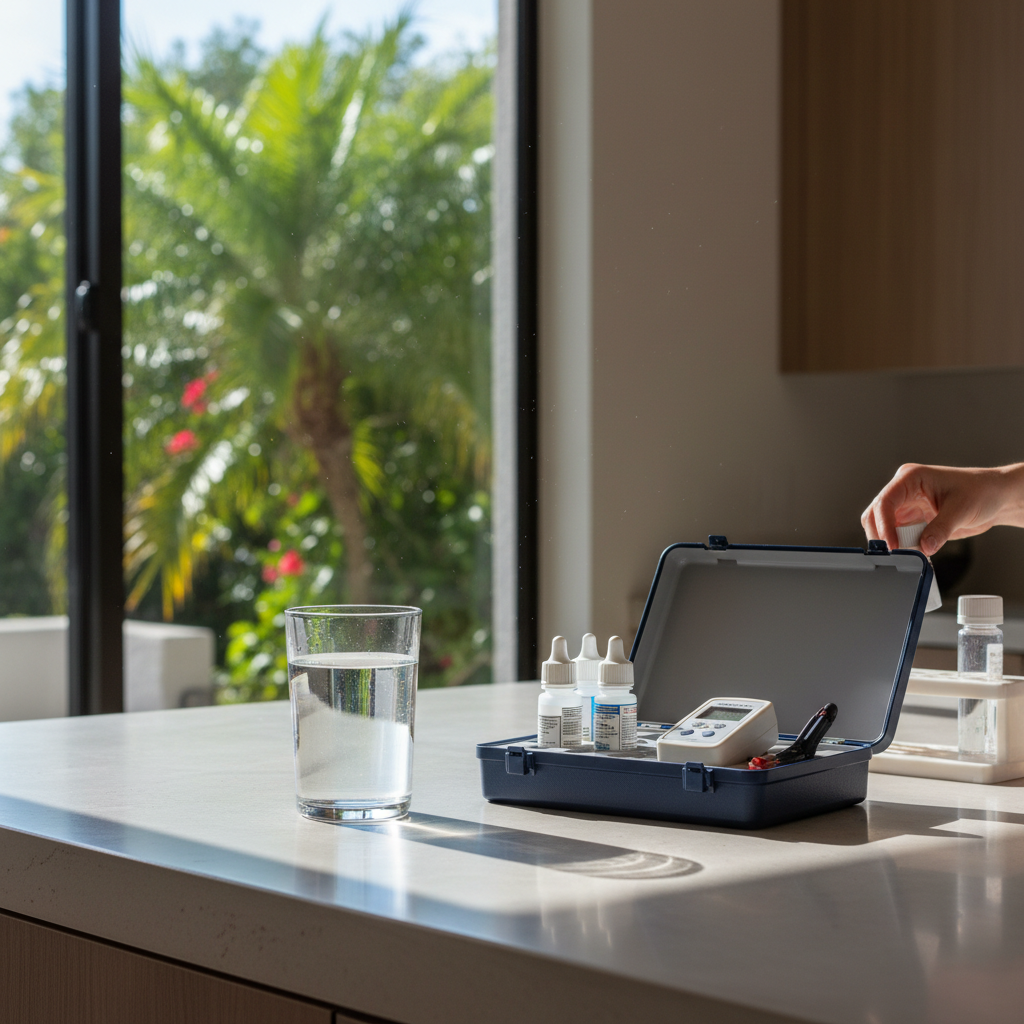
Florida well water testing is the only way for homeowners to ensure their private supply is free from silent contaminants like coliform bacteria, nitrates, and lead. Since the Environmental Protection Agency (EPA) does not regulate private wells, the responsibility of maintaining water safety falls entirely on the property owner. Florida’s unique geology, characterized by porous limestone and a high water table, makes our aquifers particularly susceptible to surface runoff and seasonal contamination during heavy summer rains.
Key takeaways
- Private wells in Florida should be tested at least once a year for bacteria and nitrates.
- Heavy rains and hazardous heat can increase microbial activity in shallow wells.
- The Floridan and Biscayne aquifers are vulnerable to nitrates from fertilizers and septic systems.
- Professional testing should always precede the installation of any filtration system.
Understanding well water risks in Florida
Unlike municipal water systems that are constantly monitored, private wells are independent systems. In Florida, approximately 12% of the population relies on private wells for drinking water. According to the Florida Department of Health, the most common threats to these wells include microbial pathogens and chemical runoff. Because our state sits on a karst landscape—composed of soft, dissolvable limestone—surface pollutants can travel quickly into the groundwater with minimal filtration from the soil.
Nitrates are a specific concern for Florida residents, particularly in agricultural regions or areas with high septic tank density. High nitrate levels can interfere with the blood's ability to carry oxygen, which is particularly dangerous for infants and elderly residents. Additionally, the recent hazardous heat waves reported across the state in June 2026 can accelerate the growth of bacteria in stagnant or poorly maintained well heads.
When to perform Florida well water testing
Routine maintenance is the foundation of a healthy home. You should seek book a water test immediately if you notice changes in the color, taste, or odor of your water. However, many dangerous contaminants are completely invisible and odorless. The Florida Department of Environmental Protection (DEP) recommends testing under the following conditions:
- Annual Checkups: Even if the water seems fine, an annual screen for coliform bacteria and nitrates is standard safety protocol.
- After Major Storms: Flooding can carry surface bacteria, such as E. coli, directly into your well casing.
- System Repairs: Anytime the well cap is removed or the pump is serviced, the system is exposed to the environment.
- New Additions: If you have recently moved into a home or installed a new treatment system, a baseline test is essential.
Homeowners proactive about their longevity often begin with a free Water Health Assessment to identify potential vulnerabilities based on their specific Florida ZIP code and local aquifer data.
Common contaminants found in Florida aquifers
While the Floridan aquifer is one of the most productive in the world, it is not impervious to pollution. Florida well water testing often reveals regional specificities. For instance, coastal areas face the threat of saltwater intrusion as sea levels rise and over-pumping occurs. Central Florida residents may find higher levels of iron or hydrogen sulfide, which causes a distinct "rotten egg" smell.
| Contaminant | Primary Source | Health/Home Impact |
|---|---|---|
| Coliform Bacteria | Septic leakage, animal waste | Gastrointestinal illness |
| Nitrates/Nitrites | Fertilizers, manure | Oxygen-carrying capacity issues | Lead/Copper | Corroded household plumbing | Neurological concerns |
| Hardness (Calcium) | Limestone bedrock | Scale buildup, skin irritation |
The impact of Florida weather on water safety
Florida's climate plays a significant role in water quality. During the summer months, intense solar radiation and high temperatures can impact shallow wells more significantly than deep-rock wells. Local health departments, such as those in Orange County and Jacksonville, frequently monitor public health risks associated with environmental changes. As reported in June 2026, hazardous heat alerts for the entire state can lead to increased water demand, which sometimes alters the flow patterns within local aquifers, potentially drawing in deeper, more mineralized water or surface-level pollutants.
Professional testing vs. DIY kits
While big-box stores offer simple DIY strips, these are often insufficient for a comprehensive health overview. They may detect high levels of hardness or chlorine, but they rarely provide the precision needed to identify low-concentration toxins or specific bacterial strains. A professional laboratory analysis ensures that the detection limits meet EPA and Florida Department of Health standards. For homeowners focused on clean living, knowing the exact parts-per-billion (ppb) of a contaminant is necessary for selecting the correct filtration technology, such as reverse osmosis or UV sterilization.
What to do next
Protecting your family starts with accurate data. If you have not tested your well in the last twelve months, or if you are concerned about local runoff affecting your water quality, follow these steps:
- Inspect your well head to ensure the cap is tightly sealed and no cracks are visible in the casing.
- Clear away any debris, fertilizers, or pesticides from the area immediately surrounding the well.
- Complete a free Water Health Assessment to see how your local area's water health ranks.
- Schedule a comprehensive lab-certified test if you are in a high-risk zone for nitrates or bacteria.
Frequently asked questions
How often should I test my well water in Florida?
The Florida Department of Health recommends testing private wells at least once every year for bacteria and nitrates. You should also test if there is a change in taste, odor, or appearance, or after any major flooding event.
What are the most common contaminants in Florida well water?
The most frequent issues found are coliform bacteria, nitrates from agricultural runoff or septic systems, and minerals like iron and sulfur. Lead can also be a concern if the home has older brass fittings or lead-soldered pipes.
Can I test my well water myself?
While DIY kits exist, they are generally less accurate than laboratory testing. For health-related concerns like bacteria and heavy metals, it is recommended to use a certified laboratory or a professional water quality service to ensure results are reliable.
Will a standard water softener make my well water safe to drink?
No. A water softener is designed to remove minerals like calcium and magnesium that cause hardness. It does not remove bacteria, nitrates, or most chemical contaminants. A multi-stage filtration or purification system is required for total safety.