
Bottled Water vs Filtered Tap in Florida: 2026 Health Guide
Is bottled water vs filtered tap better for Florida homes? Discover the truth about microplastics, Florida's aquifers, and how to ensure your family's water is truly safe.
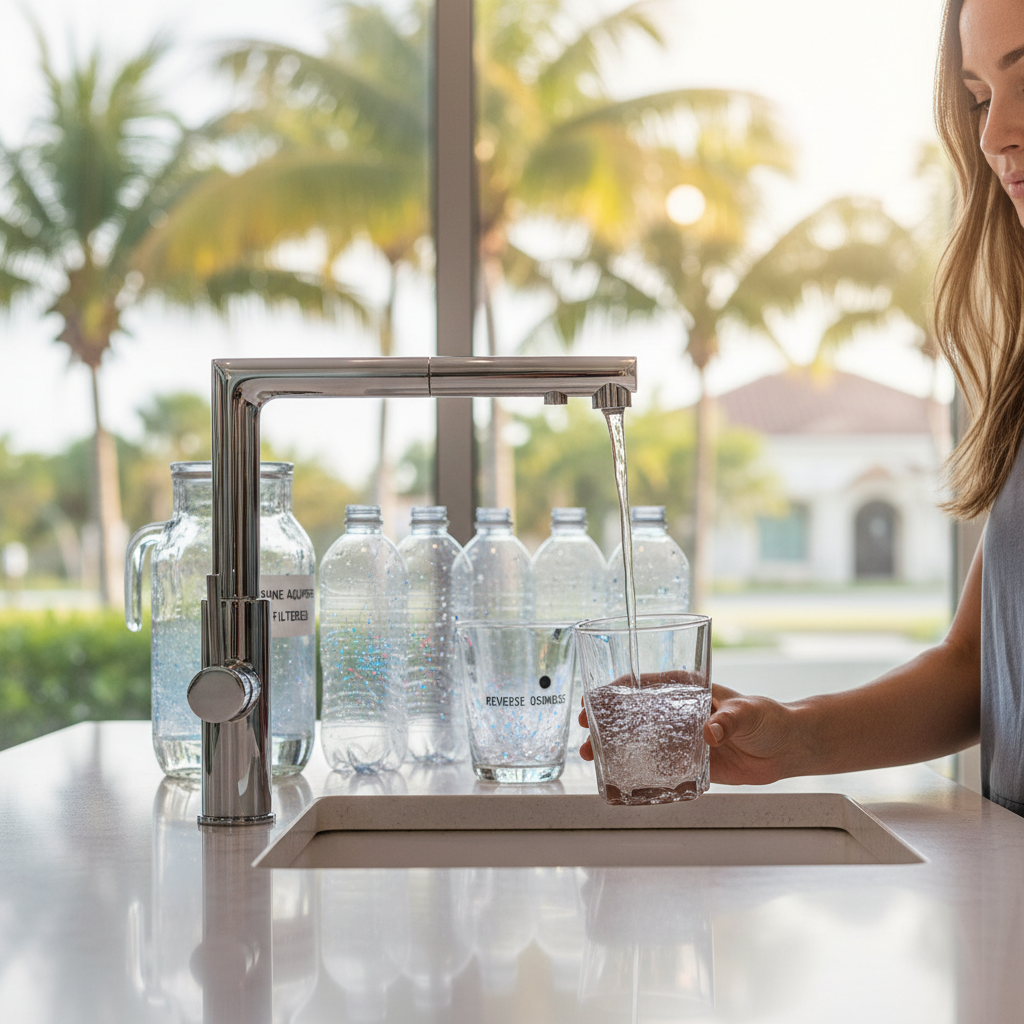
When choosing between bottled water vs filtered tap in the Sunshine State, homeowners must navigate more than just taste preferences; they must consider the unique geological challenges of the Florida aquifer system. As of June 2026, the debate has shifted from simple convenience to a complex evaluation of microplastic exposure and chemical runoff. This guide explores the environmental impact, health implications, and long-term costs of these two hydration sources to help you decide which is best for your Florida home.
Key takeaways
- Filtered tap water typically costs 90% less over time compared to premium bottled water delivery.
- Recent studies indicate bottled water contains significantly higher concentrations of nanoplastics than municipal tap water.
- Florida’s unique limestone geology makes tap water susceptible to hard minerals and agricultural runoff, requiring specific filtration.
- Point-of-use filtration systems offer real-time protection against emerging contaminants like PFAS.
The Reality of Florida's Water Sources
Florida’s drinking water primarily originates from underground aquifers, such as the Floridan and Biscayne aquifers. While the Florida Department of Environmental Protection (DEP) monitors these sources, the journey from the aquifer to your kitchen tap can introduce impurities. Older infrastructure in cities like Miami or Orlando may leach lead or copper into the supply after the water leaves the treatment plant. Conversely, bottled water is often just municipal water that has undergone basic processing, packaged in PET plastic that can degrade over time.
Health Impacts: Microplastics and Chemicals
One of the most pressing reasons to choose bottled water vs filtered tap is the concern over microplastics. According to a landmark study highlighted by the National Institutes of Health (NIH), a single liter of bottled water can contain an average of 240,000 plastic fragments. In Florida’s high-heat environment, these plastic bottles are often subjected to temperature fluctuations during transport, which can accelerate the leaching of endocrine-disrupting chemicals like Bisphenol A (BPA) and phthalates.
By contrast, home-filtered water allows you to control the material of your storage, such as glass or stainless steel. High-quality filtration systems, particularly those using Reverse Osmosis (RO), are designed to remove PFOA and PFOS—the "forever chemicals" that have been detected in various Florida groundwater sites. To understand what is specifically in your local supply, you should book a water test with a professional.
Comparative Analysis: Cost and Efficiency
The financial burden of bottled water is often underestimated by Florida families. While a single bottle may seem inexpensive, the cumulative cost of weekly cases or five-gallon jug deliveries adds up significantly over a decade. Below is a comparison of the typical investment required for a household of four in Florida.
| Feature | Bottled Water Delivery | In-Home Filtration |
|---|---|---|
| Annual Cost (Typical) | $800 - $1,500 | $150 - $300 (Maintenance) |
| Contaminant Removal | Varies by brand | Up to 99% of impurities |
| Environmental Impact | High (Plastic waste) | Low (Reusable containers) |
| Convenience | Requires storage/lugging | On-demand at the sink |
Addressing Florida-Specific Concerns
Florida homeowners face unique water challenges, including saltwater intrusion in coastal communities and high sulfur content in central regions. The EPA reports that while public water systems meet basic safety standards, the legal limits for certain contaminants have not been updated in decades. For those near agricultural zones in the Everglades, nitrates and pesticides are a recurring concern. In these scenarios, the bottled water vs filtered tap debate leans heavily toward filtration, as broad-spectrum bottled water may not target the specific agricultural runoff found in your local zip code.
"The water quality at your tap can vary significantly from the quality at the treatment plant due to the age of your home's plumbing and the distance the water travels through municipal pipes." — General Consensus, Florida Environmental Health Association.
Sustainability and Longevity
Choosing filtered water supports Florida’s fragile ecosystem. Florida’s beaches and waterways are increasingly plagued by plastic pollution, which harms marine life and the tourism industry. By eliminating single-use plastics, homeowners contribute to the preservation of the Atlantic coastline and the Gulf of Mexico. Furthermore, for those focused on longevity and clean living, drinking water free from the nanoplastics found in bottled alternatives is a fundamental pillar of a toxin-free lifestyle.
What to do next
To ensure your home is equipped with the healthiest possible water, follow these recommended steps:
- Request a copy of your annual Consumer Confidence Report (CCR) from your local Florida utility provider.
- Complete a free Water Health Assessment to identify specific risks based on your home's age and location.
- Install a high-quality multi-stage filtration system that includes an activated carbon block and a sediment filter.
- Service your filtration system every 6 to 12 months to maintain its effectiveness against Florida’s high mineral content.
Frequently asked questions
Is Florida tap water safe to drink without a filter?
While Florida tap water meets federal EPA standards, it often contains chlorine, fluoride, and minerals that affect taste and long-term health. Many residents prefer filtration to remove these additives and potential heavy metals from aging pipes.
Which is cheaper, bottled water or a home filter?
A home filtration system is significantly cheaper over time. After the initial installation, the cost per gallon is pennies, whereas bottled water can cost several dollars per gallon depending on the brand and delivery method.
Does bottled water contain microplastics?
Yes, recent research has found that bottled water contains hundreds of thousands of nanoplastic particles per liter. These particles are small enough to enter the bloodstream and human cells, posing potential long-term health risks.
What is the best type of filter for Florida water?
Reverse Osmosis (RO) systems combined with carbon filtration are generally considered the best for Florida. They effectively remove the high mineral content (hardness), chlorine, and potential agricultural runoff common in the state.