
Bottled Water vs Filtered Tap in Florida: 2026 Safety Guide
Is bottled water vs filtered tap in Florida better for your health? Discover how PFAS limits in Boca Raton and new filtration Tech impact your home's water safety.
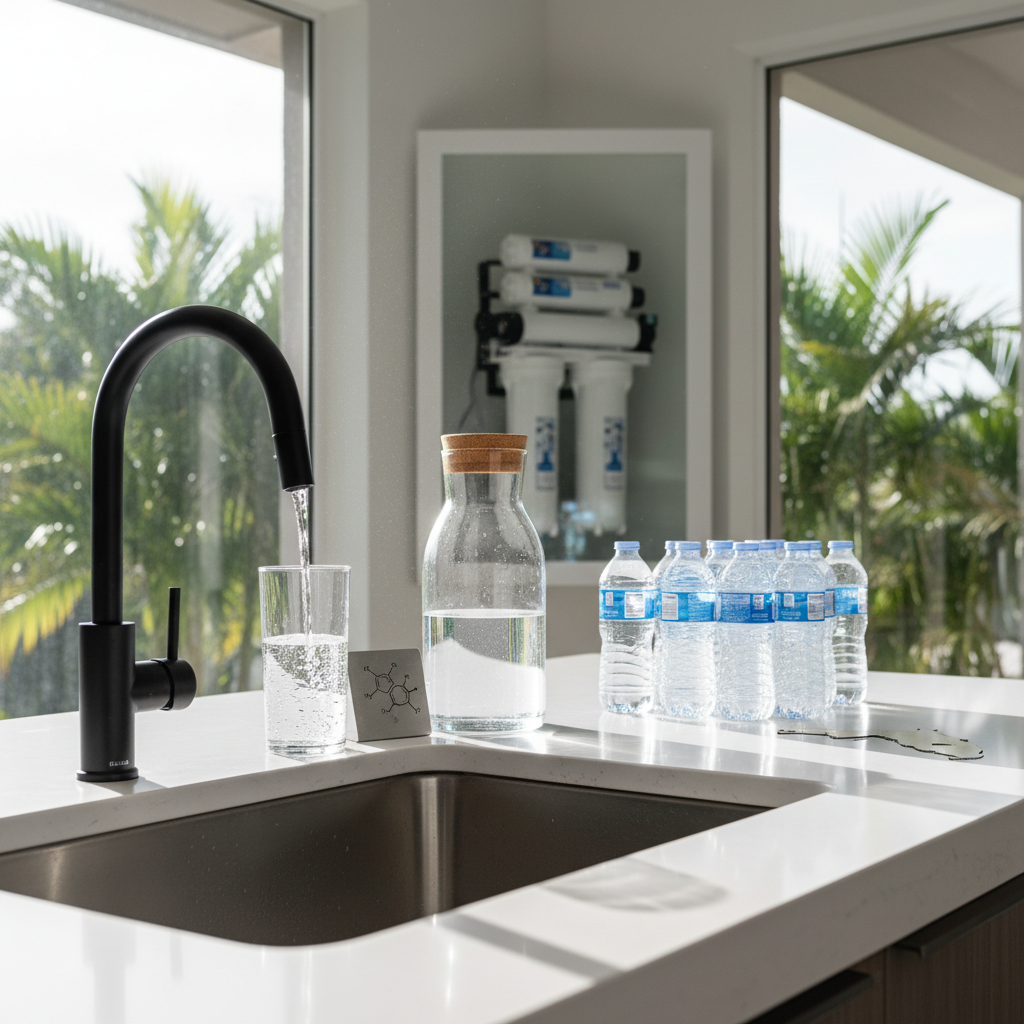
Deciding between bottled water vs filtered tap in Florida has become more complex as emerging contaminants like PFOS and microplastics dominate headlines in 2026. While many Florida homeowners rely on plastic bottles for perceived safety, recent data from the Environmental Protection Agency (EPA) and local utility reports suggest that high-quality home filtration may offer a more consistent shield against the unique geological and industrial challenges of the Sunshine State. Understanding what is actually in your glass requires looking beyond the label and into the specific aquifers that supply your home.
Key takeaways for Florida homeowners
- PFAS Regulations: Cities like Boca Raton are currently upgrading infrastructure to meet the EPA's 4.0 parts per trillion limit for PFOS, as current levels have measured between 4.9 and 7.1 ppt.
- Environmental Impact: Major July 4th events in Delray Beach and Boca Raton now provide mobile filtration units to discourage single-use plastics, highlighting a state-wide shift toward filtered tap.
- Microplastic Concerns: Bottled water can contain up to 100 times more nanoplastics than previously estimated, whereas targeted home filtration can remove these particles effectively.
- Financial Savings: Home filtration systems typically pay for themselves within 12 to 18 months compared to the ongoing costs of premium bottled brands.
The PFAS challenge in Florida tap water
Florida’s unique hydrogeology, characterized by a porous limestone aquifer system, makes the groundwater susceptible to leaching from industrial sites and firefighting foams. In Boca Raton, recent 2025 and 2026 water quality reports indicated that while the city meets current federal standards, it is racing to meet a new 2029 EPA deadline for "forever chemicals." Specifically, PFOS levels were recorded at 7.1 parts per trillion in early 2025, topping the new federal limit of 4.0 parts per trillion. While the city is not in violation during this grace period, homeowners concerned about long-term bioaccumulation are increasingly looking at point-of-entry filtration as a solution.
For those relying on private wells or municipal sources in coastal areas, saltwater intrusion and agricultural runoff also pose risks. To ensure your specific supply is safe, you should book a water test to identify exactly which contaminants are bypassing local treatment. Municipalities treat water for broad safety, but the journey through aging pipes to your kitchen sink can introduce lead or copper, which bottled water avoids but home filters also neutralize.
Bottled water and the hidden microplastic risk
One of the strongest arguments in the bottled water vs filtered tap in Florida debate involves what is added during the bottling process. A study published in the Proceedings of the National Academy of Sciences found that an average liter of bottled water contains roughly 240,000 detectable plastic fragments. These nanoplastics are small enough to enter the bloodstream and cross the blood-brain barrier. In contrast, tap water filtered through a 0.5-micron carbon block or a reverse osmosis membrane significantly reduces this exposure.
According to the Florida Department of Environmental Protection, maintaining high-quality drinking water at the source is a priority, but the secondary transition into plastic containers often degrades that quality through chemical leaching, especially in Florida's high-temperature environment.
Comparing costs and convenience in 2026
| Feature | Bottled Water (Spring) | Filtered Tap (Reverse Osmosis) |
|---|---|---|
| Annual Cost (Family of 4) | $1,200 - $2,000 | $150 - $300 (Maintenance) |
| Contaminant Removal | Varies by brand | 99% of PFAS, Lead, Chlorine |
| Microplastic Content | High (Leached from bottle) | Near zero with proper filtration |
| Environmental Impact | High plastic waste | Very low |
The shifts in Florida community water standards
Local governments are signaling a clear preference for filtered tap water. During the 2026 Independence Day celebrations in South Florida, cities like Delray Beach and Boca Raton deployed "Water Tap" trailers and mobile units to provide free filtered water to the public. These initiatives, prompted by the 250th anniversary of the United States, aim to reduce the millions of tons of plastic that end up in Florida's coastlines and the Everglades. If the city trust its filtration for mass public events, it suggests that the technology is ready for residential application.
Homeowners in Brevard County and Palm Beach County are finding that while municipal water is "legal," it isn't always optimal for longevity and health. Using a free Water Health Assessment can help you determine if your local utility’s current PFOS mitigation efforts—such as Boca Raton’s tens of millions in infrastructure spending—are sufficient for your household’s needs.
Essential filtration checklist for Florida homes
- Check your local 2025/2026 Annual Water Quality Report (Consumer Confidence Report).
- Identify if your home is served by the Biscayne or Floridan aquifer to understand mineral content.
- Select a filter certified by NSF/ANSI Standard 53 or 58 for PFAS reduction.
- Install a secondary sediment pre-filter if you live in an area with older cast-iron infrastructure.
- Replace filters according to the manufacturer's schedule to prevent bacterial growth.
What to do next
Choosing between bottled water vs filtered tap in Florida doesn't have to be a guessing game. Start by securing a baseline of your home's actual water quality. Most Florida homeowners find that a combination of a whole-home carbon system and a point-of-use reverse osmosis system provides better protection and better taste than any commercial bottled brand. Take the first step by completing a free Water Health Assessment or book a water test today to see a side-by-side comparison of your tap water versus the bottled brands you currently buy.
Frequently asked questions
Is Florida tap water safe to drink in 2026?
Yes, most municipal water in Florida meets federal standards, but many cities are currently working to lower PFOS levels to meet new EPA requirements by 2029. Filtering your water at home provides an extra layer of safety against these "forever chemicals" and microplastics.
Does bottled water have more minerals than filtered tap water?
It depends on the brand; some bottled waters are simply purified tap water with minerals added back for taste. A home filtration system allows you to remove harmful contaminants while retaining or adding back essential minerals via a remineralization stage.
How do I know if my water has PFAS or PFOS?
You can review your city's latest Water Quality Report or perform an independent laboratory test. Recent reports in Boca Raton, for example, have shown levels slightly above the new 4.0 ppt EPA limit, prompting city-wide filtration upgrades.
Is reverse osmosis better than bottled water?
Reverse osmosis is often superior because it provides a similar level of purification as high-end bottled brands without the risk of microplastic leaching from the plastic container and at a significantly lower cost per gallon.