
Bottled Water vs Filtered Tap in Florida: Which is Safer?
Is bottled water vs filtered tap in Florida better for your health? Discover the hidden risks of microplastics and local contaminants in our guide.
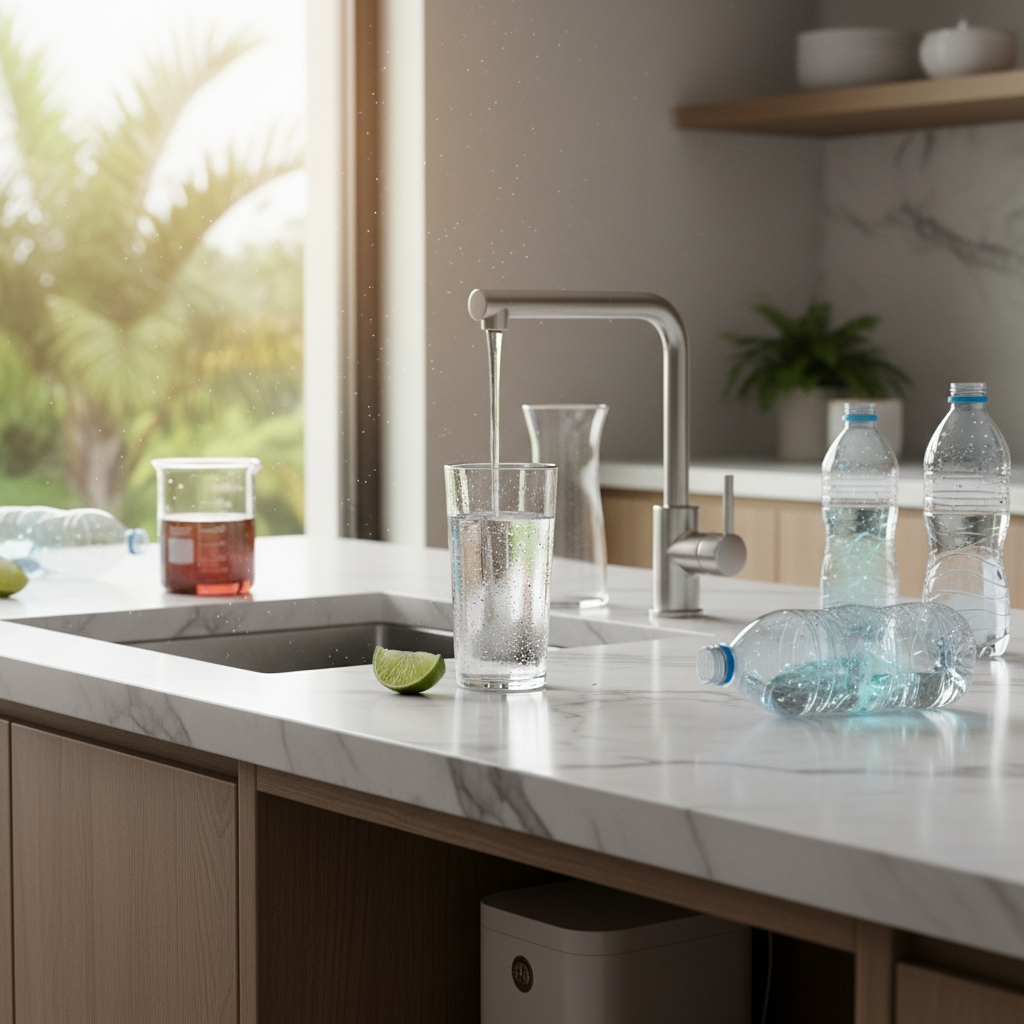
When choosing between bottled water vs filtered tap in Florida, many homeowners assume that the plastic bottle offers a premium standard of purity. However, as of 2026, shifting environmental data and new health research suggest the opposite may be true for those living above the Floridan and Biscayne aquifers. While Florida municipal water must meet strict EPA standards, the journey from the utility to your glass—and the manufacturing of bottled alternatives—introduces unique risks that every health-conscious resident must evaluate to ensure long-term longevity.
Key takeaways
- Bottled water often contains significantly higher levels of microplastics than filtered tap water.
- Florida’s unique geology makes tap water prone to hard mineral buildup and localized sulfur odors.
- Point-of-entry filtration systems provide a more sustainable and cost-effective solution than single-use plastics.
- Testing your home's specific chemistry is the only way to confirm true water safety.
The hidden reality of bottled water vs filtered tap in Florida
For decades, the convenience of bottled water has dominated the Sunshine State, especially during hurricane season and outdoor events like the Rosemary Beach Farmers Market or local golf tournaments. Yet, the perceived safety of bottled water is being questioned. According to a landmark study published by the National Academy of Sciences, a typical liter of bottled water contains an average of 240,000 detectable plastic fragments. In contrast, filtered tap water significantly reduces these microplastic exposures while maintaining a lower carbon footprint.
In Florida, the stakes are higher due to our climate. High temperatures in garages and cars accelerate the leaching of chemicals like antimony and phthalates from PET plastic bottles into the water. If you are serious about clean living, comparing bottled water vs filtered tap in Florida requires looking beyond the label and into the molecular health of your household supply.
Understanding Florida's unique water challenges
Florida’s water primarily comes from groundwater sources. While the Floridan Aquifer is one of the most productive in the world, it is susceptible to saltwater intrusion and runoff from agricultural and industrial activities. Residents in South Florida, particularly those near the coast, often face higher TDS (Total Dissolved Solids) levels. Tap water in these regions is treated with chlorine or chloramines to prevent bacterial growth during transit through aging municipal pipes.
While the Florida Department of Environmental Protection (DEP) monitors these levels at the plant, they cannot account for the lead or copper that may leach from your home's internal plumbing. This is why many families choose to book a water test to identify exactly what is coming out of their faucets before deciding on a filtration strategy.
Health implications of plastic vs. filtration
The choice between bottled water vs filtered tap in Florida often comes down to the types of contaminants you want to avoid. Bottled water is regulated by the FDA, which has historically had less frequent reporting requirements than the EPA-regulated public tap water. Furthermore, bottled water can simply be "processed tap water" that has been stripped of minerals and repackaged.
Advanced filtration like Reverse Osmosis (RO) can remove up to 99% of contaminants, including PFOA/PFAS (forever chemicals) and heavy metals, which are frequently found in trace amounts in Florida groundwater according to CDC health advisories.
Comparison: Bottled Water vs. Filtered Tap
To help you decide which method fits your lifestyle, consider the following metrics regarding cost, health, and maintenance.
| Feature | Bottled Water | Filtered Tap (RO/Carbon) |
|---|---|---|
| Microplastic Risk | High (Leaching from bottle) | Very Low (Filtered out) |
| Cost per Gallon | $1.20 - $5.00+ | $0.02 - $0.05 |
| Purity Assurance | Varies by brand | Verification through testing |
| Environmental Impact | High (Plastic waste) | Low (Sustainable) |
Steps to transition from bottled to filtered
- Identify your local water source and typical contaminants (e.g., lime, sulfur, or chlorine).
- Complete a free Water Health Assessment to understand your home's specific needs.
- Choose a filtration technology—carbon block for taste, or Reverse Osmosis for total purity.
- Install a point-of-use system in the kitchen or a whole-home system for skin and hair health.
- Invest in high-quality stainless steel or glass reusable bottles for hydration on the go.
The longevity perspective: Clean water for life
Biological aging is closely linked to oxidative stress, which can be exacerbated by contaminants in our primary hydration source. By opting for filtered tap water over bottled options, Florida homeowners eliminate the daily ingestion of microplastics while ensuring their water is rich in the right minerals (or stripped of the wrong chemicals). Whether you are attending a weekend event at the USF Botanical Gardens or enjoying a quiet morning in Orlando, the peace of mind that comes from a verified home filtration system is unmatched. For more information on maintaining a toxin-free household, you can read our related guides on clean living.
What to do next
Deciding between bottled water vs filtered tap in Florida should not be a guessing game. Start by evaluating the specific chemical profile of your neighborhood's water. We recommend that every homeowner in the state take advantage of professional analysis to ensure their filtration matches their local aquifer's profile. You can book a water test today to get a detailed report on your water's mineral content, pH, and potential contaminants.
Frequently asked questions
Is Florida tap water safe to drink without a filter?
While Florida municipal water meets federal EPA standards, it often contains chlorine, minerals that affect taste, and potential contaminants from local pipes. Using a filter improves taste and removes trace elements like microplastics and PFOAs.
Why does Florida tap water sometimes smell like sulfur?
This "rotten egg" smell is usually caused by hydrogen sulfide gas or sulfur-reducing bacteria prevalent in Florida’s groundwater and aquifers. While not typically harmful, it indicates a need for specialized filtration to improve quality.
Is bottled water safer than tap water during a hurricane?
Bottled water is a critical emergency resource when utility lines are compromised. However, for daily consumption, a high-quality home filtration system offers superior purity without the risks of microplastic leaching found in stored plastic bottles.
What is the best filter for Florida water?
Reverse Osmosis (RO) is generally considered the best for Florida because it effectively manages high TDS and removes the specific agricultural and industrial runoff often found in our state's unique soil and limestone structures.